


Listen to the article
In a sharp escalation of diplomatic tensions, Iran has firmly rejected U.S. accusations regarding potential attacks on American bases in the region, vowing retaliation against any military action targeting the Islamic Republic. The statement came from Iranian Foreign Ministry spokesperson Esmail Baghaei during a press conference Saturday, in response to claims posted on the U.S. Department of State’s Farsi page.
The U.S. has maintained that “all options remain on the table” while warning Iran not to “play games with president [Donald] Trump.” These threats come amid a backdrop of nationwide protests in Iran over deteriorating economic conditions that have reportedly resulted in hundreds of casualties in the first two weeks of January.
Trump has been particularly vocal in his support for Iranian protesters, encouraging them to “occupy institutions” and promising that “help is on its way.” On Sunday, the former president directly accused Supreme Leader Ali Khamenei of misrule and excessive violence against demonstrators, reiterating calls for regime change in Tehran.
Iranian officials have condemned Trump’s statements, claiming his rhetoric has encouraged protesters to engage in violence and property destruction, transforming economic grievances into attempts at regime change.
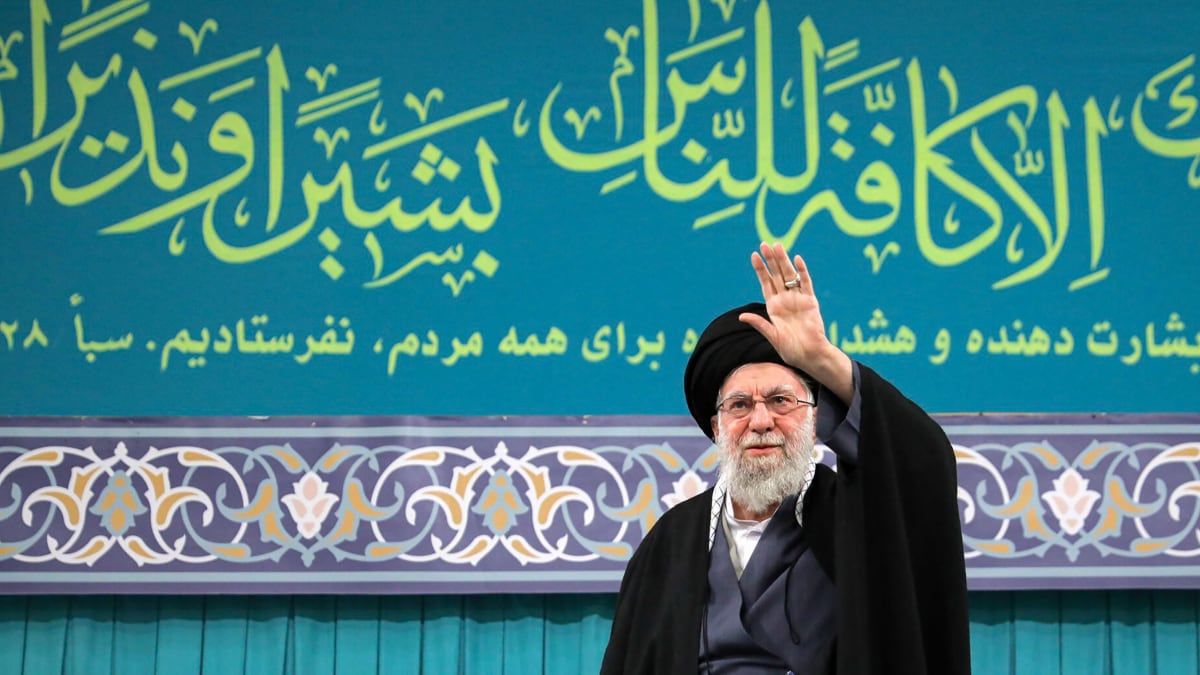
In a religious ceremony on Saturday, Supreme Leader Khamenei delivered a scathing rebuke of Trump, holding him personally responsible for the recent unrest. “The U.S. president is responsible for casualties, damages, and false accusations directed against the Iranian nation,” Khamenei declared.
He claimed that while the United States has long attempted to incite violence against the Iranian state, this instance marked a significant departure from previous tactics. “The president of the U.S. himself intervened, made statements, encouraged the rioters, and even spoke of providing military support,” Khamenei said.
The Supreme Leader suggested these actions stem from America’s inability to “tolerate a country with Iran’s characteristics, capabilities, vastness, and scientific and technological progress.” While emphasizing that Iran would not be drawn into war, he warned that authorities would not allow “domestic and international criminals to go unpunished.”
Iranian President Masoud Pezeshkian acknowledged economic hardships facing Iranian citizens in a social media post on Sunday, but attributed these challenges to U.S.-led sanctions. Pezeshkian also issued a stark warning that any attack on Khamenei would be considered an assault on the entire nation.
Against this backdrop of rising tensions, Iranian Foreign Minister Abbas Araghchi visited Iraq on Sunday, expressing satisfaction at the withdrawal of U.S. forces from Iraq’s Ain-al Asad airbase. During a joint press conference with his Iraqi counterpart, Araghchi described the development as beneficial for regional peace and stability.
The withdrawal follows an agreement reached with the Iraqi government in 2024. U.S. forces first occupied the base following the 2003 invasion until 2011, then reestablished their presence in 2014 in response to the ISIS threat.
The U.S. military presence in Iraq has long been a point of contention with Iran, which has advocated for the complete withdrawal of American and foreign troops from the region, characterizing their presence as destabilizing. Iranian officials have previously claimed the Ain-al Asad base was used to launch attacks into Iranian territory.
The base holds particular significance in U.S.-Iran relations as Iran fired several missiles at the installation in January 2020 following the U.S. drone strike that killed General Qasem Soleimani in Baghdad.
During his visit to Iraq, Araghchi emphasized that stability in Iraq is essential for regional security and peace, underscoring Iran’s strategic interest in its neighboring country as U.S. influence in the region continues to evolve.
The current exchange of threats and accusations highlights the persistent volatility in U.S.-Iran relations, with each side presenting dramatically different narratives about recent events and their underlying causes.
Fact Checker
Verify the accuracy of this article using The Disinformation Commission analysis and real-time sources.

11 Comments
This dispute highlights the delicate and volatile nature of geopolitics in the Middle East. While the details are murky, I hope the US and Iran can find a way to de-escalate through open and honest dialogue. Resorting to threats and accusations will only prolong the suffering of the Iranian people.
While the details of this dispute are murky, one thing is clear – the Iranian people are bearing the brunt of the fallout. I hope their leaders and the US can put aside political posturing and focus on finding a peaceful solution that addresses the underlying economic and social challenges.
Absolutely. The people of Iran deserve stability and prosperity, not continued unrest and hardship. Constructive dialogue and compromise are the only path forward.
This is a concerning escalation of tensions between the US and Iran. While the accusations seem dubious, it’s important to seek facts and avoid further inflaming the situation. Stability and diplomacy are critical, especially given the economic turmoil and protests in Iran.
I agree, keeping lines of communication open and avoiding military action is crucial. The US and Iran must find a peaceful resolution to this dispute.
The US and Iran appear to be on a dangerous collision course. Both sides should exercise restraint and focus on de-escalating the situation through diplomatic channels. Further inflaming tensions will only hurt the Iranian people, who are already suffering from economic hardship.
Well said. The welfare of the Iranian people should be the top priority here, not political posturing. Diplomacy and compromise are needed to prevent this from spiraling out of control.
Given the history of tensions between the US and Iran, it’s not surprising to see this latest flare-up. However, I echo the calls for restraint and diplomacy. Further escalation will only lead to more instability and harm in the region. Both sides need to focus on finding a sustainable solution.
Agreed. Diplomacy and compromise may be difficult, but they are the only responsible path forward. The well-being of the Iranian people should be the top priority.
This is a complex geopolitical situation with high stakes for all involved. I hope the US and Iran can find a way to de-escalate tensions and engage in good-faith negotiations. Resorting to threats and rhetoric will only prolong the suffering of the Iranian people.
Accusations and counter-accusations rarely lead to positive outcomes. I hope both the US and Iran can take a step back, look at the facts objectively, and find a way to engage constructively. The stakes are too high for this to descend into outright conflict.