


Listen to the article
Iran Denies US Claims of Ceasefire Talks Amid Ongoing Conflict
Iran has categorically rejected reports of negotiations with the United States, labeling such claims as “fake news” designed to manipulate financial and oil markets. Iranian Foreign Ministry Spokesperson Esmail Baghaei acknowledged that some friendly countries had conveyed messages about American willingness to talk, but emphasized that Iran’s stance regarding the Strait of Hormuz and conditions for ending the conflict remains unchanged.
The denial comes after US President Donald Trump claimed on social media Monday that he was postponing attacks on Iranian power plants due to “very good and productive conversation” between the two countries. Trump had previously issued an ultimatum demanding Iran open the Strait of Hormuz within 48 hours or face strikes on its power infrastructure.
Iran has established three firm preconditions for any future negotiations: an immediate cessation of strikes with guarantees against future attacks, withdrawal of US military bases from the region, and compensation for war damages sustained by Iran.
“No negotiations have been held with the US,” wrote Mohammad Bagher Ghalibaf, Speaker of the Iranian Parliament, on social media platform X. He characterized Trump’s claims as an attempt to “escape the quagmire in which the US and Israel are trapped.” Iranian officials have also dismissed Western media reports suggesting Ghalibaf might emerge as a potential point of contact for negotiations.
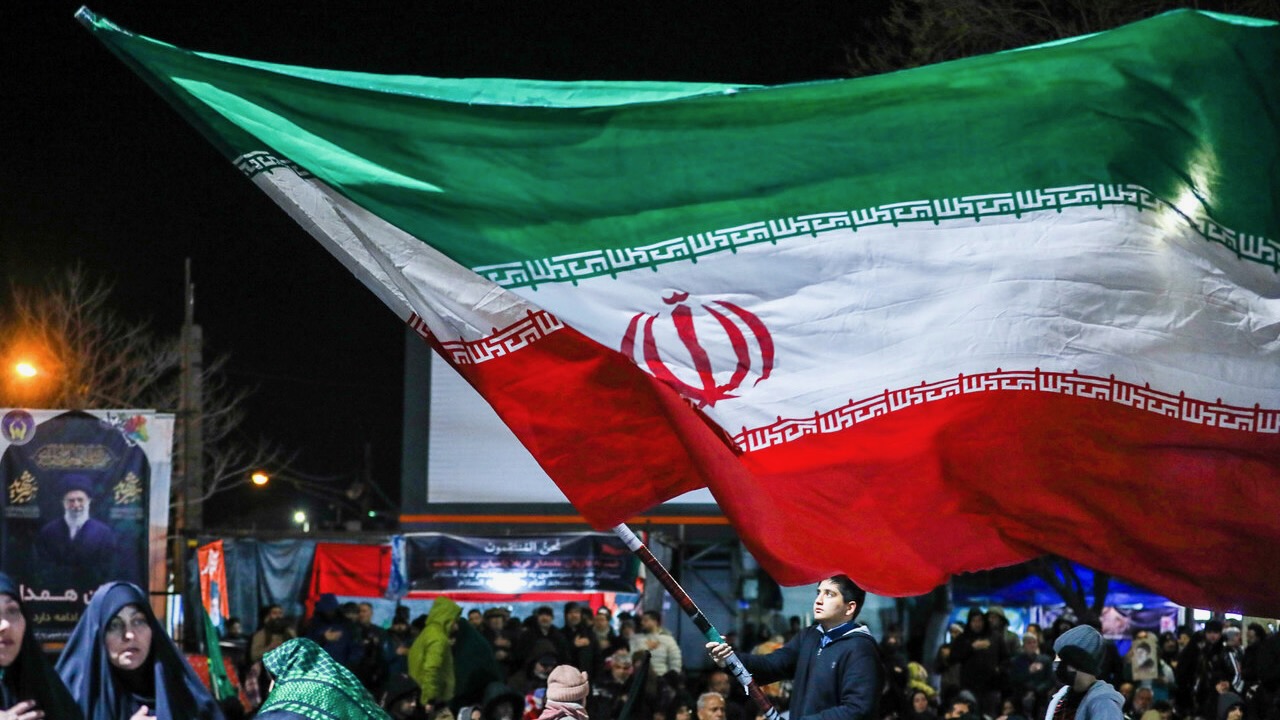
Meanwhile, public opposition to the conflict continues to grow. Hundreds of thousands of demonstrators have taken to the streets in cities across Iran and neighboring Iraq, demanding an end to what they describe as the “US-Israeli war.” In Tehran, which has suffered significant bombing since February 28, protesters waved Iranian flags and expressed solidarity with the country’s armed forces despite the ongoing threat of airstrikes.
The human cost of the conflict has been severe. According to Iran’s Health Ministry, over 210 Iranian children have reportedly been killed, including 168 schoolgirls who died on the first day of strikes. The Iranian Red Crescent Society (IRCS) reported Monday that US-Israeli operations have damaged or destroyed approximately 82,000 civilian structures, including 498 schools and 292 medical facilities. At least 22 medical staff have been killed and 113 injured in these attacks.
In a letter to World Health Organization Director-General Tedros Adhanom Ghebreyesus, the IRCS condemned these strikes on health facilities and medical personnel as violations of international humanitarian law and the Fourth Geneva Convention.
Ghalibaf has framed the conflict in stark moral terms, arguing on social media that “Iran is fighting for humanity” against what he described as an Israeli colonial regime. “The world is either with Gaza and against this colonial terror regime, or it stands with the Epstein class and child torturers. There is no middle ground,” he stated, referencing reports of Israeli soldiers allegedly torturing a Palestinian child.
The standoff over the Strait of Hormuz—a critical maritime chokepoint through which approximately 20% of global oil shipments pass—continues to heighten tensions in the region and affect global energy markets. Iran maintains that the waterway will remain closed to the US and its allies, while warning of “massive retaliation” should its power infrastructure be targeted.
As the conflict enters its fourth week, international concerns are growing about further escalation and the potential for a wider regional war that could severely disrupt global energy supplies and trigger a humanitarian crisis beyond Iran’s borders.
Fact Checker
Verify the accuracy of this article using The Disinformation Commission analysis and real-time sources.

14 Comments
This dispute over claims of diplomatic talks just adds more confusion and uncertainty around the Iran-US tensions. Clear and transparent communication from both sides would go a long way.
Absolutely, lack of reliable information fuels speculation and mistrust. Direct, good-faith dialogue is crucial for de-escalating these types of geopolitical standoffs.
Conflicting claims about diplomatic talks just add to the murky nature of this dispute. Both sides seem intent on controlling the narrative for domestic and international audiences.
You’re right, the information war is a key part of this geopolitical standoff. Transparent communication and good-faith negotiations will be essential for any lasting resolution.
Interesting that Iran is firmly rejecting Trump’s claims of diplomatic talks. This seems like a strategic move to maintain their negotiating position. I wonder what’s really happening behind the scenes.
You’re right, Iran appears to be taking a hardline stance publicly while perhaps having some back-channel discussions. Geopolitics can be quite opaque at times.
Iran rejecting Trump’s claims as ‘fake news’ is a bold move. They seem determined to control the narrative and not be seen as capitulating to US pressure. Curious to see how this plays out.
Yes, Iran is clearly trying to project strength and resolve in the face of US demands. Their unwavering public stance could be a negotiating tactic or reflect genuine unwillingness to back down.
Iran’s firm denial of Trump’s claims, along with their preconditions for talks, suggest they are playing a high-stakes game of brinkmanship. Deescalating this conflict will require careful diplomacy on all sides.
Absolutely, Iran appears to be positioning itself from a position of strength, likely to gain as much leverage as possible. Compromise and goodwill on both sides will be critical to finding a peaceful solution.
Iran’s preconditions for any future negotiations – ceasing strikes, withdrawing US bases, and compensation for damages – sound reasonable given the heightened tensions. Curious to see if they can find common ground.
Agreed, Iran’s position seems grounded in addressing the core issues driving the conflict. Diplomatic resolutions often hinge on both sides finding acceptable compromises.
The situation around the Strait of Hormuz remains highly volatile. Iran’s preconditions for talks, like ceasing strikes and withdrawing US forces, signal they want tangible concessions before engaging diplomatically.
Absolutely, the stakes are incredibly high given the strategic importance of the Strait. Iran seems intent on not appearing weak, so substantial mutual compromises will likely be needed for any breakthrough.