


Listen to the article
Iran has categorically rejected claims that it fired missiles at a strategically significant joint U.S.-U.K. military base on Diego Garcia, characterizing the allegations as fabricated disinformation designed to escalate regional tensions.
In a statement posted on social media platform X, Iranian Foreign Ministry spokesperson Esmaeil Baghaei dismissed the accusations, suggesting they represent part of a coordinated campaign to falsely implicate Iran in attacks it did not commit.
“That even the NATO Secretary General declines to endorse Israel’s most recent disinformation speaks volumes: the world has grown thoroughly exhausted with these tired and discredited ‘false flag’ storylines,” Baghaei stated, referring to NATO chief Mark Rutte’s reluctance to validate Israeli claims about Iranian missile launches.
Rutte had previously stated that NATO “cannot confirm” Israeli assertions that Iran had fired intercontinental ballistic missiles targeting the Diego Garcia installation, adding credibility to Iran’s denial.
The controversy emerged after The Wall Street Journal reported Friday that two intermediate-range ballistic missiles had been launched toward Diego Garcia, though neither allegedly struck the facility. The Pentagon has not yet responded to requests for comment on the alleged incident.
The reported missile launch had raised eyebrows among military analysts because Diego Garcia is located approximately 4,000 kilometers from Iranian territory—double the 2,000-kilometer range limit that Iranian Foreign Minister Abbas Araghchi previously claimed Tehran had deliberately imposed on its missile capabilities. This discrepancy fueled speculation about whether Iran had secretly developed longer-range capabilities or if the reports were indeed fabricated.
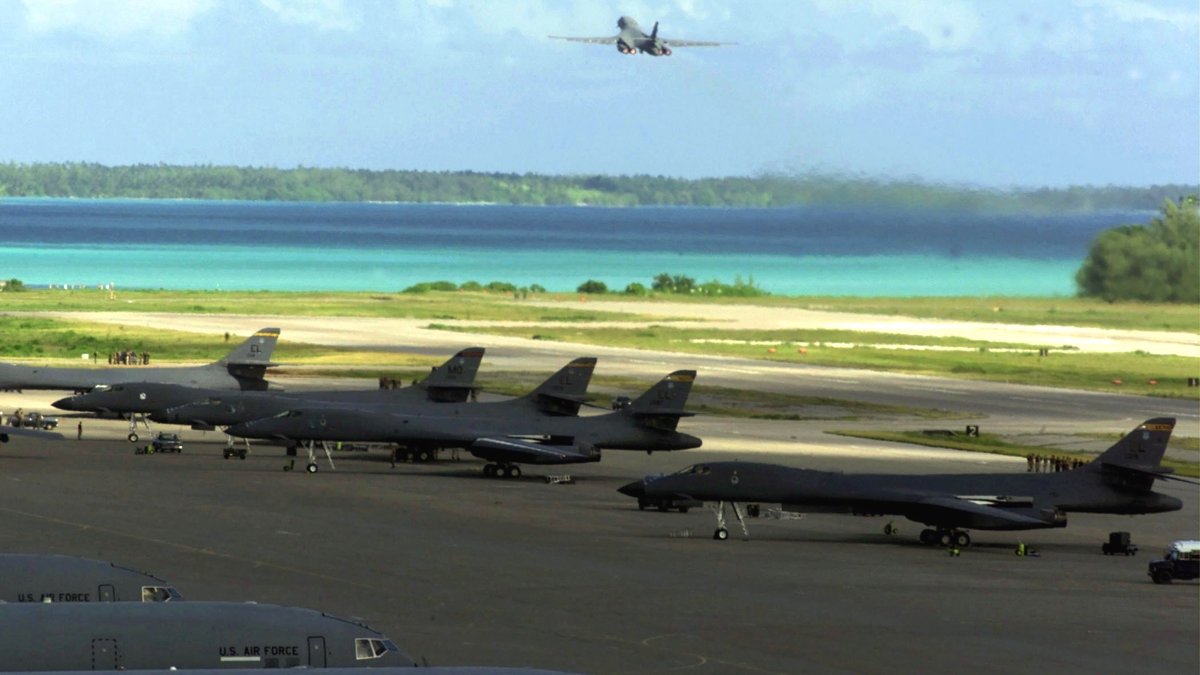
Diego Garcia, the largest island in the Chagos Archipelago in the central Indian Ocean, has significant strategic value to Western military operations. Since the 1970s, it has served as a critical forward operating base for U.S. and British forces, hosting long-range bombers, naval assets, and intelligence facilities that allow power projection throughout the Indian Ocean and Middle East regions.
The island is one of two bases that the United Kingdom has authorized the United States to use in its ongoing military campaign against Iran, making it a high-value target in the escalating conflict between Western powers and Tehran.
The disputed missile incident comes amid sharply deteriorating regional security following a major U.S.-Israeli offensive against Iran launched on February 28. That operation reportedly resulted in over 1,300 casualties, including Iran’s then-Supreme Leader Ali Khamenei.
In response, Iran has conducted a series of retaliatory drone and missile strikes targeting not only Israel but also Jordan, Iraq, and Gulf states hosting American military installations. These attacks have caused civilian and military casualties, damaged critical infrastructure, disrupted global markets, and forced adjustments to international aviation routes throughout the Middle East.
The conflicting narratives highlight the increasingly complex information environment surrounding the Middle East conflict, with all parties seeking to control the narrative around military operations and responsibilities for escalation. Independent verification of missile launches in remote regions like the Indian Ocean remains challenging for international observers and media organizations.
Military analysts note that if confirmed, a missile strike at such distance would represent a significant escalation and demonstration of previously undisclosed Iranian military capabilities, potentially forcing Western defense planners to reassess Iran’s strategic reach and threat profile.
Fact Checker
Verify the accuracy of this article using The Disinformation Commission analysis and real-time sources.

9 Comments
This incident highlights the ongoing information warfare in the Middle East. It will be important to see if any impartial investigations or credible sources can shed more light on what actually transpired.
While Iran has a history of making such claims, the fact that NATO is not endorsing Israel’s version is intriguing. This appears to be a complex situation that requires more objective analysis.
Accusations of ‘false flag’ operations are common in this part of the world, but NATO’s hesitation to validate Israel’s claims suggests there may be more to this story than meets the eye.
Absolutely. The lack of consensus from key international actors is a red flag and warrants a closer look at the details before jumping to conclusions.
The ‘false flag’ accusation is a serious allegation. While Iran has a history of such claims, NATO’s hesitation to validate Israel’s version of events raises questions about the reliability of the information.
Given the geopolitical tensions in the region, it’s not surprising to see accusations of misinformation and blame-shifting. Maintaining an objective, fact-based perspective is crucial in this type of environment.
This seems like another case of finger-pointing and political posturing rather than substantive facts. It’s important to reserve judgment until more credible evidence emerges.
I’m curious to see how this plays out. Iran denying involvement and NATO being skeptical of Israel’s claims suggests this may be more complex than a straightforward false flag operation.
Agreed. The lack of confirmation from NATO is an interesting wrinkle that complicates the narrative. This bears closer scrutiny.