


Listen to the article
In a significant escalation of Middle East tensions, Iran and the United States exchanged accusations Monday over alleged military strikes, with Tehran claiming it had targeted U.S. military positions in Dubai while American officials categorically denied the reports.
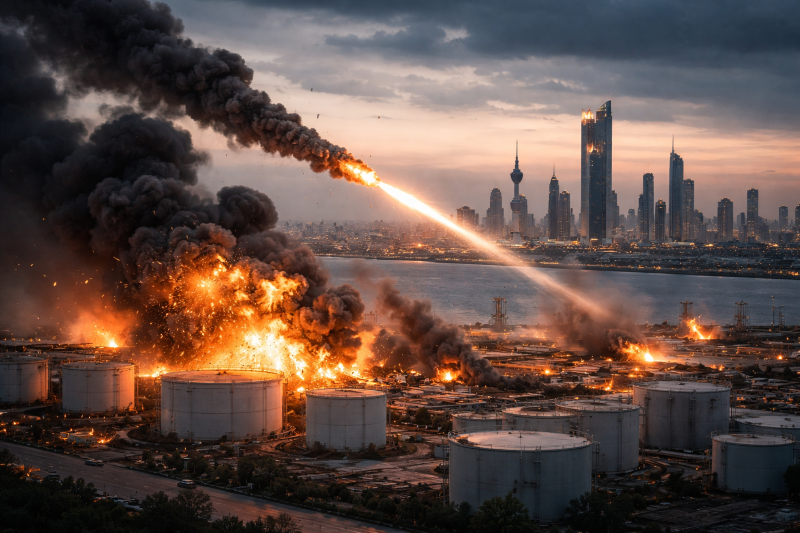
Iran’s Islamic Revolutionary Guard Corps (IRGC) issued a statement asserting it had conducted missile and drone strikes against what it described as U.S. military “hideouts” in Dubai. According to the IRGC, these locations housed more than 500 American personnel, and the alleged attacks resulted in casualties that required ambulances to transport “the dead and wounded” for several hours.
The statement contained an ominous warning that the region could become a “graveyard” for American troops should hostilities continue.
U.S. Central Command swiftly rejected these claims as fabrications. In a statement posted on the social media platform X, the command stated no U.S. personnel had been attacked in Dubai and accused Tehran of spreading misinformation to distract from what it characterized as Iran’s deteriorating military position in the region.
The rhetorical confrontation intensified when Iranian President Masoud Pezeshkian cautioned Gulf nations against allowing their territories to be used as staging grounds for U.S. or Israeli operations against Iran. Pezeshkian emphasized that while Tehran does not initiate conflicts, it would respond decisively to any attacks on its infrastructure or economic interests.
The tensions are playing out against a backdrop of increasing regional instability. Kuwait International Airport recently suffered multiple drone strikes that damaged its radar systems. Although no casualties were reported, Kuwaiti authorities subsequently attributed the attack to Iran and its allied groups, further complicating the diplomatic landscape in the Gulf.
The ripple effects of these tensions are increasingly disrupting civilian life throughout the region. Air travel has been particularly affected, with major airports in Kuwait and Bahrain temporarily suspending operations due to security concerns. Commercial airlines have canceled thousands of flights, disrupting both passenger travel and cargo movement across this critical global transit hub.
In a separate claim that has further muddied the waters, Iran’s Revolutionary Guards stated they had struck U.S. naval assets at a Kuwaiti port, alleging that several vessels were destroyed and American personnel killed. Like the Dubai claims, these assertions could not be independently verified and have been met with skepticism by regional security analysts.
The IRGC also claimed it employed ballistic missiles and kamikaze drones in operations targeting U.S.-linked sites, including a hotel in Dubai. Neither U.S. nor United Arab Emirates authorities have confirmed such incidents occurred.
Meanwhile, Yemen’s Iran-backed Houthi movement claimed responsibility for a missile strike against Israel, saying they targeted military installations in the southern part of the country. Israel’s military reported that the missile was intercepted before it could cause damage.
This exchange of claims and denials comes at a particularly volatile time for the region, as the conflict shows signs of widening beyond its initial parameters. Security experts express growing concern about the potential for broader regional escalation that could affect critical infrastructure, international shipping routes, and global supply chains.
The Gulf states, particularly the UAE and Kuwait, find themselves in an increasingly precarious position as they attempt to maintain their economic prosperity while navigating between their security relationships with the United States and the proximity of Iran, a regional power with significant asymmetric warfare capabilities.
Energy markets have reacted nervously to these developments, with oil prices experiencing volatility as traders assess the potential impact on production and transportation in a region responsible for approximately one-third of global oil supplies.
Fact Checker
Verify the accuracy of this article using The Disinformation Commission analysis and real-time sources.

12 Comments
It’s worrying to see the US and Iran trading accusations like this. Both sides need to be very careful not to take actions that could trigger a wider conflict, which would be disastrous for the region and the world. Dialogue and diplomacy are the only way forward.
I agree completely. At this stage, it’s critical that the US and Iran focus on diplomatic solutions rather than escalating military posturing. Restraint and de-escalation should be the top priorities to avoid a potentially catastrophic outcome.
The war of words between the US and Iran is deeply troubling. While Iran’s allegations are serious, the US denial seems credible. At this point, cooler heads must prevail, and both sides should focus on conflict resolution through diplomatic channels to avoid a potentially disastrous military confrontation.
I agree completely. The priority now should be to establish clear communication channels, verify facts, and pursue diplomatic solutions that address the root causes of the tensions. Further escalation, whether through military posturing or inflammatory rhetoric, will only increase the risks for all involved.
This is a concerning development, but I’m skeptical of Iran’s claims given the US denial. Both sides need to tread carefully and avoid actions that could provoke a broader confrontation. Transparent communication and conflict resolution through diplomatic channels should be the priority.
I share your skepticism. Unverified claims from either side are unhelpful and only increase the risks. The responsible path forward is for both nations to engage in good-faith negotiations to address the underlying issues and de-escalate tensions.
This is a complex geopolitical situation with a lot of history and distrust on both sides. While Iran’s claims are concerning, the US denial seems credible. Avoiding further inflaming the situation should be the top priority right now.
I share your view. Verifying facts and avoiding inflammatory rhetoric is crucial to prevent this from spiraling out of control. Calm, measured responses from all parties are needed to deescalate the tensions.
The US and Iran have a long history of confrontation, but open military hostilities would be disastrous for the region. I hope cooler minds prevail and they find a way to resolve this through negotiation rather than force.
Absolutely. Further escalation benefits no one, and the risk of miscalculation or unintended conflict is extremely high. Both sides need to show restraint and focus on diplomatic solutions.
Quite a concerning escalation of tensions between the US and Iran. It’s critical that both sides exercise restraint and avoid further provocations. Spreading unverified claims only serves to heighten the risks of miscalculation.
I agree, this situation requires cool heads and diplomatic efforts to de-escalate. Inflammatory rhetoric from either side is unhelpful and could lead to dangerous consequences.