


Listen to the article
India Rebukes Pakistan Over Comments on Terror Group Ban Verdict
India has issued a sharp rebuke to Pakistan following Islamabad’s criticism of a recent Indian court decision upholding a ban on a terrorist organization operating in Jammu and Kashmir. The Ministry of External Affairs (MEA) characterized Pakistan’s statements as “full of lies and baseless stories” in what marks the latest diplomatic flare-up between the two nuclear neighbors.
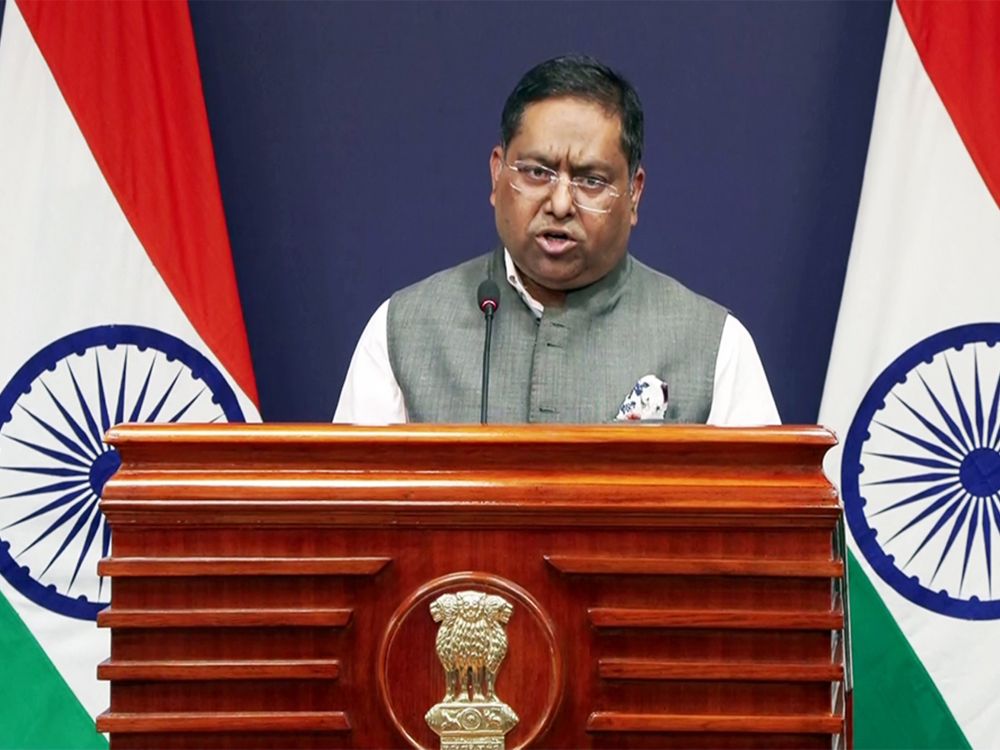
MEA spokesperson Randhir Jaiswal addressed the matter during a press briefing on Wednesday, accusing Pakistan of deliberately spreading misinformation to deflect attention from its own role in supporting cross-border terrorism.
“Pakistan continues to peddle lies and frivolous narratives,” Jaiswal stated. “This is simply another attempt to distract from their well-documented history of providing safe havens and financial support to terrorist organizations.”
The controversy stems from a recent Delhi court verdict that maintained the ban on a prominent terrorist group active in the disputed Kashmir region. The ruling specifically upheld restrictions against the organization and its members, including Asiya Andrabi, a known separatist leader.
Following the court decision, Pakistan issued a statement claiming the verdict was politically motivated and unjust. Pakistani officials alleged that India was unfairly targeting legitimate political organizations under the guise of counter-terrorism operations.
India has categorically rejected these assertions, with Jaiswal pointing to extensive documentation that India has previously shared with international bodies, including the United Nations, detailing Pakistan’s alleged involvement in funding and supporting terrorism.
“We have repeatedly provided comprehensive dossiers to the international community that clearly demonstrate Pakistan’s role in terror financing and infrastructure support,” Jaiswal emphasized. “Their statements attempting to portray themselves as innocent are completely divorced from reality.”
The diplomatic exchange occurs against the backdrop of decades of strained relations between the two countries, particularly over the Kashmir region, which both nations claim in its entirety. Since the partition of the subcontinent in 1947, India and Pakistan have fought three wars over Kashmir, with the region remaining a persistent flashpoint.
Security analysts note that terrorist activities in Jammu and Kashmir have been a significant factor in the deterioration of bilateral relations. India has consistently maintained that Pakistan provides material and logistical support to militant groups operating in the region, an accusation that Pakistan routinely denies.
The Delhi court’s decision to uphold the ban reflects India’s broader counter-terrorism strategy, which has intensified following several high-profile attacks on Indian soil that New Delhi has attributed to Pakistan-based groups. Most notably, the 2008 Mumbai attacks, which killed 166 people, led to a significant hardening of India’s stance on cross-border terrorism.
International watchdogs, including the Financial Action Task Force (FATF), have previously placed Pakistan under increased monitoring for deficiencies in its counter-terrorist financing regime. Although Pakistan was removed from the FATF’s “grey list” in October 2022 after implementing reforms, concerns about terrorist financing mechanisms within the country persist among international observers.
The latest exchange underscores the continuing challenges in India-Pakistan relations, with terrorism remaining a central point of contention between the neighbors. Diplomatic efforts to normalize relations have repeatedly faltered over these security concerns, with each side maintaining firm positions on their respective narratives about regional terrorism.
As tensions continue, security experts suggest that meaningful progress in bilateral relations remains unlikely without substantial changes in Pakistan’s approach to militant groups operating from its territory.
Fact Checker
Verify the accuracy of this article using The Disinformation Commission analysis and real-time sources.

12 Comments
This appears to be another chapter in the protracted dispute between India and Pakistan over Kashmir and terrorism. While it’s important to uphold bans on terrorist groups, the allegations and counter-allegations risk further inflaming regional tensions. Impartial conflict resolution should be the priority.
The ongoing tensions between India and Pakistan over terrorism and Kashmir are clearly a delicate and politically charged issue. It’s important that any counterterrorism efforts are grounded in facts and international law, rather than being used as political weapons. Deescalating rhetoric and finding common ground should be the priority.
Absolutely, maintaining an impartial, evidence-based approach is crucial when dealing with such sensitive geopolitical disputes. Escalating rhetoric and blame-shifting rarely leads to productive outcomes.
The back-and-forth accusations between India and Pakistan on terrorism are concerning, especially given their nuclear-armed status. It’s critical that any counterterrorism efforts are grounded in facts and international law, rather than being used as political bargaining chips. Deescalating tensions should be the priority.
Agreed, this issue requires a measured, impartial approach focused on de-escalation and finding common ground, rather than further inflaming regional tensions through inflammatory rhetoric.
The Kashmir conflict has long been a flashpoint between India and Pakistan. This latest diplomatic row over a terrorist organization ban highlights the deep mistrust and competing narratives. Objective analysis of the facts, without taking partisan stances, would help shed light on this complex issue.
Absolutely, maintaining an impartial, fact-based perspective is crucial when dealing with such sensitive geopolitical disputes. Escalating rhetoric and blame-shifting rarely leads to productive outcomes.
This dispute over a terrorist organization ban highlights the deep-seated mistrust and competing narratives between India and Pakistan. While the concerns about terrorism are valid, the accusatory tone from both sides is worrying. Constructive dialogue and conflict resolution should be the focus to address this complex issue.
Interesting to see the diplomatic tensions between India and Pakistan continue over the issue of terrorism. Both sides seem to be making strong accusations against the other. It will be important to monitor developments and ensure any counter-terrorism efforts are balanced and in line with international law.
Agreed, the long-standing rivalry between these two nuclear-armed neighbors is concerning. Diplomatic efforts to deescalate tensions and find common ground on counter-terrorism would be valuable.
This dispute over a terrorist organization ban highlights the deep-seated mistrust and competing narratives between India and Pakistan. While the concerns about terrorism are valid, the accusatory tone from both sides is worrying. Constructive dialogue and conflict resolution should be the focus to address this complex issue.
This dispute seems to be another manifestation of the longstanding India-Pakistan rivalry, particularly over the Kashmir issue. While upholding bans on terrorist groups is important, the inflammatory rhetoric from both sides is concerning. Constructive dialogue and conflict resolution efforts would be the best path forward.