


Listen to the article
Guinea Football Federation Refutes Claims About 1976 AFCON Match Against Morocco
The Guinean Football Federation (FGF) has issued a formal statement dismissing recent rumors regarding its alleged challenge to the result of a 1976 Africa Cup of Nations (AFCON) match against Morocco.
In recent days, numerous reports and social media posts had suggested that Guinea was preparing to contest the outcome of the match played nearly five decades ago, with claims that the team had abandoned the pitch during the game. These reports have now been categorically rejected by Guinean football authorities.
“The Guinean Football Federation informs the national and international public that it has not initiated any procedure either with the Court of Arbitration for Sport or with CAF in relation to the 1976 Africa Cup of Nations,” the federation declared in its statement. The FGF further characterized the reports as “inaccurate and not based on any official foundation,” while calling for more responsible reporting on football matters.
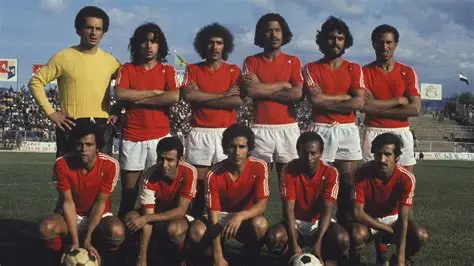
In an effort to set the historical record straight, the federation provided details about the match in question, which was played on March 14, 1976, in Addis Ababa, Ethiopia. According to the FGF, Guinea took an early lead through Souleymane Cherif, who scored in the 33rd minute. Morocco later equalized when Ahmed Makrouh, commonly known as “Baba,” found the net in the 86th minute. The match ended in a 1-1 draw.
Crucially, the FGF emphasized that understanding the tournament format at that time is essential to comprehending the final outcome. Unlike modern AFCON tournaments, which conclude with a traditional final match, the 1976 edition employed a final group stage format to determine the champion.
“In accordance with the regulations in force at the time, the competition did not include a classic final,” the federation explained. “The qualified teams played a final group, and the ranking directly determined the winner.”
Under this format, Morocco accumulated enough points to finish at the top of the final group standings and were officially crowned African champions, with Guinea finishing as runners-up. The clarification effectively dismisses both aspects of the rumor: that there was a Moroccan walk-off during the match, and that Guinea is currently pursuing any legal challenge to the result.
The emergence of these rumors comes at a time of heightened interest in African football governance and historical decisions. The continental game has seen increased scrutiny in recent years, with social media often amplifying unverified claims about past tournaments and controversies.
Football historian Ahmed Koné, who specializes in West African football, told reporters that such historical revisionism is not uncommon. “Every few years, we see claims about old tournaments resurface, often with political undertones or reflecting current rivalries. The 1976 AFCON has been subject to several myths over the decades,” Koné explained.
The FGF concluded its statement with a broader message about the importance of factual reporting in sports journalism. “The federation reaffirms its commitment to respecting historical facts and sporting regulations,” it noted, adding that it remains dedicated to “fair play, mutual respect and the unity of African football.”
This clarification from Guinea comes as the continent prepares for future football competitions, including qualification matches for the next AFCON tournament. Relations between football federations across Africa remain crucial for the sport’s development, with historical accuracy an important component of maintaining those relationships.
Sports analysts suggest that the swift response from the FGF demonstrates an increasing awareness among African football authorities about the need to address misinformation quickly before it gains traction in the digital age.
Fact Checker
Verify the accuracy of this article using The Disinformation Commission analysis and real-time sources.

10 Comments
The Guinea FA’s response is commendable. Addressing unfounded rumors and providing the accurate historical details is crucial for maintaining the credibility of past sporting events. Their statement seems thoughtful and aimed at setting the record straight.
Absolutely. Upholding the truth and not allowing misinformation to take hold is the responsible approach here. The federation’s transparency on this matter is appreciated.
This seems like a straightforward case of historical record-setting straight. Good to see the Guinean FA taking the time to refute the rumors and provide the accurate details. Transparency and factual reporting are important, especially when it comes to major sporting events like this.
Absolutely. Responsible reporting and respecting the historical record are critical. Glad the federation acted quickly to address the misinformation.
This seems like a straightforward case of the Guinea FA setting the record straight. Addressing misinformation and providing the facts is the right thing to do. Kudos to them for taking this matter seriously.
I agree. It’s important for sports organizations to be proactive in correcting false narratives and upholding the integrity of past competitions. The federation’s statement comes across as measured and appropriate.
The Guinea FA’s response is commendable. Clearing up false claims and maintaining the integrity of past sporting events is crucial. It’s encouraging to see them take this matter seriously and provide the facts.
Agreed. Upholding the truth and not allowing misinformation to spread is the right approach here. The federation’s statement seems thorough and appropriate.
It’s good to see the Guinea FA taking a firm stance against the rumored claims about the 1976 AFCON match. Providing the accurate details and refuting the false reports is important for preserving the historical record.
Exactly. Maintaining transparency and accountability around past sporting events is crucial. The federation’s response appears to be a responsible and timely action.