


Listen to the article
University Faces Backlash After False Claims About Robotic Dog Development
Galgotias University issued a formal apology on Wednesday after drawing international criticism for falsely claiming to have developed a robotic dog that was actually manufactured by a Chinese startup and purchased online.
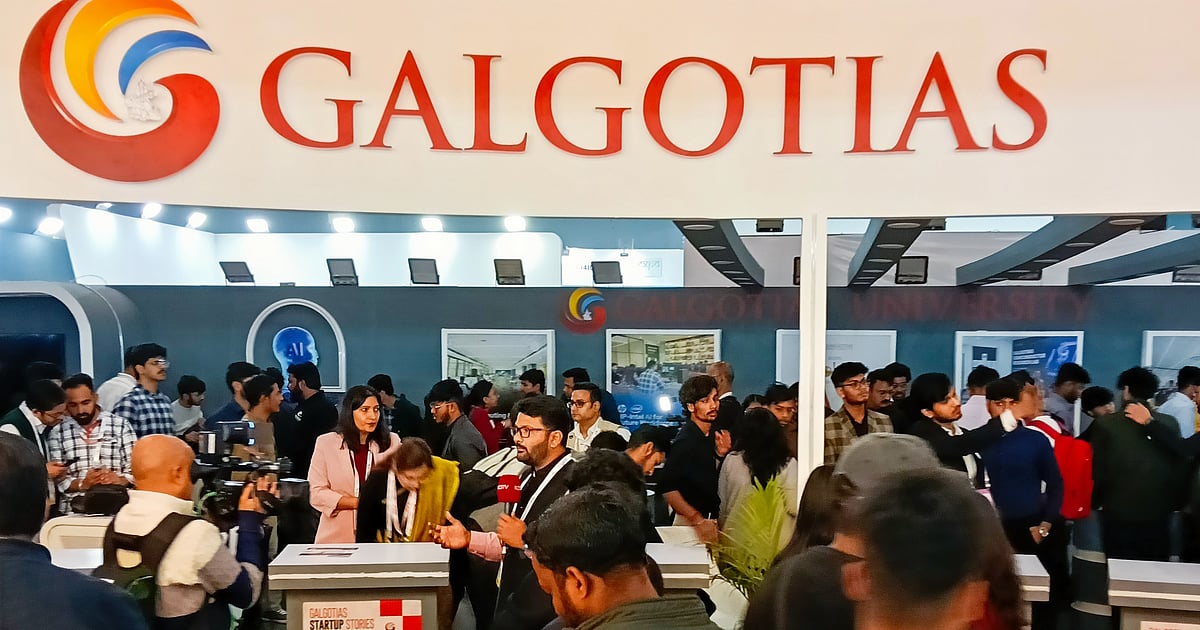
The controversy escalated when organizers of the AI Impact Summit in New Delhi ordered the private university to vacate its allocated hall at Bharat Mandapam, where the prestigious technology event is taking place. When university representatives reportedly denied receiving eviction instructions, organizers responded by cutting electrical power to the university’s pavilion.
The incident has raised serious questions about academic integrity and the verification of technological claims at public exhibitions. According to sources familiar with the matter, the robotic dog in question bears the patent and design signatures of a Chinese technology company, contradicting the university’s initial presentation of the device as its own innovation.
Throughout Wednesday, university officials attempted to manage the growing scandal by suggesting media misrepresentation rather than acknowledging the misleading claims. Professor Neha Singh, who had been at the center of the controversy, offered a cryptic explanation during a media interaction, stating, “My 6 can be your 9,” implying that her statements had been misinterpreted by journalists.
This defense contradicts Singh’s earlier televised statements on DD News, where she explicitly claimed the robotic dog was developed at the university’s center of excellence. When confronted with this inconsistency, Singh suggested that she might not have been properly understood. “Listening is an art,” she told an interviewer, while simultaneously admitting she may have expressed herself poorly – something she described as “rare” in what observers noted was a remarkably self-assured tone given the circumstances.
The incident occurs against the backdrop of India’s growing ambitions in the artificial intelligence and robotics sectors. Educational institutions across the country have been eager to demonstrate technological prowess, particularly as the government pushes for greater innovation and self-reliance in advanced technologies.
Technology experts have pointed out that robotic dogs have become increasingly available in commercial markets, with various models produced by companies in China, the United States, and elsewhere. These devices typically incorporate AI capabilities, sensors, and mobility systems that allow them to navigate environments and perform programmed tasks.
The controversy highlights growing concerns about academic misconduct and misrepresentation in technology demonstrations. Similar incidents have occurred internationally, where institutions or individuals have presented purchased technology as indigenous developments.
The AI Impact Summit, which attracts industry leaders, researchers, and government officials, aims to showcase genuine advancements in artificial intelligence and its applications across various sectors. Summit organizers’ swift action against the university underscores the importance placed on authenticity and transparency at such high-profile events.
This incident may prompt increased scrutiny of exhibitor claims at future technology demonstrations and renewed calls for verification protocols to prevent similar misrepresentations. It also raises questions about the pressure institutions may feel to demonstrate cutting-edge research capabilities in a competitive academic environment.
As of Wednesday evening, Galgotias University had not issued a detailed statement explaining how the misrepresentation occurred or what measures would be taken to prevent similar incidents in the future. The university’s reputation in technology education may face significant challenges as it works to restore credibility following this public relations disaster.
Fact Checker
Verify the accuracy of this article using The Disinformation Commission analysis and real-time sources.

5 Comments
This is a disappointing situation. Academic institutions need to be transparent and accountable when making claims, especially at public events. Falsely presenting purchased technology as one’s own innovation is a serious breach of integrity.
The decision by the AI Impact Summit organizers to evict the university’s pavilion was a strong statement. Misrepresenting technological capabilities at a high-profile event like this should have serious consequences to deter similar incidents in the future.
This episode highlights the importance of scrutinizing claims made by universities and other organizations, especially around emerging technologies. Rigorous fact-checking is crucial to maintain public trust and prevent the spread of misinformation.
It’s concerning to see a university make exaggerated claims about their technological capabilities. Proper verification and attribution are essential, especially for emerging technologies like robotics. This incident raises worrying questions about the institution’s research practices.
The university’s apology seems more like an attempt to save face than a sincere acknowledgment of wrongdoing. If the robotic dog was indeed purchased and not developed in-house, they should take full responsibility instead of blaming media misrepresentation.