


Listen to the article
Former Michigan Coach’s Attorney Claims False Statements Led to His Arrest
The attorney for former University of Michigan football coach Sherrone Moore claims her client was “villainized” by false statements that led to his arrest following his termination from the university last month.
In a motion filed early Thursday morning, Detroit-based attorney Ellen Michaels alleged that Heidi Sharp, the employment attorney representing a university staffer with whom Moore had a relationship, made misleading statements to police that resulted in criminal charges against the former coach.
Michaels contends there is no history of domestic violence between Moore and the staffer, and that allegations of stalking amounted to a “single, work-related communication.” The motion further alleges that Sharp “characterized a mental health crisis involving self-harm as an attack.”
The legal dispute stems from events following Moore’s December 10 firing. The 39-year-old coach was terminated after university officials found evidence of what they deemed an inappropriate relationship with a staff member, violating university policy. This abruptly ended Moore’s two-year tenure as head coach of the prestigious football program.
According to court documents, the incident that led to Moore’s arrest occurred when he allegedly attempted to confront the staffer at her apartment as she was trying to leave after making a report to the university. A transcript from a warrant hearing before Magistrate Odetalla M. Odetalla indicates Sharp called emergency services after being contacted by her client.
In her legal filings, Michaels claims Sharp’s statements created a “false narrative” designed to “maximize the chances of obtaining a large settlement from the deep pockets of the University of Michigan.” Michaels also criticized Sharp for contacting university legal counsel before emergency services after her client reached out.
“When Sharp’s litigation narrative is stripped away, Michigan law compels the conclusion that probable cause did not exist for any charge,” Michaels wrote in the supporting brief filed January 22.
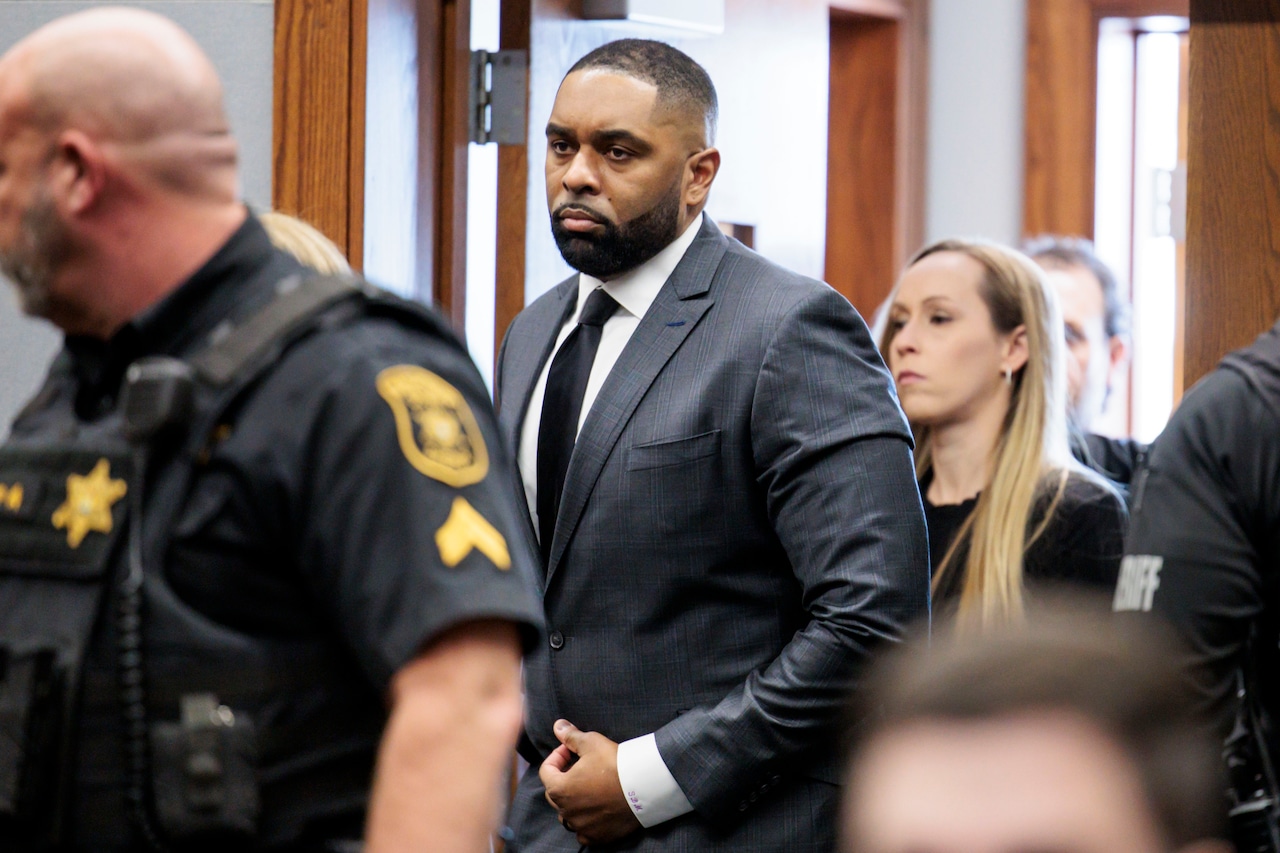
Moore appeared in court Thursday for his second hearing, accompanied by his wife Kelli Moore. Judge J. Cedric Simpson of the 14A-1 District Court scheduled a motion hearing for February 17 to determine if an evidentiary hearing can proceed in the case. Prosecutors must respond to Michaels’ motion by February 2.
Michaels has requested a Franks hearing, a legal procedure named after the 1978 case Franks v. Delaware, to challenge the validity of the search warrant. She has also asked for Moore’s arrest warrant to be quashed.
The former coach remains free on a $25,000 bond and is scheduled for another probable cause conference in March.
The case has drawn significant attention throughout Michigan and the college football world, coming after Moore had led the Wolverines through a successful period. The university has maintained that Moore’s conduct represented a “breach of trust,” as stated by the University of Michigan president.
Sharp did not respond to requests for comment regarding the allegations made in Michaels’ motion.
The legal battle unfolds against the backdrop of significant upheaval in Michigan’s storied football program, which has seen multiple coaching changes in recent years. Moore’s termination and subsequent legal issues mark yet another challenging chapter for a program that has otherwise enjoyed considerable on-field success in recent seasons.
As the case proceeds through the legal system, both sides appear prepared for what could be a contentious legal battle involving one of college football’s most prominent programs.
Fact Checker
Verify the accuracy of this article using The Disinformation Commission analysis and real-time sources.

10 Comments
Allegations of misconduct in the sports world are always troubling. I’ll be interested to see how this case unfolds and whether the coach’s attorney can substantiate the claims of an unfair portrayal.
Absolutely. There are usually multiple sides to these stories, and it’s important not to rush to conclusions before all the facts are known.
This appears to be a sensitive and complex personnel matter. I hope the university and authorities handle it with care and ensure a thorough, fair, and objective investigation.
Agreed. These types of cases can be emotionally charged, so it’s crucial that the process remains impartial and focused on the facts.
This is a complex situation with conflicting accounts. I hope the facts come to light and justice is served, regardless of the parties involved. A fair process is crucial.
Agreed. The public narrative can often be misleading, so it’s important to withhold judgment until all the evidence is presented.
The attorney’s claims of a false narrative are concerning. I’ll be following this case closely to see if the evidence supports the coach’s side of the story.
It’s always important to consider multiple perspectives in these situations. I hope the truth comes to light, whatever it may be.
This appears to be a complicated case with conflicting accounts. I’m curious to see how the legal proceedings unfold and whether the coach’s attorney can substantiate the claims of an unfair portrayal.
Absolutely. These types of high-profile cases often generate a lot of media attention, so it’s important to wait for the full facts to emerge before drawing any conclusions.