


Listen to the article
Canadian Food Inspection Agency Fines Grocers for “Maple Washing” as Buy-Canadian Movement Faces Growing Pains
The Canadian Food Inspection Agency (CFIA) has imposed $47,000 in fines on five businesses for misleading country-of-origin claims, sparking concern among food manufacturers that such enforcement might inadvertently dampen retailers’ enthusiasm for promoting Canadian products.
Since last spring, the agency has been cracking down on what some call “maple washing” – the practice of overstating a product’s Canadian origins. In January, two $10,000 penalties were levied against stores owned by grocery giant Loblaw Cos. Ltd. The company has acknowledged the findings, with spokesperson Scott Bonikowsky stating they are “sorry for the error and any confusion it may have caused.”
The CFIA is also investigating labelling and advertising overseen by Sobeys head office, though Sobeys spokesperson Karen White-Boswell declined to comment on the matter.
These investigations come in response to growing consumer frustration with potentially false claims capitalizing on the buy-Canadian movement, which gained significant momentum in early 2025 following U.S. threats of annexation and tariffs. The movement strengthened after former U.S. President Donald Trump implemented punishing import fees on Canada and other trading partners.
Major retailers quickly responded to consumer demand by prominently featuring Canadian products with maple leaf icons and dedicated display areas. This shift created substantial opportunities for domestic manufacturers, but the recent penalties have raised concerns about unintended consequences.
“I think it certainly does a disservice when products end up mislabelled at the grocery store,” said Kristina Farrell, executive officer of Food and Beverage Canada. “But what we don’t want to do is encourage mistrust in our food system or what consumers are going to buy in stores.”
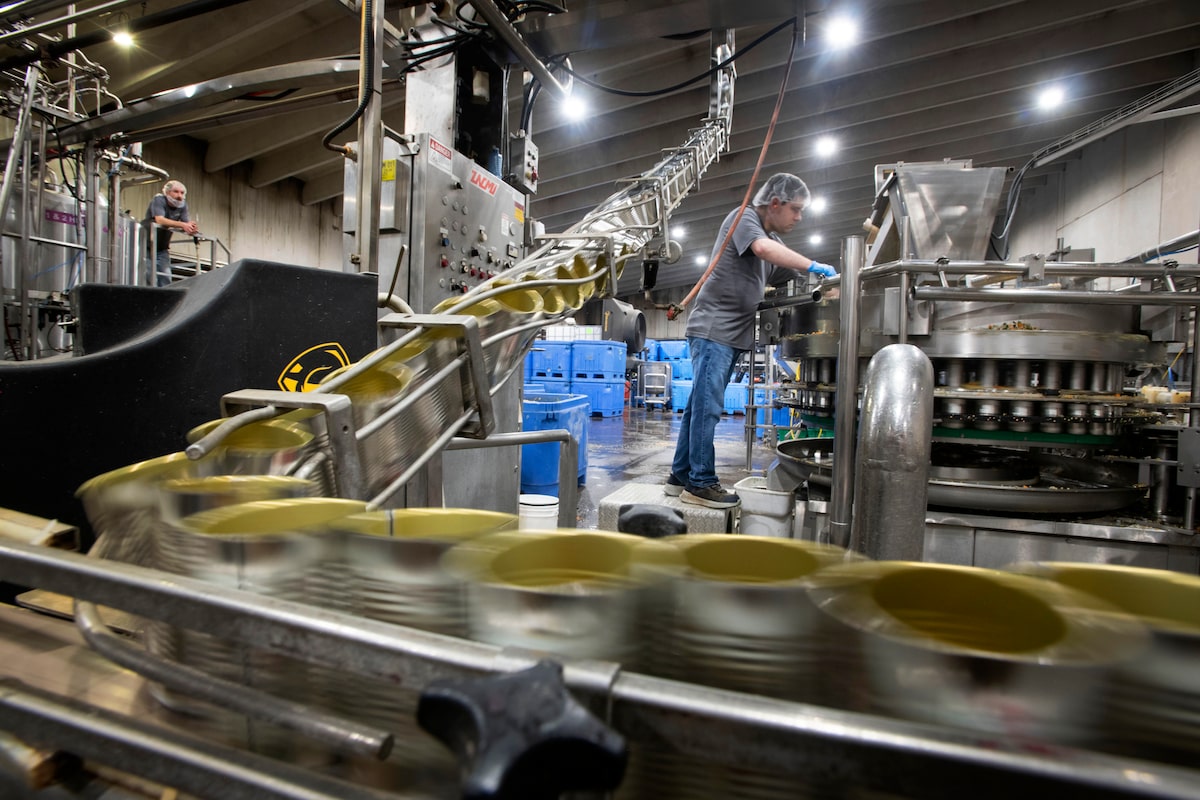
The buy-Canadian movement has been transformative for companies like Sprague Foods. Based in Belleville, Ontario, the century-old family business had been struggling to compete with large-scale global operations for contracts to produce store-brand canned beans. Six years ago, they pivoted to launching their own soup and chili brand, sourcing beans from Saskatchewan and vegetables from Quebec.
“For us, it was really a vehicle of discovery,” said Keenan Sprague, who runs the company alongside his family. “Before this, we were truly living in a globalized system where you were almost indifferent to where it came from.”
The company secured coveted shelf space in Metro, Sobeys, and Loblaw stores – something notoriously difficult for smaller brands – and saw sales boom as a result of the buy-Canadian trend.
Similar success stories played out across the Canadian food manufacturing sector, with processors increasingly sourcing from domestic growers as retailers committed to promoting Canadian products.
However, consumer frustration grew regarding misleading origin claims. In the first quarter of 2025, the CFIA reported an eight-fold spike in complaints about false origin labelling. Throughout 2025, the agency identified 75 instances of non-compliance resulting from consumer complaints about country-of-origin claims.
Current regulations are quite strict: a “product of Canada” designation requires at least 98% Canadian content, while “made in Canada” can be used if the product underwent substantial transformation in Canada, even with imported ingredients.
Loblaw stated it is taking measures to prevent future labelling issues. “We are committed to meeting regulatory requirements and making sure customers can trust the information they see in our stores,” Bonikowsky wrote.
Kim Furlong, president and CEO of the Retail Council of Canada, emphasized the complexity of tracking supply chains across thousands of products. “Retailers understand the trust that’s associated with making those claims, and they’re working toward making sure that what they’re saying is accurate,” she said. “What we’ve seen are isolated incidents; it’s not rampant.”
Some observers, like product regulation lawyer Wendy Hutton, believe the current maximum fine of $25,000 for serious violations is insufficient to truly deter false advertising by major grocers. To a corporation of Loblaw’s size, she compared such penalties to a “10-cent speeding ticket.”
Others worry that even modest penalties might discourage retailers from promoting Canadian products altogether. “I just hope they continue to put emphasis on doing it and getting it right – as opposed to the retailer saying, ‘Well, it’s not worth it,'” said Peter Chapman, a former Loblaw executive and founder of consulting firm SKUFood.
While the Bank of Canada reports that buy-Canadian sentiment has waned slightly since last year, a majority of consumers still report spending more on Canadian goods and less on American products.
To address current limitations, Food and Beverage Canada is recommending that labelling requirements be adjusted to allow a “product of Canada” designation for food containing 85% domestic ingredients, down from the current 98% threshold.
“Even if some ingredients are imported, the value is still created in Canada and still being processed by Canadian manufacturers, and by people employed here in Canada,” Farrell explained.
Fact Checker
Verify the accuracy of this article using The Disinformation Commission analysis and real-time sources.

8 Comments
This is a tricky balancing act for the authorities. On one hand, they need to protect consumers from deceptive marketing. But on the other, overly zealous enforcement could backfire and discourage legitimate efforts to promote domestic products. The key is finding the right middle ground that maintains trust without stifling the buy-Canadian movement.
Absolutely. It’s a delicate situation that requires nuance and a pragmatic approach from regulators. Striking the right balance will be crucial for the long-term success of the ‘Made in Canada’ branding.
Maple washing is a crafty way to exploit growing consumer demand for local products. While I understand the food industry’s hesitation around stricter rules, robust policing of false claims is ultimately better for building long-term trust in the ‘Made in Canada’ brand.
Exactly. Consumers deserve transparency, and companies should be held accountable for deceptive marketing, even if it creates some short-term disruption. The integrity of the ‘Made in Canada’ label is important to protect.
This is an interesting case of companies misleading consumers about the origin of their products. While promoting local goods is laudable, false claims undermine consumer trust and the integrity of the ‘Made in Canada’ label. It’s good to see the CFIA taking enforcement action, even if it may have unintended consequences.
I agree. Misleading marketing is a concern, but the authorities need to strike a careful balance between enforcement and not discouraging genuine efforts to support domestic production.
It’s good to see the CFIA taking action against false ‘Made in Canada’ claims. Consumers deserve accurate information to make informed purchasing decisions. While the fines may cause some short-term headaches, upholding the integrity of the ‘Made in Canada’ brand is crucial for the long-term success of the buy-local initiative.
This crackdown on mislabeling highlights the growing pains of the buy-Canadian movement. While the inspections may deter some investment, they’re necessary to maintain the credibility of country-of-origin claims. Manufacturers need to ensure their marketing is fully honest and transparent.