


Listen to the article
The Niger Uranium Claim: How False Intelligence Fueled the Iraq War
In the anxious months before the Iraq invasion, intelligence about Saddam Hussein’s alleged weapons programs circulated through Western capitals with unusual urgency. Among the most alarming claims was that Iraq was seeking uranium from Africa—a critical component for nuclear weapons development that suggested the regime was actively pursuing atomic capabilities.
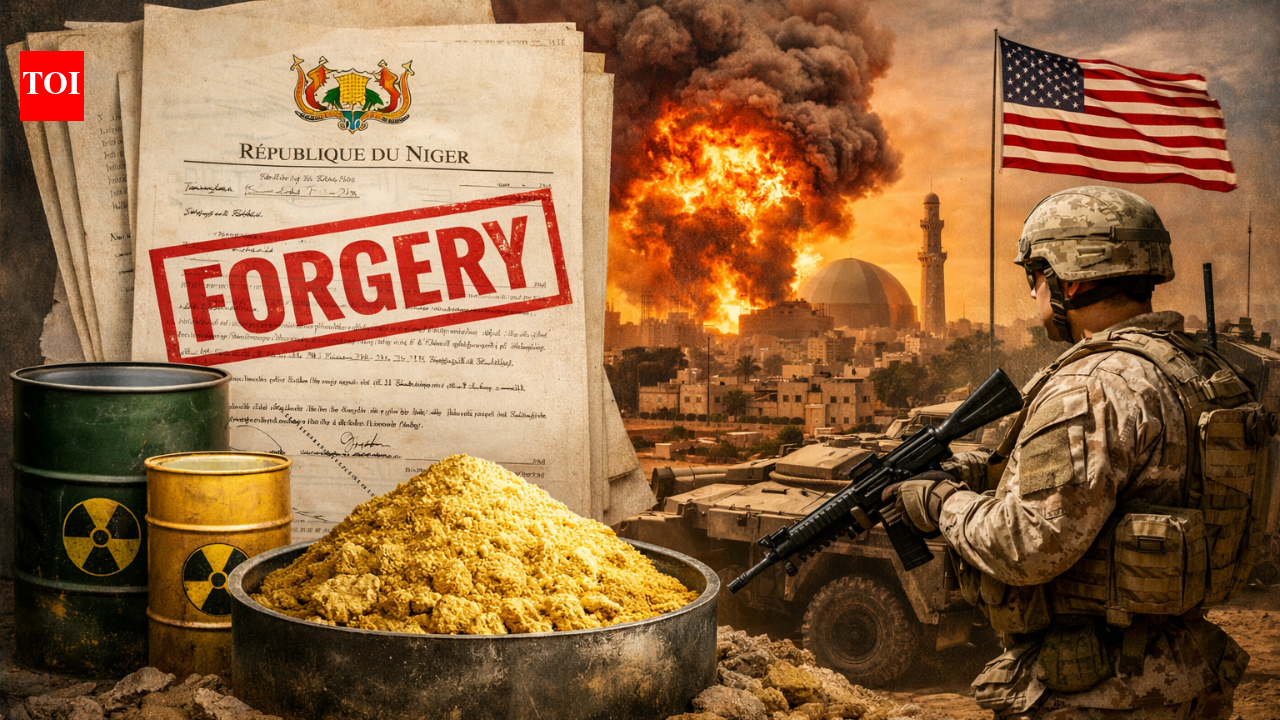
This allegation, which would later feature prominently in President George W. Bush’s January 2003 State of the Union address, relied on a small set of documents purporting to show a uranium deal between Iraq and Niger. These documents would eventually be exposed as forgeries, but not before they helped propel the United States into a war costing an estimated $1.7 trillion and thousands of lives.
The saga began in 2002 when Italian military intelligence (SISMI) circulated documents suggesting Niger had agreed to sell 500 tons of uranium ore, known as yellowcake, to Iraq. The claim quickly gained traction. By September 2002, a British government report stated there was intelligence that “Iraq has sought significant quantities of uranium from Africa.”
Senior U.S. officials, including National Security Adviser Condoleezza Rice and Defense Secretary Donald Rumsfeld, publicly repeated the allegation. It culminated in President Bush’s now-infamous “sixteen words” during his January 28, 2003 State of the Union: “The British government has learned that Saddam Hussein recently sought significant quantities of uranium from Africa.”
Behind the scenes, however, the intelligence community harbored significant doubts. The State Department’s intelligence branch had labeled the documents “dubious.” In a 2002 National Intelligence Estimate on Iraq’s weapons programs, the State Department’s Bureau of Intelligence and Research included a footnote calling such claims “highly dubious.”
Former ambassador Joseph Wilson, dispatched by the CIA to investigate the allegations in February 2002, interviewed Niger officials and concluded the story was “bogus and unrealistic.” Wilson noted that Niger’s uranium industry was too tightly controlled by international bodies to permit such a secret transaction. Similar conclusions were reached by U.S. General Carlton Fulford and Ambassador Barbro Owens-Kirkpatrick after their own visits to Niger.
Even more damning, CIA Director George Tenet had successfully advocated removing a similar uranium reference from an earlier Bush speech in October 2002. Yet somehow, the claim reappeared in the State of the Union, albeit attributed solely to British intelligence rather than presented as a U.S. assessment.
By early March 2003, International Atomic Energy Agency (IAEA) Director-General Mohamed ElBaradei reported to the United Nations that the documents were “not authentic” and the uranium allegations were “unfounded.” As ElBaradei testified: “Based on thorough analysis, the IAEA has concluded, with the concurrence of outside experts, that these documents… are in fact not authentic. We have therefore concluded that these specific allegations are unfounded.”
Despite mounting evidence that the claim was false, the United States, joined by Britain and other allies, invaded Iraq on March 20, 2003. The war’s stated objective was to eliminate Saddam’s alleged nuclear, biological, and chemical arsenal.
In the months that followed, no stockpiles of nuclear material or actual weapons of mass destruction were found. Iraq did have stores of yellowcake, but these dated from the 1980s and had long been sealed under IAEA supervision. By July 2003, the White House conceded it had been wrong to include the Niger reference in the presidential address, with Tenet acknowledging: “These 16 words should never have been included in the text written for the President… This was a mistake.”
The human and financial costs of the conflict proved staggering. Approximately 4,500 American service members died in Iraq, with 32,000 wounded. British forces lost 179 soldiers. Iraqi civilian casualties are estimated between 150,000 and 200,000 according to the Iraq Body Count project.
The direct financial burden on U.S. taxpayers reached an estimated $1.7 trillion, with an additional $500 billion for veterans’ care. When future obligations like lifetime health and disability benefits are included, some analysts place the total cost at over $6 trillion in present value.
Beyond these tangible costs, the Iraq war destabilized the region, sparked a prolonged insurgency and sectarian conflict, and required an extended U.S. military presence in the Middle East—all based on intelligence that proved fundamentally flawed.
The Niger uranium affair exposed not just a single intelligence failure, but a systematic breakdown. Dubious documents were circulated as fact, professional warnings were ignored, and uncertainty transformed into political certainty. The safeguards meant to separate intelligence analysis from political advocacy collapsed under the pressure of an administration intent on war.
Two decades later, the episode serves as a sobering reminder: intelligence is inherently imperfect, and policy built upon it must be approached with caution, transparency, and honesty about its limitations.
Fact Checker
Verify the accuracy of this article using The Disinformation Commission analysis and real-time sources.

8 Comments
This is a sobering reminder of how flimsy intelligence can have catastrophic consequences. The Iraq War was a tragic case of false claims fueling an unnecessary conflict. Rigorous verification of intelligence is crucial to avoid such disastrous mistakes in the future.
Absolutely. The human and financial toll of the Iraq War was immense, all based on faulty information. We must learn from this experience to be more skeptical and thorough when evaluating intelligence claims, no matter how urgent they may seem.
This is a sobering reminder of the consequences of acting on flawed intelligence. The Iraq War was a tragic case of false claims leading to an unnecessary and costly conflict. Rigorous verification and transparency in the intelligence community are essential to prevent such disastrous mistakes in the future.
The revelations around the false Niger uranium documents are deeply troubling. This case demonstrates the urgent need for greater transparency, accountability, and fact-checking within the intelligence community to prevent such grave errors from occurring again.
Absolutely. The human and financial toll of the Iraq War, all stemming from these forged documents, is a devastating lesson. We must learn from this experience and strengthen our processes to ensure reliable, evidence-based intelligence is the foundation for major policy decisions.
The role of forged documents in instigating the Iraq War is deeply concerning. It highlights the need for robust fact-checking and transparency in the intelligence community to prevent such dangerous misinformation from driving major policy decisions.
Agreed. This cautionary tale shows how easily false narratives can snowball and lead to catastrophic outcomes. Strengthening verification processes and fact-based decision-making should be a top priority to avoid repeating these kinds of tragedies.
It’s alarming to see how a small set of fabricated documents could have such a massive geopolitical impact. This underscores the critical importance of rigorous intelligence analysis and source verification, especially when the stakes are so high.