


Listen to the article
As the Milano-Cortina Winter Olympics enters its second week, a troubling trend has emerged alongside the celebration of athletic achievement: a surge of AI-generated misinformation circulating across social media platforms.
Digital manipulation and false claims are creating viral narratives that threaten to undermine the integrity of Olympic coverage and inflame geopolitical tensions, particularly regarding Ukrainian and Russian participation in the Games.
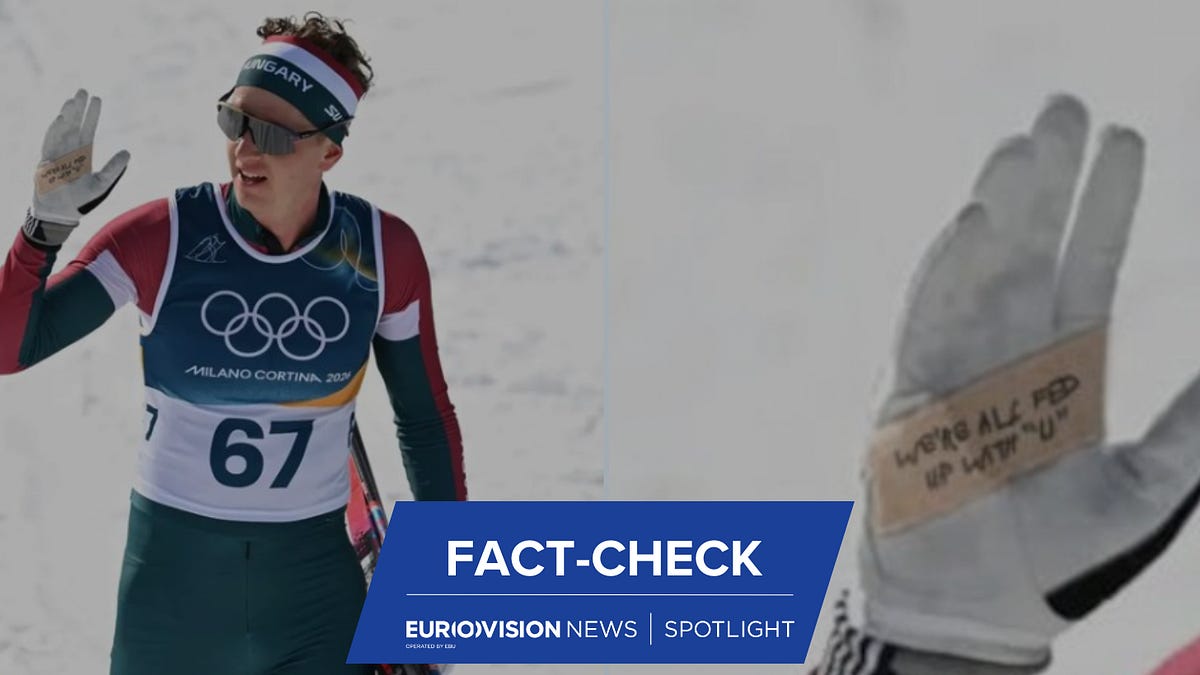
One widely shared example features Hungarian cross-country skier Adam Konya, depicted in manipulated images showing him with a glove bearing an anti-Ukrainian message reading “WE’RE ALL FED UP WITH ‘U’.” The posts falsely claimed Konya was protesting in solidarity with a skeleton athlete Vladyslav Heraskevych, who was allegedly disqualified after wearing a helmet honoring deceased Ukrainian compatriots.
Digital forensic analysis revealed these images were manipulated. SynthID detection identified telltale signs of digital alteration, including unnaturally sharp text on the glove and digitally overlaid tape that didn’t conform to the physical properties of the glove. A reverse image search confirmed the original, unaltered photo had been shared on Team Hungary’s official Facebook page on February 8, showing Konya waving with no sticker present.
In another concerning incident, a doctored video featuring CBC News chief correspondent Adrienne Arsenault went viral, spreading false claims about Ukrainian athletes being isolated at the Olympic village. The manipulated clip, which garnered over 62,000 views, claimed Ukrainian athletes were deliberately segregated from other participants due to alleged misconduct at the previous Paris Olympics.
CBC’s fact-checking team debunked this claim, confirming that 16 seconds into the video, the original footage had been replaced with AI-generated content. Comparison with the authentic clip posted on CBC News’ official TikTok account on February 4 confirmed the alteration. No credible reports exist suggesting Ukrainian athletes were accused of misbehavior during the 2024 Paris Games.
Geopolitical tensions surrounding Russian participation have also become fodder for AI-generated content. An Italian social media user posted an image allegedly showing a spectator displaying a large Russian flag in the stands with the caption “Russia has finally arrived at the Olympics in Italy.” SynthID tools confirmed this image was created or manipulated using Google AI software.
This content directly contradicts official Olympic policy, as Russian and Belarusian athletes are only permitted to compete as Individual Neutral Athletes (AIN) without national flags, symbols or uniforms. The International Olympic Committee has explicitly banned the Russian flag at the 2026 Olympic Games.
The spread of misinformation has even extended to identity fabrication. Social media users shared images of Swedish skier Frida Karlsson, falsely identifying her as “Swedish Princess Frida” with accompanying fabricated anti-Trump statements and claims she advocated for Canada joining the European Union. One such post garnered over 77,000 views. The Swedish Royal Court has no record of a princess named Frida.
These incidents highlight the growing challenge of maintaining information integrity during high-profile international events in an era of increasingly sophisticated AI tools. With billions of eyes on the Winter Olympics, the spread of manipulated images and false narratives demonstrates how easily misinformation can infiltrate global discourse, particularly when leveraging existing geopolitical tensions.
As the Games continue, media organizations and viewers are increasingly having to apply critical analysis to Olympic content they encounter online, checking sources and looking for signs of artificial manipulation before sharing or believing what they see.
AI-generated misinformation represents a significant challenge to information integrity that extends well beyond sports, potentially undermining public trust in media coverage of major international events.
Fact Checker
Verify the accuracy of this article using The Disinformation Commission analysis and real-time sources.

8 Comments
It’s disheartening to see the spread of AI-generated misinformation around the Olympics. Manipulated images and false narratives can seriously undermine the integrity of the games and create unnecessary tensions. We should be focused on celebrating the athletes’ achievements, not fueling divisive propaganda.
Agreed. Digital forensics is crucial to exposing these AI-altered images and setting the record straight. Fact-checking and media literacy are key to combating the viral spread of misinformation.
The proliferation of AI-generated misinformation ahead of the 2026 Olympics is deeply concerning. Manipulated images and false narratives undermine the spirit of the games and the trust in the media coverage. Rigorous verification and fact-checking will be crucial to preserving the integrity of the event.
The use of AI to generate misleading images and narratives ahead of the Olympics is deeply troubling. While the technology has many positive applications, it’s clearly being misused to sow division and spread disinformation. We must remain vigilant and call out these tactics whenever they arise.
This is a concerning trend that could erode public trust in the Olympics coverage. Viral spread of fabricated content is a major challenge, especially as AI tools become more advanced. Rigorous verification and source-checking will be essential going forward.
Absolutely. The integrity of the games is paramount, and we can’t let malicious actors undermine that with manipulated media. Kudos to the forensic analysts for their work in exposing these false claims.
It’s appalling to see the Olympics, a symbol of international unity, being targeted by AI-powered disinformation campaigns. We need robust fact-checking and media literacy efforts to combat this threat to the integrity of the games.
Agreed. The organizers and media outlets covering the Olympics must be extremely diligent in verifying the authenticity of any content, especially anything involving contentious geopolitical issues. Transparency and accountability will be key.