


Listen to the article
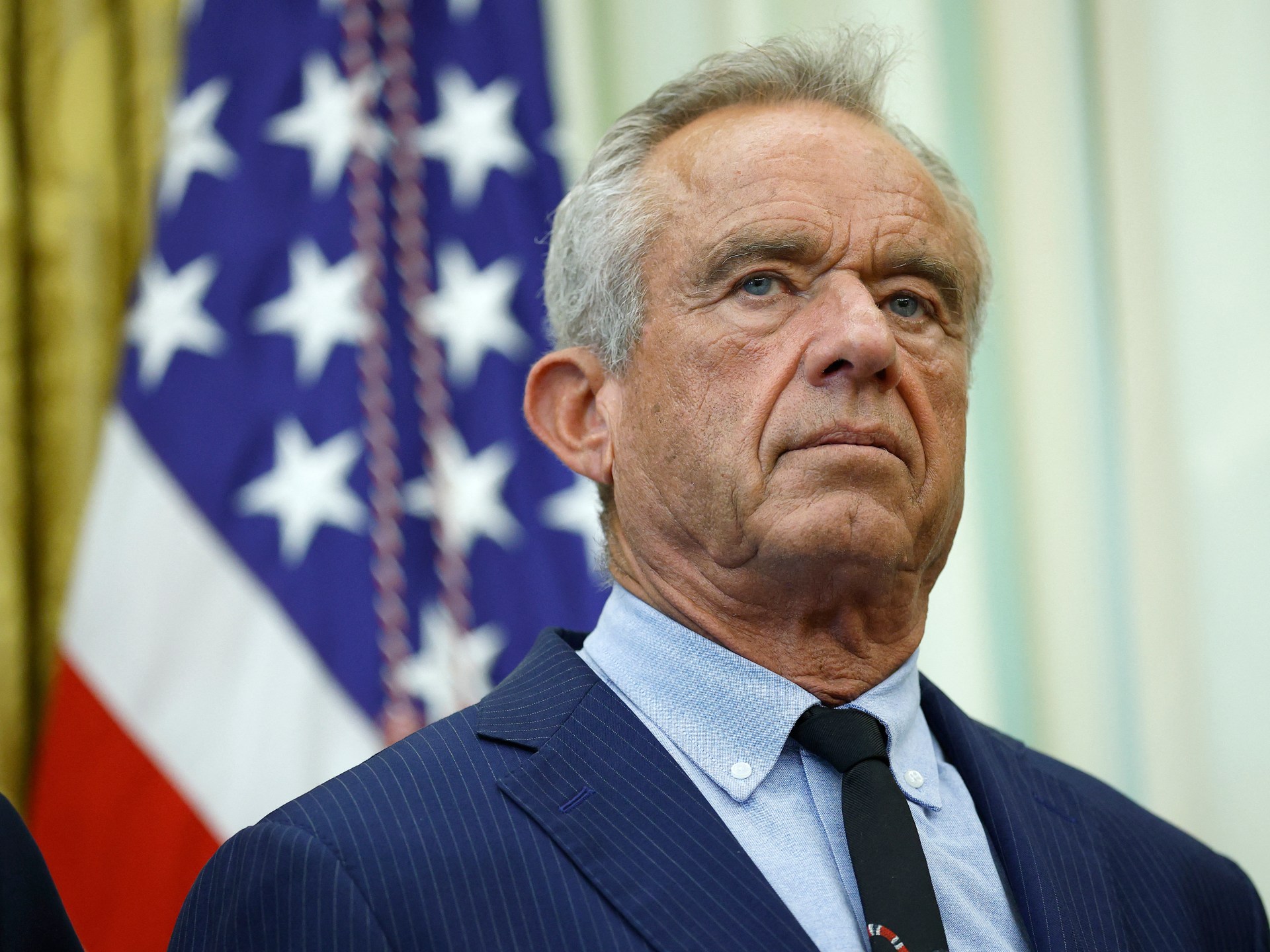
In a controversial statement on October 9, Health and Human Services Secretary Robert F. Kennedy Jr. claimed a possible connection between circumcision, Tylenol use, and increased autism rates. Kennedy asserted, “There’s two studies that show children who are circumcised early have double the rate of autism, and it’s highly likely because they’re given Tylenol.”
Medical experts have quickly disputed these claims, noting they aren’t supported by rigorous scientific evidence. Kennedy’s statement marks another instance where he has questioned the safety of acetaminophen, the active ingredient in Tylenol, particularly for pregnant women – a position he shares with President Trump.
Circumcision, the surgical removal of the penis foreskin, is typically performed on infants for religious or cultural reasons. The procedure remains common in the United States despite ongoing debates about its medical necessity.
The studies Kennedy referenced – one from 2013 and another from 2015 – have significant limitations and don’t establish the causal relationship he suggested. Neither study examined whether patients received acetaminophen, and both acknowledged substantial methodological constraints.
The 2013 paper, authored by UMass-Lowell epidemiologists, was described by its own authors as a “hypothesis generating exploratory analysis” – essentially a preliminary investigation not designed to reach definitive conclusions. It examined data from nine countries, comparing general circumcision rates with autism prevalence in males.
Helen Tager-Flusberg, professor emerita at Boston University and founder of the Coalition of Autism Scientists, criticized the study’s approach, stating, “You can’t really do a correlation with any level of legitimacy from a statistical point of view on such a small sample size.”
The 2015 Danish study examined whether circumcised boys were more likely to develop autism before age 10. While it found a 46 to 62 percent increased autism risk in circumcised boys, this finding must be contextually understood. In Denmark, circumcision is uncommon, practiced mainly in Jewish and Muslim communities. Of the 342,877 boys studied, only 3,347 (less than 1 percent) were circumcised, and just 57 had both circumcision and autism. The most dramatic finding – a 62 percent increased risk – was based on only 24 boys.
Contrary to Kennedy’s implications, decades of research have established acetaminophen’s safety profile for children when used as directed under medical supervision. The drug is not universally recommended following circumcisions, which are typically performed with local anesthetics. Some hospitals do suggest acetaminophen for post-procedure pain management as needed.
When questioned about his remarks, Kennedy pointed to the 2015 study and an unpublished paper from 2025 in a post on X (formerly Twitter). This unpublished work, produced by WPLab – a North Carolina company that actively promotes links between acetaminophen and autism – has not undergone peer review, the standard vetting process for scientific research.
The WPLab paper boldly claims “overwhelming evidence” connects acetaminophen exposure in infants to autism, a position that contradicts scientific consensus. The Atlantic recently reported that WPLab CEO William Parker, a retired Duke University associate professor, maintains frequent contact with Kennedy.
Kennedy’s claims about circumcision add to a growing list of controversial health statements he has made since his appointment as HHS Secretary. His positions on vaccines, pharmaceutical treatments, and other public health issues have repeatedly drawn criticism from the medical and scientific communities, who emphasize the importance of evidence-based approaches to health policy.
The scientific community continues to stress that correlation doesn’t equal causation, particularly in complex neurodevelopmental conditions like autism spectrum disorder where genetic factors play a significant role. Research into autism’s causes remains ongoing, with experts urging caution about drawing premature conclusions that might mislead the public or affect healthcare decisions.
Fact Checker
Verify the accuracy of this article using The Disinformation Commission analysis and real-time sources.

9 Comments
This is an important reminder to be wary of any claims, no matter the source, that aren’t solidly grounded in scientific consensus. I’m glad the medical community was quick to correct the record on this issue.
Concerning claims from Kennedy, but medical experts have quickly refuted the lack of scientific evidence to support a link between circumcision, Tylenol, and autism. More rigorous research is needed before making such bold assertions.
While I respect Kennedy’s advocacy, these claims seem to lack the rigorous scientific evidence required to make such bold assertions. I hope more nuanced, fact-based discussions can emerge around childhood health issues.
It’s disappointing to see public figures making such bold claims without strong scientific backing. Circumcision and childhood health are complex topics that require nuanced, evidence-based discussion, not sensational falsehoods.
Spreading misinformation, even inadvertently, can have serious public health consequences. I’m glad to see the experts intervening to provide the facts and context that were missing from Kennedy’s statements.
While I respect Kennedy’s advocacy work, making unsupported connections between common medical procedures and autism is irresponsible. I hope he and others will rely more on rigorous research going forward when discussing sensitive health issues.
This is another example of misinformation around medical issues. I’m glad the experts were able to quickly dispute these unfounded claims and point out the significant limitations in the studies cited. The public deserves accurate, evidence-based information.
Absolutely. Spreading unsubstantiated theories, especially about sensitive topics like childhood health, can be very harmful. I’m glad the facts are being set straight.
Carelessly linking common medical practices to autism is incredibly reckless. I hope Kennedy and others will be more responsible in their public statements about complex health topics going forward.