


Listen to the article
U.S. Health Secretary Kennedy’s Autism Comments Spark Controversy Among Experts and Advocates
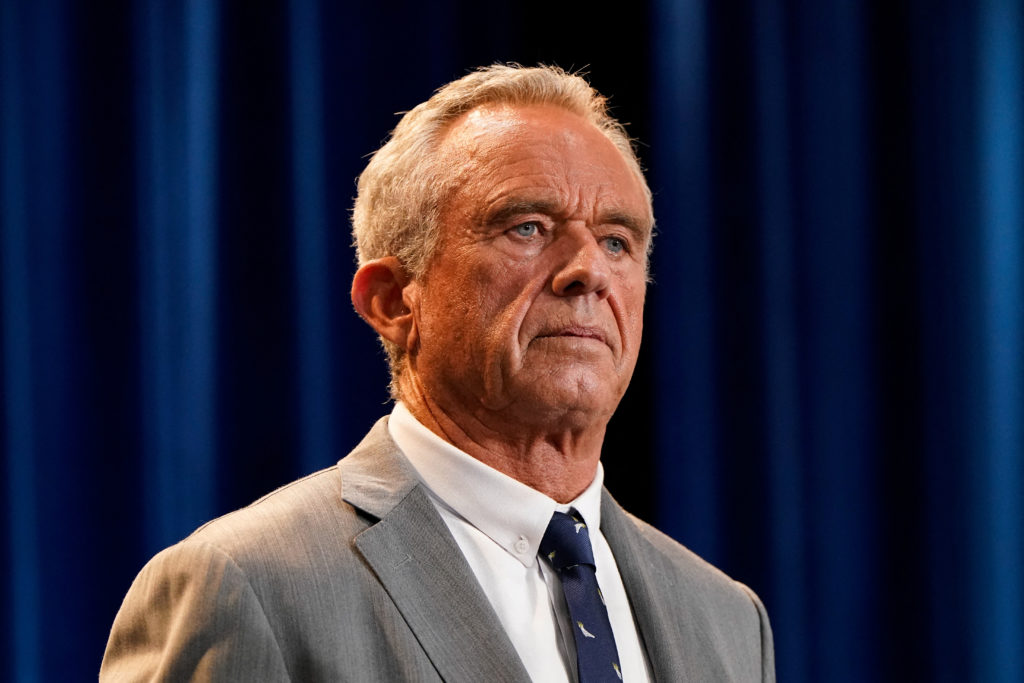
U.S. Health and Human Services Secretary Robert F. Kennedy Jr. has drawn criticism for controversial statements about autism during an April 16 press conference addressing new CDC data on autism prevalence.
Kennedy’s remarks came in response to a recent Centers for Disease Control and Prevention report showing autism rates have increased to 1 in 31 among 8-year-olds, continuing a trend of rising diagnoses over recent decades.
During the press conference, Kennedy described autism as something that “destroys families” and represents an “individual tragedy.” He claimed many autistic children were “fully functional” before they “regressed… into autism when they were 2 years old,” adding that these children “will never pay taxes, they’ll never hold a job, they’ll never play baseball, they’ll never write a poem, they’ll never go out on a date. Many of them will never use a toilet unassisted.”
Kennedy also asserted that “most cases now are severe,” stating that “25 percent of the kids who are diagnosed with autism are nonverbal, non-toilet-trained, and have other stereotypical features.”
Medical experts and autism advocates quickly challenged Kennedy’s characterization as inaccurate and harmful. David Mandell, a University of Pennsylvania psychiatry professor and director of the Penn Center for Mental Health, criticized Kennedy’s “fixed, myopic view” of autism and suggested he spend time with parents of autistic children and researchers who have studied the condition extensively.
When asked for clarification, HHS press secretary Vianca N. Rodriguez Feliciano stated that Kennedy “remains committed to working toward a society where people with autism have access to meaningful opportunities, appropriate supports, and the full respect and recognition they deserve.” According to The Washington Post, an HHS spokesperson claimed Kennedy “was referring to those that are severely affected by this chronic condition” and that “this was in no way a general characterization.”
Autism spectrum disorder represents a neurological difference that affects how individuals interact with the world around them. The Cleveland Clinic explains that people with autism “may excel more in certain areas and need more support in other areas compared to their neurotypical peers.”
Diagnostic criteria for autism have evolved significantly over time. John J. Pitney Jr., a Claremont McKenna College politics professor and author of “The Politics of Autism,” notes that in the 1950s and 1960s, many people with profound autism were likely misdiagnosed with “mental retardation” or schizophrenia, while others received no diagnosis at all.
In recent decades, diagnostic criteria have broadened to include “individuals with milder symptoms, stronger language skills, and higher IQs,” according to Christopher Banks, president and CEO of the Autism Society of America. This expanded definition means only a minority of people on the spectrum experience the severe limitations Kennedy described.
Research provides a more nuanced picture than Kennedy’s statements suggest. A 2023 federal report found that 26.7 percent of 8-year-olds with autism had “profound” autism, defined as being nonverbal, minimally verbal, or having an IQ below 50. However, other studies indicate lower percentages of severe cases.
A 2024 study by researchers at the University of Utah and Children’s Hospital of Philadelphia examined 1,368 U.S. children with autism and found that when parents were asked whether they would characterize their child’s autism as “severe,” only 10.1 percent said yes. Among those with “severe” autism, just 38 percent were classified as having a “severe” intellectual disability.
CDC data from 2020 showed that 42 percent of people with autism had an IQ in the average or higher range, with some studies suggesting this figure could be as high as 60 percent.
Zoe Gross, director of advocacy at the Autistic Self Advocacy Network and herself on the spectrum, cited a 2017 study finding that 61 percent of people on the spectrum were employed. She also pointed to examples contradicting Kennedy’s claims, including Major League Baseball players Tarik El-Abour and Jim Eisenreich, who were public about their autism diagnoses, and poet DJ Savarese, a nonspeaking but highly literate advocate.
Judith Ursitti, co-founder and president of the Profound Autism Alliance, acknowledged that people with profound autism “will require lifetime, round-the-clock care,” including her 21-year-old son. However, this represents only one segment of the diverse autism spectrum.
Eric M. Garcia, an autistic journalist and author of “We’re Not Broken: Changing the Autism Conversation,” described Kennedy’s remarks as “demoralizing,” adding that attempts to exclude certain autistic people from Kennedy’s characterization “doesn’t make it any better.”
As public understanding of autism continues to evolve, accurate representation of the spectrum’s diversity remains crucial for both policy development and social inclusion.
Fact Checker
Verify the accuracy of this article using The Disinformation Commission analysis and real-time sources.

5 Comments
These claims about autism seem highly exaggerated and out of touch with current research and understanding of the condition. Autism is a complex spectrum disorder with a wide range of symptoms and abilities. Generalizing all autistic individuals as ‘never paying taxes’ or ‘never using a toilet’ is extremely misleading.
I agree, these comments demonstrate a poor grasp of the diversity within the autism spectrum. Autism affects people in vastly different ways, and many autistic individuals are highly capable and contributing members of society.
It’s concerning to see a public health official make such inaccurate and stigmatizing statements about autism. This kind of rhetoric can be very harmful and further marginalize an already vulnerable population. I hope the Secretary receives proper education on the realities of autism spectrum disorder.
Absolutely. Statements like these reflect a profound lack of understanding. Autism is a complex neurological condition, not a ‘tragedy’ or ‘destruction.’ I hope this controversy leads to more informed, compassionate dialogue around autism.
The Secretary’s comments demonstrate a troubling level of misinformation and outdated stereotypes about autism. The autism spectrum encompasses a wide range of abilities and life experiences. Dismissing autistic individuals as ‘never’ contributing to society is both inaccurate and dehumanizing.