


Listen to the article
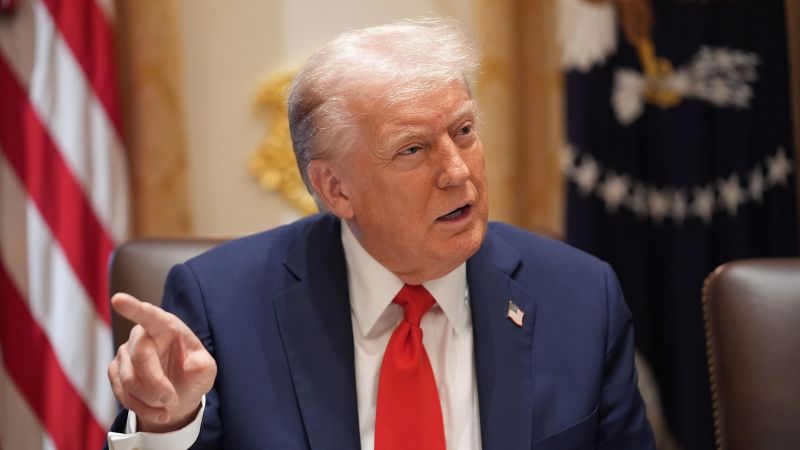
In a recent Cabinet meeting at the White House, President Donald Trump made a series of inaccurate claims, primarily focused on vaccines and public health issues, alongside several other policy misstatements.
The President’s vaccine-related assertions were particularly misleading. He claimed babies receive “82 vaccines in a shot,” a statement with no basis in reality. According to the Centers for Disease Control and Prevention’s recommended childhood vaccination schedule, American babies typically receive fewer than 20 different vaccines through roughly 20 to 30 shots by age 15 months.
Trump also dramatically exaggerated vaccine dosage sizes, comparing them to “twice the size of a glass of water.” In reality, standard vaccine doses are minuscule—typically 0.5 milliliters for vaccines like MMR (measles, mumps, and rubella), approximately one-tenth of a teaspoon.
The President made unfounded claims about the Amish community, suggesting they universally reject vaccines and medications and experience no autism. Braxton Mitchell, professor at the University of Maryland School of Medicine who has worked with Amish communities for over three decades, refuted these statements. While vaccination rates among the Amish are lower than the national average, many do vaccinate their children and use modern medications. Mitchell confirmed that autism does exist in Amish communities, though its prevalence hasn’t been systematically studied.
Trump incorrectly stated that “measles is already separate now” from the MMR combination vaccine. No standalone measles vaccine is currently available in the United States, though the acting CDC director has recently joined Trump in calling for pharmaceutical companies to develop separate vaccines.
Beyond healthcare topics, the President made several other demonstrably false claims. He asserted that each Venezuelan drug boat targeted by military strikes “kills 25,000 Americans”—a figure that experts call “absurd.” With approximately 82,000 total drug overdose deaths in the U.S. in 2024 according to federal data, Trump’s claim suggests that attacking just four boats prevented more than a year’s worth of overdose fatalities nationwide.
Trump also exaggerated his diplomatic achievements, claiming to have “settled seven wars” before the Gaza ceasefire. This count includes situations that were not actual wars during his presidency, such as a diplomatic dispute between Egypt and Ethiopia over a dam project. He also counted ongoing conflicts as resolved, including fighting in the Democratic Republic of Congo despite the leading rebel coalition not signing a peace agreement.
In discussing prescription drug prices, the President made mathematically impossible claims, stating his “Most Favored Nation” policy would reduce costs by “100%, 200, 300, 500% and even more.” As analysts have repeatedly pointed out, even reducing prices to zero would constitute only a 100% reduction.
The Cabinet meeting also featured Trump’s recurring false claim that the 2020 election was “rigged”—a statement repeatedly debunked by election officials, courts, and independent analyses. He also mischaracterized legislation he signed earlier this year, claiming it ensures “no tax on Social Security.” The bill actually created a temporary additional tax deduction for individuals 65 and older, not a complete elimination of taxes on Social Security benefits.
These inaccuracies follow a pattern of presidential statements that contradict established facts across multiple policy domains and public health issues.
Fact Checker
Verify the accuracy of this article using The Disinformation Commission analysis and real-time sources.

14 Comments
Interesting fact check on the President’s misleading vaccine claims. It’s important to have accurate, evidence-based information on public health issues like this. Vaccines are a complex topic, but the data clearly shows they are safe and effective at preventing serious diseases.
Agreed. Spreading misinformation about vaccines can be dangerous and undermine public trust in vital health measures. We should rely on authoritative medical sources, not unsubstantiated political rhetoric.
The President’s statements about vaccine doses and the Amish community seem very questionable. I’d be curious to see the full context and any credible sources he may have cited. Responsible leaders should strive for accuracy, not hyperbole, when addressing public health concerns.
Agreed. Public officials need to be more careful about making unsupported claims, especially on sensitive topics. Fact-checking and relying on expert medical advice is key to informing the public responsibly.
This report highlights the need for more rigorous fact-checking, especially around sensitive topics like public health. Leaders should be held accountable for making false or exaggerated claims, as that can sow confusion and undermine sound policymaking.
Absolutely. Transparent, evidence-based discussions are critical, particularly on issues that impact people’s lives and wellbeing. Distorting the facts for political gain is irresponsible and can have real consequences.
While I’m generally skeptical of the media’s coverage of this administration, the vaccine misinformation highlighted here is concerning. Regardless of political affiliation, we should want our leaders to provide truthful, science-based information on public health issues.
That’s a fair point. Healthy skepticism of the media is understandable, but verifiable facts should take precedence, especially when it comes to public health and safety. Responsible leadership requires prioritizing accuracy over political narratives.
This report raises important questions about the President’s understanding of vaccine science and his willingness to spread misinformation. As a leader, he has a duty to provide the public with reliable, evidence-based guidance on critical health matters.
Absolutely. Elected officials wield significant influence, so they must be especially careful to avoid making unsubstantiated claims, especially on issues that can impact public wellbeing. Fact-checking and consulting medical experts should be standard practice.
While I’m generally supportive of the President, I have to agree that his statements on vaccines seem highly problematic. Spreading misinformation about public health can have serious consequences, and leaders should be held accountable for the accuracy of their claims.
Well said. Responsible leadership means putting facts and public interests first, even when it may not align with one’s political leanings. Accurate, evidence-based communication on health issues should be a top priority for all elected officials.
This report underscores the importance of maintaining rigorous standards of truth and accuracy, especially when it comes to public health. While I may not always agree with the media’s coverage, in this case, the facts they’ve presented seem well-supported and concerning.
I agree. Fact-checking and relying on expert medical advice is crucial, regardless of one’s political affiliation. Spreading misinformation, even inadvertently, can have serious repercussions and erode public trust. Leaders must be held accountable for the truthfulness of their statements.