


Listen to the article
False Claims Circulating About FMD Vaccine Requirements, Industry Body Warns
Farmers are being warned against misinformation regarding foot-and-mouth disease (FMD) vaccine distribution after reports emerged of individuals and companies spreading false information about payment requirements and registration systems.
The FMD Industry Coordination Council has labeled these claims as “absolute nonsense” and urged farmers to exercise caution when receiving such messages, which continue to circulate via WhatsApp and other platforms despite previous warnings.
Dewald Olivier, CEO of Red Meat Industry Services (RMIS) and chair of the Industry Coordination Council, expressed serious concern about these fraudulent communications. “I want to state categorically that this borders on sabotage. It is dishonest and completely unacceptable that producers are being exploited in this way,” Olivier said.
The council clarified that there are two distinct vaccination scenarios currently in place. The first involves animals that have tested positive for FMD, which will be vaccinated by the state. In these cases, state veterinarians or approved private veterinarians will receive authorization to assist with vaccinations, though the exact implementation process is still being finalized.
“We are not yet certain how this will be implemented, whether the veterinarian will administer the vaccine or whether the farmer will be authorized to vaccinate their own animals,” explained Olivier.
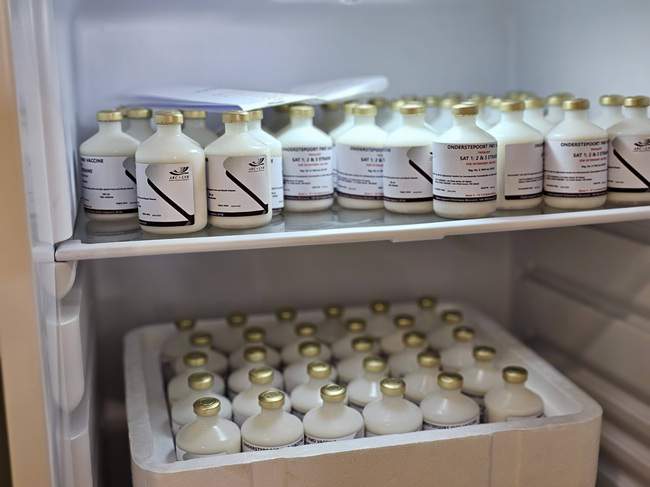
The second scenario applies to preventive vaccination for producers who want to protect their livestock before infection occurs. In these cases, vaccines will become available for purchase once South Africa secures sufficient volumes. This process will require farmers to buy vaccines through veterinarians, though the application system is still being finalized.
Industry sources confirm that traceability will be essential in preventive vaccination programs to ensure authorities remain informed about vaccine distribution. However, no legitimate system currently requires farmers to pay upfront or register on specific platforms to qualify for vaccines.
Of particular concern are reports that some unscrupulous market players are threatening farmers, claiming they will be ineligible for vaccines if not registered on certain systems. The Industry Coordination Council has firmly rejected these claims.
Meanwhile, authorities are facing challenges in compiling an accurate national FMD heatmap due to underreporting of disease cases. This heatmap is crucial as it determines priority areas for vaccine distribution. The reluctance to report cases is largely attributed to farmers’ concerns about quarantine measures that would subsequently be imposed.
To address this issue, in mid-February, the Industry Coordination Council established an anonymous reporting system, allowing farmers to report known cases via WhatsApp (073 786 7363) by simply sending GPS coordinates or the nearest road location. During the third week of February, the system received numerous reports, with approximately 80% originating from KwaZulu-Natal.
The anonymous reporting initiative has shown some success, with multiple cases now documented that might otherwise have remained unreported. Olivier has encouraged farmers to continue using this system to ensure the heatmap remains current and accurate, which will ultimately help authorities direct vaccination efforts more effectively.
The foot-and-mouth disease outbreak continues to pose significant challenges for South Africa’s livestock sector, with implications for both domestic meat production and international trade. Effective vaccination strategies are considered essential to containing the spread, but require accurate information about outbreak locations and coordinated distribution efforts.
Farmers seeking legitimate information about FMD vaccines are advised to contact their local veterinarians or agricultural extension offices rather than relying on unverified messages circulating on social media platforms.
Fact Checker
Verify the accuracy of this article using The Disinformation Commission analysis and real-time sources.

10 Comments
I’m glad the industry body is taking this issue seriously and warning farmers to be cautious. Disinformation can have real consequences when it comes to animal health, so having trusted sources push back is important.
Absolutely. Farmers need to be able to rely on accurate, up-to-date information from their industry leaders, especially for critical disease control measures like FMD vaccination.
It’s good to see the industry body quickly addressing these false claims about mandatory payments or registration for FMD vaccines. Farmers should always verify information from trusted, official sources to avoid getting misled by misinformation campaigns.
Absolutely, transparency and clear communication from industry leaders is crucial to combat the spread of harmful falsehoods. Farmers need accurate, reliable information to make informed decisions about protecting their livestock.
These false claims about mandatory payments or registration sound like an attempt to sow confusion and mistrust. It’s good the industry is getting ahead of it and emphasizing the need for farmers to verify information.
Exploiting farmers with fraudulent claims about vaccine requirements is incredibly unethical. I’m glad the Industry Coordination Council is taking a strong stance and urging vigilance against these types of malicious disinformation tactics.
Agreed, the council is right to label these false messages as sabotage. Farmers shouldn’t have to worry about being taken advantage of when it comes to critical animal health measures.
The distinction between state-led vaccinations for positive cases versus other scenarios is helpful context. Clear communication from authorities on the proper vaccination protocols will be crucial to prevent further spread of FMD.
It’s concerning to hear about these misleading communications circulating on messaging platforms. Fact-checking and debunking misinformation is so important, especially for sensitive issues like livestock disease control.
Definitely. The industry needs to stay proactive in dispelling any false claims before they take hold and potentially disrupt important vaccination efforts. Transparency is key to maintaining farmer trust.