


Listen to the article
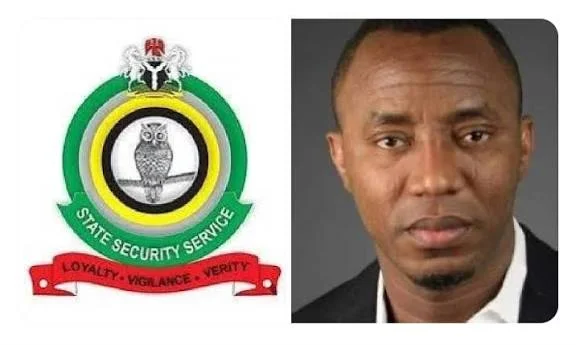
Nigerian security services prosecuted prominent opposition figure Omoyele Sowore for social media posts critical of President Tinubu, citing national security concerns rather than defamation, according to testimony in Federal High Court proceedings on Tuesday.
The Department of State Services (DSS) defended its decision to charge the online publisher and political activist with making false claims against President Bola Tinubu on X (formerly Twitter) and Facebook. DSS official Cyril Nosike, under cross-examination, insisted the prosecution stemmed from perceived security implications of Sowore’s post describing Tinubu as a “criminal,” not necessarily because the president requested action.
The court hearing took an unexpected turn when defense attorney Marshall Abubakar played video evidence showing President Tinubu himself promising to tolerate criticism and name-calling. When questioned about this apparent contradiction, Nosike maintained that the security implications of Sowore’s statements, rather than the criticism itself, prompted the agency’s response.
“We acted because of the security implications of the post, not necessarily on behalf of the President,” Nosike testified, though he acknowledged the video was recorded during a state visit to Brazil. He admitted he was not present when the video was recorded and had downloaded it from Sowore’s own social media page.
Further questioning revealed significant gaps in the prosecution’s case. Nosike confirmed that the DSS had not received any formal complaint from President Tinubu regarding Sowore’s posts. He also admitted being unaware if Tinubu even knew about the statements in question, despite considering the president “the victim” in the matter.
The defense strategy highlighted what appears to be selective prosecution. Abubakar presented video evidence of Reno Omokri, recently appointed as an ambassador, calling Tinubu a “drug lord” during the previous election campaign. When asked why Omokri faced no charges and was cleared for a diplomatic appointment despite similar criticisms, Nosike claimed ignorance of the DSS screening process for government appointees.
This case represents the latest chapter in Sowore’s long-running legal battles with Nigerian authorities. The witness claimed no knowledge of Sowore’s previous trial in 2019, when he was charged with calling for a revolution. The defense also presented a certified court order from February 19, 2024, directing the DSS to return Sowore’s mobile phones, which have been in government custody since 2019. Justice Mohammed Umar admitted this document as evidence.
The prosecution of Sowore has raised concerns among press freedom advocates and civil liberties organizations. Nigeria has faced increasing scrutiny for its treatment of journalists and critics under various administrations. The International Press Institute and Committee to Protect Journalists have previously expressed concerns about the shrinking space for free expression in Africa’s most populous nation.
Legal experts have noted the case highlights tensions between Nigeria’s constitutional guarantees of free speech and the government’s broad interpretation of national security threats. The country’s cybercrime legislation has been criticized by human rights organizations for containing vague provisions that can be weaponized against political opponents and critics.
The trial proceedings have drawn significant public attention in Nigeria, where Sowore maintains a substantial following as founder of Sahara Reporters, an online news platform known for its investigative reporting on corruption. His prosecution continues a pattern of legal challenges he has faced since his 2019 presidential run.
The court adjourned the case, with further hearings scheduled for February 4, when additional witnesses are expected to testify.
Fact Checker
Verify the accuracy of this article using The Disinformation Commission analysis and real-time sources.

16 Comments
This case highlights the delicate balance between national security and civil liberties. While the government has a duty to protect the country, prosecuting a prominent critic on such grounds raises serious concerns about the potential for overreach. The courts should scrutinize the evidence closely.
I agree, the courts need to ensure that Sowore’s free speech rights are not being unduly restricted, especially given the apparent contradiction between the government’s actions and Tinubu’s previous statements on tolerating criticism.
This case raises serious concerns about the government’s commitment to protecting free speech, even in the face of national security concerns. While the state has a duty to protect the country, prosecuting a prominent critic on such grounds appears heavy-handed and merits close judicial scrutiny.
Absolutely. The apparent contradiction between the government’s actions and Tinubu’s previous statements on tolerating criticism is concerning and warrants further investigation to ensure that Sowore’s fundamental rights are not being violated.
This case raises important questions about the balance between free speech and national security. The government’s charges against Sowore seem heavy-handed, but the specifics of the security implications are not entirely clear. More information is needed to fully evaluate the situation.
I agree, the government needs to provide more transparency around the specific security threats posed by Sowore’s statements. Prosecuting a critic on national security grounds is a serious matter that deserves close judicial review.
It’s troubling to see a political activist facing criminal charges for criticizing the president, even if national security is the stated reason. The government should be transparent about the specific threats posed by Sowore’s statements.
I share your concerns. The apparent contradiction between Tinubu’s statements and the prosecution is concerning and warrants further scrutiny by the courts.
Prosecuting a prominent critic for ‘false claims’ is concerning, even if national security is cited as the rationale. The court should closely scrutinize the evidence to ensure Sowore’s free speech rights are not being unduly restricted.
Absolutely. The government needs to demonstrate a clear and present danger to national security to justify such charges, especially given Tinubu’s previous statements on tolerating criticism.
The prosecution of Sowore for ‘false claims’ against the president is troubling, even if national security is cited as the reason. Free speech is a fundamental right, and the government must demonstrate a clear and present danger to national security to justify such charges. More transparency is needed to fully evaluate this case.
I agree, the courts should closely examine the evidence to ensure that Sowore’s free speech rights are not being violated. The government’s actions seem to contradict the president’s own stated position on tolerating criticism.
This case highlights the tensions between free speech and national security concerns. The government’s charges against Sowore seem heavy-handed, but the security implications of his statements are unclear. More transparency would be helpful to understand the nuances here.
I agree, the government’s response appears disproportionate given Tinubu’s own stated tolerance for criticism. However, there may be more to this story than meets the eye in terms of potential security risks.
The government’s prosecution of Sowore for ‘false claims’ against the president is concerning, even if national security is cited as the justification. Free speech is a fundamental right that should not be easily overridden, and the courts must carefully weigh the evidence.
Absolutely. The government’s actions seem to contradict Tinubu’s own statements on tolerating criticism. More transparency is needed to understand the specific security risks that prompted these charges against Sowore.