


Listen to the article
Singapore beverage manufacturer F&N has firmly rejected viral social media claims that its popular carbonated drink, Sarsi, can be used as a home remedy for coughs when boiled. Health professionals warn that any perceived benefits may be attributed to placebo effects rather than medicinal properties.
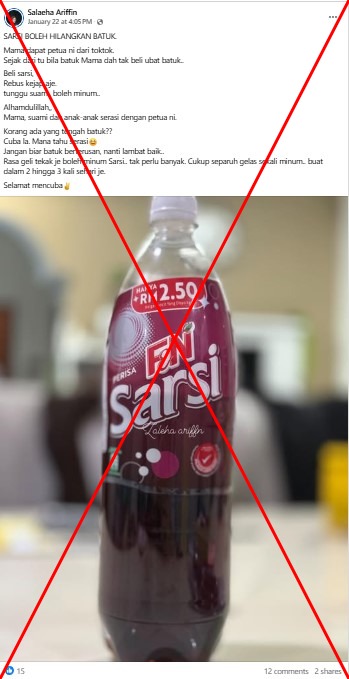
The claim surfaced in a Malay-language Facebook post on January 22, 2026, stating: “SARSI CAN GET RID OF COUGH. Since then, whenever I cough, I don’t bother buying cough syrup anymore. I just grab some sarsi, boil it for a bit, let it cool down… then drink it.” Similar assertions have circulated since 2023 across multiple social media platforms including Instagram, TikTok, and Threads.
In response to these widespread claims, a representative from the Malaysian arm of F&N Holdings Bhd clarified the company’s position. “F&N Sarsi is only intended for use as a refreshment in its original form and is not formulated, marketed or indicated for the treatment or relief of cough or any other medical conditions,” the spokesperson told AFP on December 18, 2025. “F&N Holdings Bhd does not endorse or support the use of F&N Sarsi for any medical or therapeutic purposes.”
Health experts consulted on the matter have dismissed the purported medicinal benefits of the carbonated beverage. Dr. Sharifa Ezat Wan Puteh, a public health expert at Universiti Kebangsaan Malaysia, explained to AFP that the drink contains no medicinal properties that would effectively relieve coughs. “Taking Sarsi drink might present a false sense of security, when in fact the sufferer may need to have proper investigations and checks,” she cautioned.
Dr. Thurein Hlaing Win, country manager of Myanmar healthcare website Hello Sayarwon, elaborated on the potential misconceptions surrounding this home remedy. “There is no medical benefit to this remedy. Any temporary relief felt is likely due to the syrup coating the throat (demulcent effect) or a placebo effect. It does not fight the infection or treat the respiratory issue,” he stated in an email to AFP.
Medical professionals have expressed concern that such unverified remedies could delay proper treatment for persistent coughs, which might indicate more serious underlying conditions. Dr. Win emphasized that coughs lasting more than two weeks warrant proper medical diagnosis, as they could stem from conditions such as asthma, gastroesophageal reflux disease, or respiratory infections.
Beyond the lack of medicinal value, health experts also highlighted potential risks associated with the practice. Boiling the soft drink removes water and carbonation, resulting in a concentrated sugar syrup that could contribute to excessive sugar consumption if regularly ingested as a supposed remedy.
Official health guidance from Britain’s National Health Service indicates that most coughs resolve naturally within three to four weeks. The NHS recommends rest, adequate fluid intake, and staying home if fever is present as appropriate measures for managing typical coughs.
This is not the first time unverified home remedies have gained traction in Malaysia. AFP has previously investigated and debunked similar claims regarding orange juice concentrate and onions as cough treatments, highlighting a pattern of traditional or alternative remedies circulating through social media without scientific backing.
Public health officials continue to urge individuals experiencing persistent coughs to seek proper medical advice rather than relying on unproven home remedies. Healthcare professionals emphasize that timely medical consultation enables appropriate diagnosis and treatment of underlying conditions, potentially preventing more serious health complications.
Fact Checker
Verify the accuracy of this article using The Disinformation Commission analysis and real-time sources.

11 Comments
This is a good example of how important it is for companies to be proactive in correcting false information about their products, especially when it comes to health and safety. Glad to see F&N taking a firm stance.
While I understand the appeal of natural home remedies, we have to be very careful about promoting unproven claims, especially when they involve potentially unsafe practices like boiling soda. Good on F&N for clarifying the facts.
Agreed, it’s important not to spread misinformation, even if it’s well-intentioned. Responsible for companies to address these kinds of viral claims head-on to protect consumers.
I’m curious what could be driving the popularity of this claim about boiling Sarsi to treat coughs. Is it just an old folk remedy that’s resurfaced, or is there some other underlying reason it’s spreading now?
Could be a combination of factors – people seeking alternative, homemade remedies, the rapid spread of misinformation on social media, and a general distrust of mainstream medicine. But the company is right to debunk these unproven claims.
Interesting to see a beverage company debunking false claims about their product’s medicinal properties. Boiling soda seems like an ineffective and potentially unsafe home remedy for coughs.
Agreed, any perceived benefits are likely just placebo effects. It’s good to see the company taking a firm stance against these unsubstantiated health claims.
This is a common pattern we see with viral social media claims – someone makes an unproven assertion, it spreads rapidly, and then the company has to step in to clarify. Responsible for companies to address these myths head-on.
True, it’s important for companies to be proactive in correcting misinformation about their products, especially when it relates to health and safety. Glad to see F&N taking that approach.
Seems like a classic case of false health claims going viral online. Glad to see the company taking a proactive stance to set the record straight and protect public health. Boiling carbonated drinks is definitely not recommended.
As a general rule, I’m quite skeptical of any unorthodox home remedies that claim to cure medical conditions. Boiling soda seems like an especially dubious approach. Good on F&N for setting the record straight.