


Listen to the article
Record-Breaking Year for False Claims Act Enforcement Signals Intensifying Scrutiny
The Justice Department has reported a historic $6.8 billion in False Claims Act (FCA) settlements and judgments in 2025, marking the highest recovery total since the government began tracking such data in 1987. This record-setting figure significantly surpasses previous peaks, including the $6.1 billion recovered in 2014, signaling an unprecedented focus on fraud enforcement across healthcare, federal contracting, and other sectors receiving government funds.
The statistics, highlighted in DOJ’s recently released annual FCA report, demonstrate that enforcement enjoys strong bipartisan support and continues to accelerate under the Trump administration. Most notably, whistleblower-initiated cases, known as qui tam lawsuits, generated $5.3 billion of the total recoveries, confirming their critical role in the government’s anti-fraud efforts.
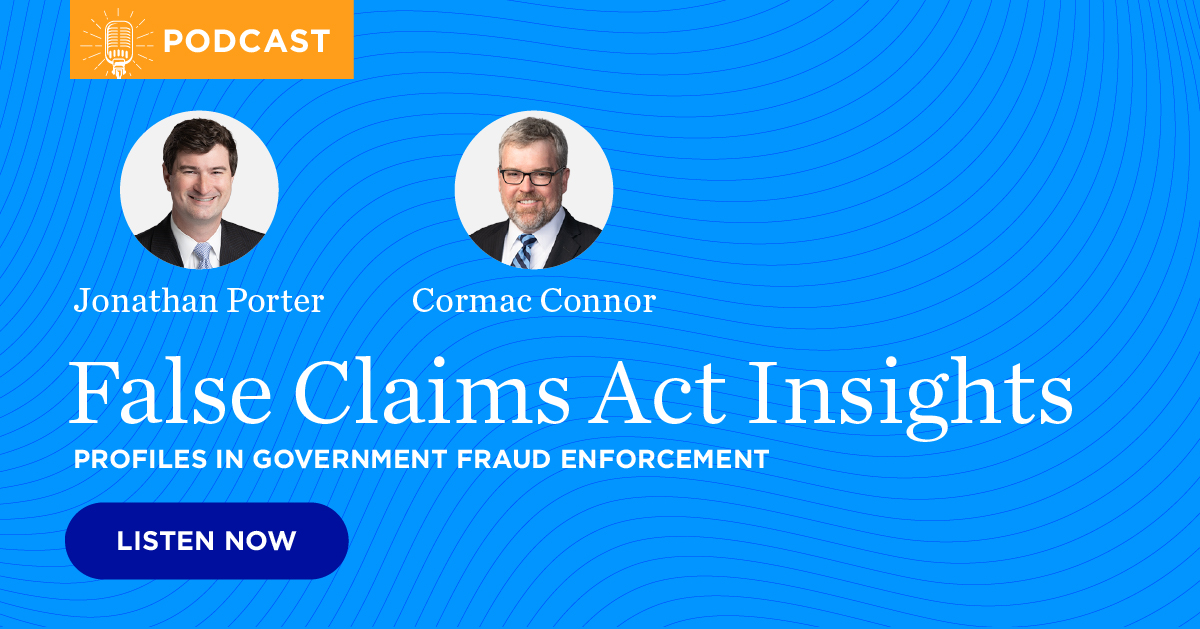
“What we’re seeing is the resolutions in 2025, which tells you that there was a huge ramp up during the Biden administration,” explained Cormac Connor, a former Assistant U.S. Attorney now practicing with Husch Blackwell in Washington, DC. “Everything we were seeing and hearing from DOJ in the past years suggests that there’s more to come.”
Adding to this momentum is the record number of new qui tam cases filed in 2025. Since these cases typically require several years to investigate and resolve, the surge in filings indicates that the current wave of enforcement is likely just beginning.
Enforcement Priorities Taking Shape
Brenna Jenny, Deputy Assistant Attorney General overseeing FCA enforcement at main Justice, recently outlined several priority areas during a legal conference. These include scrutiny of secretive healthcare kickbacks, inflated prescription prices, and substandard care in medical devices and provider services.
Jenny specifically highlighted her personal interest in targeting scenarios where medical products or care delivery not only fail to improve patients’ quality of life but actually make it worse.
Other enforcement priorities include:
- A new task force focused on tariff and trade enforcement, particularly targeting companies that misstate country of origin to evade duties or sanctions, or engage in transshipment schemes
- Cybersecurity compliance violations, where contractors certify data security parameters but fail to implement them
- Civil rights fraud, investigating contractors who certify compliance with federal civil rights laws while engaging in discriminatory hiring, promotion, or pay practices
Jenny also confirmed a significant increase in DOJ-initiated dismissals of qui tam cases, with 25 cases dismissed in 2025 compared to an average of six per year during the Biden administration. This suggests a more assertive approach to managing the government’s caseload and addressing potentially problematic whistleblower cases.
Technology and Resource Challenges
The DOJ is increasingly deploying artificial intelligence tools to identify potential FCA violations, particularly looking for outliers and anomalies in billing patterns or compliance data. This technology-driven approach may help compensate for reported staffing challenges, as the civil division’s attorney headcount is reportedly down approximately 20% from last year.
“If you have fewer attorneys and more cases, it’s going to be harder for those attorneys to get their work done,” Connor noted. This could lead to more declined qui tam cases proceeding without government intervention, creating a different dynamic for defendants.
Constitutional Challenges Loom
In the background of these developments, challenges to the constitutionality of the qui tam provisions themselves continue to work through the courts. At least three Supreme Court justices have signaled openness to arguments that allowing private citizens to initiate enforcement actions may unconstitutionally extend executive authority.
Jenny’s emphasis on the DOJ’s robust dismissal authority may be positioning the government to counter these constitutional challenges by demonstrating that the executive branch maintains ultimate control over these cases.
Implications for Organizations
For companies in FCA-enforced industries, these developments underscore the importance of robust compliance programs and careful attention to government certifications. Whistleblower complaints should be taken extremely seriously, given the DOJ’s explicit invitation for more cases and the financial incentives for potential whistleblowers.
Organizations should pay particular attention to civil rights compliance certifications, cybersecurity requirements, tariff and import documentation, and small business set-aside contract qualifications. The shift of DOJ’s SEAL team prosecutors to tariff enforcement further signals the government’s intensifying focus on international trade compliance.
As one observer noted, “When you’re thinking about FCA enforcement, if you’ve got the SEAL team on the criminal side talking about indicting executives or even a company, suddenly your FCA liability looks a little bit different.”
With record recoveries already achieved and more cases in the pipeline, the message is clear: government contractors and recipients of federal funds face unprecedented scrutiny that shows no signs of abating.
Fact Checker
Verify the accuracy of this article using The Disinformation Commission analysis and real-time sources.

6 Comments
It’s impressive that the DOJ recovered $6.8 billion in FCA cases last year, a new record. This shows the government’s commitment to combating fraud, though the high dismissal rate is somewhat concerning.
The FCA seems to be a powerful tool for holding companies and individuals accountable for defrauding the government. I’ll be interested to see if this increased enforcement leads to any high-profile prosecutions in the mining or energy sectors.
The surge in recoveries under the FCA suggests that the government is getting more aggressive in rooting out fraud and abuse, which is good to see. I wonder if this heightened scrutiny will impact certain industries more than others.
That’s a good point. The healthcare and federal contracting sectors seem to be major targets, but I’m curious to see if other industries like mining and energy are also under increased FCA enforcement.
This is an interesting report on the record-breaking FCA enforcement under the Trump and Biden administrations. Clearly, whistleblower lawsuits are playing a critical role in uncovering fraud across government-funded sectors.
The rise in qui tam lawsuits highlights the important role whistleblowers play in the government’s anti-fraud efforts. I wonder if this will incentivize more people to come forward with information about potential wrongdoing.