


Listen to the article
DC Attorney General Files Unprecedented RICO Lawsuit Against Slumlord Empire
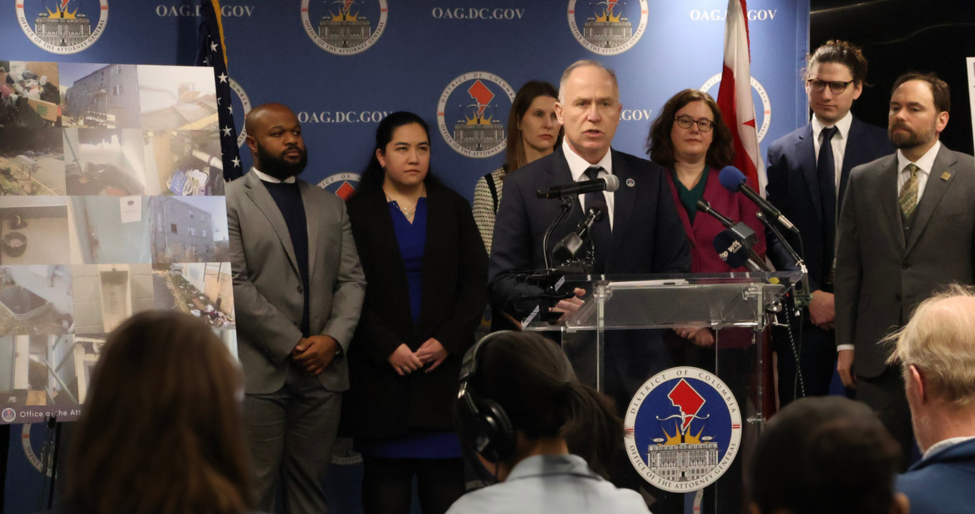
In a landmark legal action, DC Attorney General Brian L. Schwalb has filed the first-ever civil lawsuit using the Racketeer Influenced and Corrupt Organizations Act (RICO) to dismantle what officials describe as a vast real estate fraud scheme operated by Ali “Sam” Razjooyan, his brother Eimon “Ray” Razjooyan, and their mother Houri Razjooyan.
The lawsuit alleges the Razjooyans have constructed an illegal real estate empire controlling dozens of apartment buildings throughout the District, with 90% of their approximately 70 properties concentrated in Wards 7 and 8—areas that historically have faced economic challenges and housing insecurity.
According to the Attorney General’s office, the Razjooyans operated a sophisticated Ponzi-like scheme, deceiving lenders with fraudulent financial documents and false promises to renovate buildings. The family allegedly claimed they would rent renovated units to tenants receiving housing subsidies, which provide reliable government payments often exceeding rent-stabilized amounts.
“Instead of fixing up the properties, the Razjooyans use the loan proceeds to enrich themselves, pay off loans from previously purchased buildings, and buy new properties to perpetuate the scheme,” the Attorney General’s office stated in court documents.
The consequences for tenants have been severe. Investigators documented over 4,000 housing code violations across the Razjooyan properties, with conditions described as “among the worst they have ever seen in DC.” Residents have endured rodent and insect infestations, gas leaks, electrical hazards, trash accumulation, mold, and flooding.
“DC has a serious housing affordability problem, and slumlords like the Razjooyans make things worse by decreasing the available housing supply and forcing tenants to live in horrific conditions,” said Attorney General Schwalb. “Their business model, by design, preys on tenants for profit—cheating banks, private lenders, and the DC government along the way.”
The lawsuit further alleges the Razjooyans defrauded District housing assistance programs of more than $16 million by falsely claiming their properties met safety and habitability requirements—a prerequisite for receiving housing subsidies.
Earnest Wilkerson, President of the Minnesota Commons Tenant Association, described the deterioration that occurred after Razjooyan purchased his building: “Maintenance stopped, pest control treatments stopped, and trash accumulated everywhere. We had multiple floods and burst pipes that collapsed people’s ceilings. Our heat kept going out and rodents ran rampant.”
The legal action seeks to permanently dismantle the Razjooyans’ housing scheme, ban them from operating residential rental properties in the District, and secure restitution for harmed tenants along with penalties and damages for the District.
DC Department of Buildings Director Brian J. Hanlon emphasized the significance of the case, noting that his department “helped build the case by conducting thousands of inspections at more than 100 properties.”
The Attorney General’s investigation uncovered an elaborate web of financial fraud involving numerous LLCs, unlicensed property management and construction companies, and straw purchasers allegedly used to conceal true property ownership.
The lawsuit details a systematic pattern: the Razjooyans would secure loans at up to double the actual purchase price of distressed properties, make superficial cosmetic repairs while ignoring serious structural issues, refinance at inflated values, and then allow buildings to deteriorate while collecting housing subsidies.
Under both the RICO Act and the District’s False Claims Act, the Razjooyans could be held liable for triple damages plus civil penalties.
This case represents a significant shift in enforcement strategy. Rather than addressing individual properties, the Attorney General is targeting what he describes as a criminal enterprise operating throughout the District. The RICO statute, originally created to combat organized crime in 1970, allows for both criminal and civil actions against entities engaged in patterns of racketeering activity.
The lawsuit follows earlier legal actions filed by Schwalb’s office in August 2024 against Sam Razjooyan for endangering tenants at two apartment complexes in Wards 7 and 8, which ultimately led investigators to uncover the broader alleged scheme.
Legal Aid DC’s Megan Browder praised the action, stating: “It is a stain on DC’s entire housing system, and residents deserve better. We commend Attorney General Schwalb and his office for pursuing justice for these tenants and accountability from one of the District’s most dangerous slumlords.”
Fact Checker
Verify the accuracy of this article using The Disinformation Commission analysis and real-time sources.

8 Comments
This lawsuit sounds like a major crackdown on an alleged slumlord operation. I’m curious to see if the AG can prove the racketeering and fraud charges. Holding bad actors accountable for defrauding tenants and lenders is important.
You’re right, these types of abuses need to be addressed. It will be interesting to follow the details as the case unfolds.
Using RICO to go after a large-scale slumlord scheme is an aggressive legal strategy. I’ll be following this case to see if the AG can successfully prove the racketeering allegations.
Targeting real estate fraud and exploitation in underserved communities is critical. I hope the AG is able to dismantle this alleged criminal empire and provide relief for the affected tenants.
Agreed, slumlord operations that prey on vulnerable residents need to be shut down. This could set an important precedent.
Exploiting housing subsidies and defrauding lenders is a particularly egregious abuse of power. I hope the tenants get the relief and restitution they deserve from this lawsuit.
Absolutely, tenants who were deceived and taken advantage of should be the priority. Holding the perpetrators fully accountable is crucial.
This lawsuit highlights the urgent need to crack down on predatory real estate practices, especially in underserved communities. I’m glad to see the AG taking such strong action.