


Listen to the article
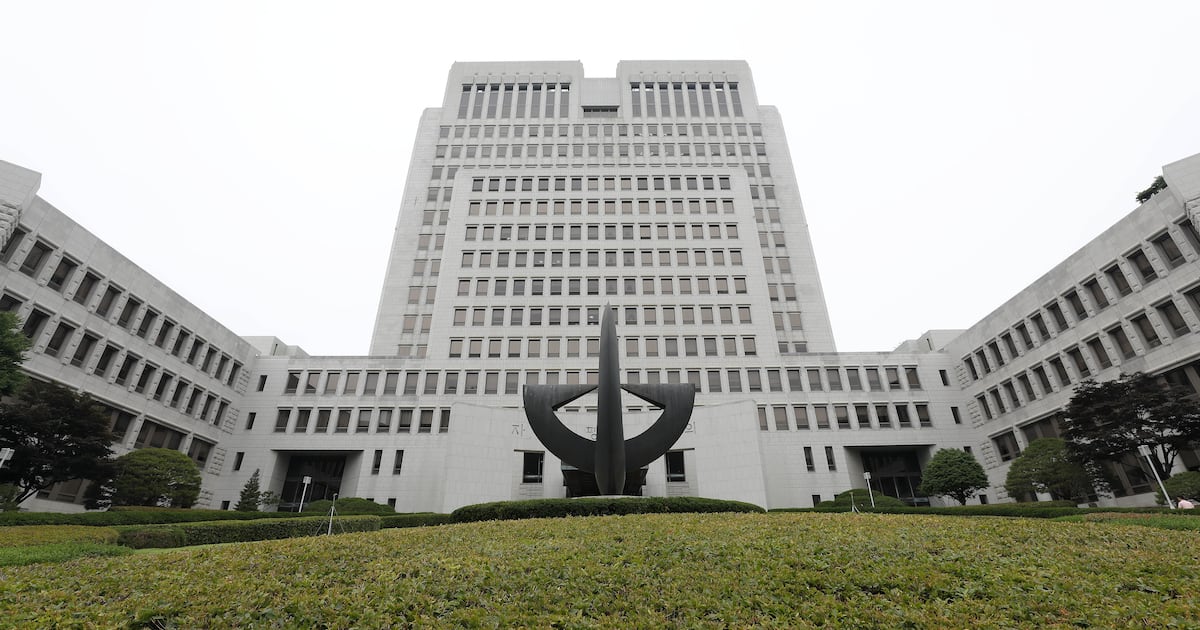
South Korea’s highest court has ruled in favor of church elders accused of manipulating congregation members into falsely claiming they were sexually assaulted by their pastor, bringing a final resolution to a controversial case that has lasted nearly a decade.
The Supreme Court on Monday upheld a lower court’s acquittal of three church elders charged with defamation and false accusation. The elders had been accused of implanting false memories in female church members, allegedly coaching them to believe they had been sexually assaulted by their pastor.
The case began in 2015 when multiple female members of a Presbyterian church in Seoul’s Gangnam district filed police reports claiming sexual assault by their pastor. According to court documents, five women alleged they had been drugged and sexually assaulted during one-on-one prayer sessions.
Prosecutors, however, later charged the church elders instead, claiming they had orchestrated a campaign to remove the pastor from his position by manipulating vulnerable congregation members. The prosecution alleged the elders had conducted what amounted to psychological conditioning sessions, where they gradually convinced the women that unexplained physical discomfort or emotional distress were symptoms of sexual trauma.
The case has sparked intense debate in South Korean religious circles about church governance, power dynamics within religious organizations, and the complex psychology of recovered memories. Experts in psychology who testified during the trial presented conflicting views on whether false memories could be implanted so thoroughly that victims would believe them to be true.
“This ruling reinforces the importance of carefully evaluating claims of memory manipulation in legal settings,” said Dr. Kim Min-ho, a psychology professor at Seoul National University who was not involved in the case. “Memory is malleable, but determining when and how it might have been manipulated requires extraordinary evidence.”
During the trial, defense attorneys for the elders presented evidence that the women had independently come forward with consistent accounts of abuse. They argued that the prosecution’s theory of orchestrated false memory implantation lacked scientific backing and underestimated the women’s agency.
The original allegations against the pastor were separately investigated but did not result in criminal charges, primarily due to lack of physical evidence and the complicated nature of the memory-based testimonies. The pastor, who has since relocated to a different congregation, has consistently maintained his innocence.
Religious organizations across South Korea have been watching the case closely, as it touches on sensitive issues of church leadership, internal conflict resolution, and how religious institutions handle abuse allegations. The Presbyterian denomination, one of the largest Protestant groups in South Korea, has been particularly affected by the controversy.
Church governance experts note that the case highlights the sometimes fraught relationship between pastors and church elders, who in the Presbyterian tradition share authority over church affairs. “This case reveals the potential for destructive power struggles within church leadership structures,” said Professor Park Sung-jin of Presbyterian University and Theological Seminary.
Legal experts suggest the ruling may impact how similar cases involving recovered memories are handled in South Korean courts going forward. The Supreme Court’s decision effectively acknowledges the difficulty in legally proving memory manipulation in the absence of clear evidence of coercion or conspiracy.
The women who made the original allegations have largely withdrawn from public view. Their legal representatives expressed disappointment with the ruling but indicated they would respect the court’s decision.
The church at the center of the controversy has since split, with many members leaving to join other congregations. Church attendance in South Korea has been declining in recent years, with trust in religious institutions diminishing partly due to high-profile scandals and internal conflicts.
The case underscores the challenges facing South Korea’s religious institutions as they navigate issues of accountability, trust, and proper handling of abuse allegations in an increasingly secular society.
Fact Checker
Verify the accuracy of this article using The Disinformation Commission analysis and real-time sources.

16 Comments
This is a complex case with troubling allegations on both sides. I’m glad the court was able to make a final ruling, though the details raise many questions about the power dynamics within this church congregation.
Agreed, the psychological manipulation claims are quite serious. It’s important that due process is followed, even in sensitive cases like this.
This is a troubling case with serious allegations on both sides. I’m glad the legal process was able to reach a final verdict, though the details continue to raise difficult questions about the dynamics within this church community. The claims of false memory implantation are quite concerning, and I’m curious to understand the court’s reasoning in acquitting the church elders.
You make a good point. These types of cases highlight the challenges of verifying allegations, especially in tight-knit religious settings where power dynamics can be complex. Hopefully this ruling can provide some clarity, even if it doesn’t fully resolve the underlying tensions.
The claims of false memory implantation are quite concerning, and I’m curious to understand the court’s reasoning in acquitting the church elders. This case highlights the challenges of verifying allegations, especially in close-knit religious communities where power dynamics can be complex.
Agreed, these situations are incredibly nuanced. Hopefully this ruling can provide some closure, even if the underlying issues remain unresolved.
The claims of false memory implantation are quite concerning. I’m curious to learn more about the court’s reasoning in acquitting the church elders. These types of cases highlight the challenges of verifying allegations, especially in tight-knit religious settings.
Agreed, the power dynamics at play make these situations incredibly complex. Hopefully this ruling can provide some clarity, even if it doesn’t fully resolve the underlying tensions.
This is a troubling case with serious allegations on both sides. I’m glad the legal process was able to reach a final verdict, though the details continue to raise difficult questions about the dynamics within this church community.
Yes, it’s important that due process is followed, even in sensitive situations like this. Hopefully this ruling can bring some closure, though the underlying issues may remain unresolved.
This is a troubling case with serious allegations on both sides. I’m interested to learn more about the court’s decision-making process and the factors that led to the acquittal of the church elders. These types of situations raise difficult questions about power, memory, and the dynamics within religious institutions.
You’re right, these cases rarely have clear-cut resolutions. It’s important that due process is followed, even when the details are murky and the stakes are high.
Interesting to see the church elders acquitted, despite the accusations of implanting false memories. This highlights the challenge of verifying claims of sexual assault, especially in close-knit religious communities.
Yes, these situations can be very messy. Hopefully this ruling brings some closure, though the underlying issues may linger.
The allegations of psychological manipulation are quite concerning. I wonder what factors led the court to ultimately acquit the church elders. This case seems to raise complex questions about power, memory, and the dynamics within religious institutions.
Agreed, the court’s decision likely came down to a careful weighing of the evidence. These types of cases rarely have clear-cut resolutions.