


Listen to the article
A Chinese health supplement company, marketed as Australian-made, has been caught in a major fraud scandal that has sent shockwaves across the nation’s consumer landscape.
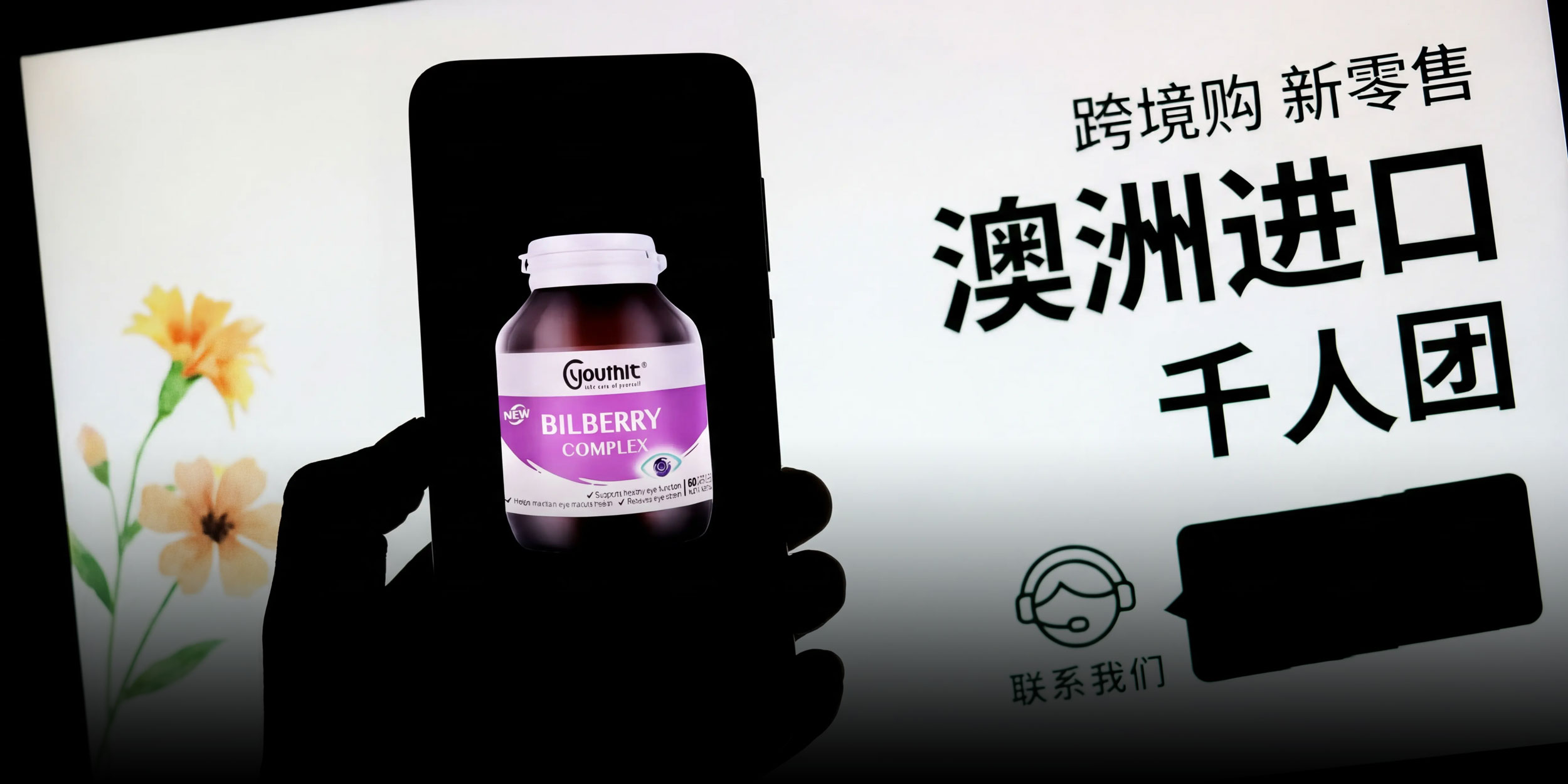
The company, YouthIt, which positioned itself as a premium Australian import brand, was exposed by state broadcaster CCTV on April 1 for manufacturing its products domestically while charging premium prices for its supposedly foreign-made supplements. The investigation revealed the company had also allegedly purchased international cosmetic awards to enhance its reputation and lacked required governmental approvals for marketing health supplements.
The scandal quickly captivated public attention, with the hashtag “YouthIt” generating more than 130 million views on Weibo, China’s popular microblogging platform, as consumers expressed outrage over the deception.
YouthIt had established itself as one of the top supplement sellers on major Chinese e-commerce platforms, selling over 6 million bottles of lutein, an antioxidant marketed for eye health protection. Products typically sold for between 300 yuan ($44) and 400 yuan per bottle, with pricing justified by the supposed Australian origin.
The investigation began after suspicious consumers traced YouthIt’s import information to a company in eastern Anhui province. CCTV reporters followed the trail to the brand’s registered Melbourne address, only to discover an auto repair shop instead of the purported health supplement facility.
In response to the growing scandal, Chinese authorities have launched a coordinated investigation. The State Council’s food safety office, the State Administration for Market Regulation, and the General Administration of Customs summoned representatives from major platforms including Douyin (China’s version of TikTok), Alibaba’s Tmall, and lifestyle platform Xiaohongshu for discussions regarding stricter oversight of cross-border e-commerce.
“Platforms, as the infrastructure behind these transactions, cannot hide behind claims of ignorance,” said Lei Jiamiao, a lawyer at Henan Hounuo Law Firm. China’s E-commerce Law requires platforms to verify merchants and ensure food and drug safety, with platforms potentially liable if they fail to address known issues.
YouthIt issued a statement on Friday acknowledging the investigation and announcing an internal review. The company claimed it had ended its relationship with Suoxiang Marketing in early 2024, blaming the marketing firm for exaggerating the brand’s story.
However, an anonymous Suoxiang employee told CCTV that the marketing strategy deliberately boosted YouthIt’s credibility through hired overseas experts, purchased international awards, and tens of thousands of promotional social media posts.
The company’s marketing strategy also relied heavily on endorsements from Chinese celebrities and prominent livestreamers. Since the scandal broke, several promoters have publicly apologized and promised to reimburse customers who purchased products through their channels.
Legal expert Lei noted that “livestream hosts hired to promote the products cannot evade responsibility if they falsely endorse claims about origin or international awards,” as regulations require hosts and platform operators to verify supplier credentials.
The practice of falsely marketing domestic products as foreign imports is not uncommon in China’s health supplement industry. According to Zheng, a supplement-brand marketing manager interviewed by CCTV, prices for such deceptively marketed products can be inflated 10 to 20 times their actual value.
For consumers like Sun Xiao’an from Zhejiang province, the revelations have been particularly disturbing. Sun spent approximately 10,000 yuan on YouthIt’s lutein capsules over three years, believing they would help control her daughter’s myopia.
“I believed that buying from the official store on Tmall meant the products were reliable,” Sun said. “After three years, I have no idea what ingredients were in these products, what their composition was, or whether they posed any health risks.”
Adding to consumer frustration, Tmall has reportedly refused to issue refunds for opened products, only accepting returns for unopened items purchased within the past three months.
The YouthIt scandal highlights broader issues in China’s booming dietary health supplement market, which reached 312.4 billion yuan last year. According to market analytics firm Zhiyan Consulting, fraudulent marketing practices are proliferating due to consumer information gaps, inadequate platform oversight, and China’s influential livestreamer economy.
Chinese authorities have recognized the growing problem. In November 2025, the State Administration for Market Regulation launched a nationwide crackdown on false advertising targeting seniors, particularly focusing on drugs and health supplements, signaling the government’s commitment to cleaning up the industry.
Fact Checker
Verify the accuracy of this article using The Disinformation Commission analysis and real-time sources.

12 Comments
The scale of this deception is quite alarming. Over 6 million bottles sold under false pretenses? That’s a massive breach of consumer trust. Regulators need to intervene and hold this company accountable.
Absolutely. This kind of fraud cannot be tolerated. Consumers should be able to trust the authenticity of the supplements they buy, especially when it comes to health products.
Falsely marketing supplements as foreign-made when they are actually produced domestically is a blatant attempt to exploit consumer preferences. This kind of deception erodes trust in the entire industry and must be stopped.
Absolutely. Consumers should be able to make informed choices, not be misled by misleading marketing claims. Stricter regulations and enforcement are clearly needed to prevent these kinds of fraudulent practices.
This is a concerning development in the supplement market. Consumers should be able to trust the origins and quality of the products they purchase, not be misled by false claims. Stronger oversight is clearly needed.
I agree. Brands that try to deceive consumers about the source of their products should face serious consequences. This serves as a wake-up call for the industry to prioritize transparency and integrity.
This is a concerning trend in the supplement industry, where some companies try to exploit consumer preferences for foreign-made products. Regulatory bodies need to crack down on these deceptive practices to protect the public.
Absolutely. Buying supplements should be an informed choice, not an exercise in being misled. Stricter rules and enforcement are needed.
Wow, this is quite a scandal. Falsely claiming Australian origin to charge premium prices for supplements is unacceptable and misleading. Consumers have a right to know the true source of the products they purchase.
I agree, the lack of required approvals is also concerning. Brands should be transparent about their manufacturing processes and origins.
It’s troubling to see a company go to such lengths to inflate its reputation and pricing. Consumers deserve honesty when it comes to the products they ingest. This scandal highlights the need for better supply chain transparency.
Agreed. Purchasing decisions should be based on accurate information, not misleading marketing claims. This serves as a cautionary tale for the industry.