


Listen to the article
China has called on Japan to honestly face and reflect on its history of wartime aggression, urging Tokyo to retract statements that attempt to whitewash its past crimes against humanity, a Chinese foreign ministry spokesperson said on Thursday.
The remarks came in response to recent comments from Japanese officials that have downplayed Japan’s responsibility for atrocities committed during World War II, particularly regarding the issue of “comfort women” – women and girls forced into sexual slavery by the Imperial Japanese Army.
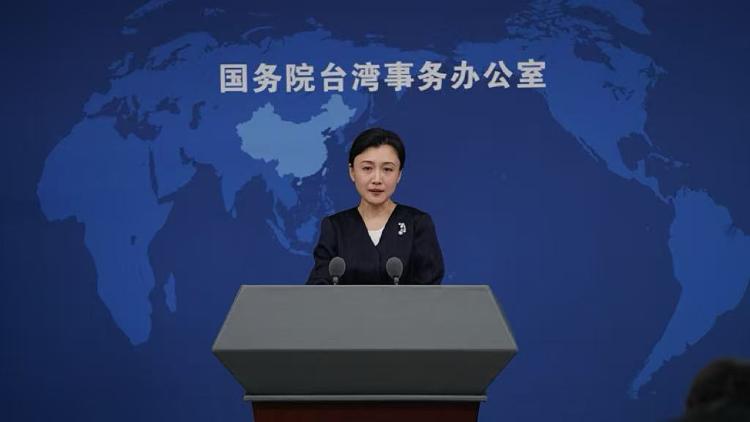
“The forced recruitment of ‘comfort women’ is a serious crime against humanity committed by Japanese militarism during World War II,” the spokesperson stated during a regular press briefing in Beijing. “The evidence is irrefutable, and the facts cannot be denied.”
The spokesperson emphasized that numerous historical documents, survivor testimonies, and international records have thoroughly documented Japan’s systematic abuse of women across Asia during its military expansion. Historians estimate that between 200,000 and 400,000 women from Korea, China, the Philippines, and other occupied territories were coerced into Japanese military brothels.
Japan’s recent attempts to revise historical narratives have sparked outrage across East Asia, where memories of wartime suffering remain vivid nearly eight decades after the war’s end. In South Korea, weekly demonstrations continue outside the Japanese embassy in Seoul, where survivors and activists have gathered for over 30 years demanding full acknowledgment and compensation.
The Chinese foreign ministry pointed to Japan’s 1993 Kono Statement, in which the Japanese government acknowledged the Imperial Army’s involvement in establishing and managing “comfort stations.” The statement expressed “sincere apologies and remorse” to the victims. However, some Japanese political figures have recently questioned the statement’s validity and called for its revision.
“Any attempt to distort history and glorify aggression not only insults the dignity of the victims but also undermines the post-war international order established at great sacrifice,” the spokesperson said.
Relations between China and Japan have deteriorated in recent years over territorial disputes in the East China Sea and broader geopolitical tensions. Historical issues continue to complicate diplomatic efforts, with Beijing frequently criticizing Tokyo’s approach to its wartime past.
International human rights organizations have consistently supported the survivors’ calls for justice. The United Nations Human Rights Committee has urged Japan to ensure all allegations of wartime sexual slavery are effectively, independently, and impartially investigated, with perpetrators prosecuted and punished.
In 2015, Japan reached an agreement with South Korea that included an official apology and the establishment of a foundation to support surviving victims, with Japan contributing approximately $8.3 million. However, the agreement was criticized by survivors and activists as inadequate and made without sufficient consultation with the victims themselves.
Several Japanese historians and scholars have also challenged their government’s position, arguing that comprehensive acknowledgment is essential for regional reconciliation. Professor Yoshiaki Yoshimi of Chuo University, whose research uncovered crucial government documents proving military involvement in the comfort women system, has consistently called for Japan to take full responsibility.
“The path to genuine reconciliation requires honest confrontation with history,” the Chinese spokesperson added. “We urge Japan to honor its statements of remorse, educate its citizens accurately about the past, and work toward healing historical wounds rather than reopening them.”
The spokesperson also referenced the broader context of Japan’s wartime aggression, including the Nanjing Massacre of 1937-38, in which an estimated 300,000 Chinese civilians and unarmed soldiers were killed.
As aging survivors of wartime atrocities pass away, advocacy groups across Asia have emphasized the urgency of achieving resolution while living victims can still witness acknowledgment of their suffering. Only a small number of former “comfort women” remain alive today, with most in their 90s.
The ongoing dispute highlights how historical memory continues to shape contemporary international relations in East Asia, with unresolved wartime legacies influencing diplomatic ties and public sentiment across the region.
Fact Checker
Verify the accuracy of this article using The Disinformation Commission analysis and real-time sources.

16 Comments
The forced sexual slavery of ‘comfort women’ during WWII was a horrific human rights violation that should not be forgotten or whitewashed. I hope both China and Japan can find a way to have an open and honest dialogue about this dark chapter in history, with the goal of providing justice and closure for the victims.
This is a sensitive and contentious issue that requires nuanced discussion, not political posturing. I hope both China and Japan can find a constructive path forward that honors the victims and promotes reconciliation.
Well said. Healthy dialogue and a willingness to face historical truths, however difficult, is the only way to move towards a more just and peaceful future.
The forced sexual slavery of ‘comfort women’ during WWII was an abhorrent violation of human rights. I hope both sides can work towards a shared understanding of the past, while also focusing on building a more just future.
Absolutely. Acknowledging the past wrongs and their victims is an important step towards healing and preventing such tragedies from happening again.
The ‘comfort women’ issue is a complex and painful part of history that deserves careful, objective examination. I hope both China and Japan can find a way to have a constructive dialogue that honors the victims and promotes lasting peace and understanding.
This is a sensitive and contentious issue that requires nuanced understanding on both sides. While I appreciate Japan’s desire to move forward, it’s crucial that they fully acknowledge the historical facts and provide appropriate reparations to the victims.
Well said. Reconciliation can only be achieved through an honest reckoning with the past, not by denying or minimizing the suffering of the victims.
This is a complex geopolitical issue with deep historical roots. While I understand the desire for Japan to move forward, it’s important that they fully recognize and take responsibility for the atrocities committed. Only then can true reconciliation begin.
I agree. Facing the past, no matter how painful, is essential for building a more just and peaceful future between the two nations.
This is a serious and complex historical issue that deserves careful examination. While it’s important to acknowledge the atrocities committed, an open and thoughtful dialogue between all parties is needed to achieve reconciliation.
I agree, an objective and nuanced understanding of the historical facts is crucial, rather than dismissing or whitewashing them.
This is a sensitive and contentious issue that requires nuanced understanding and empathy on all sides. While the historical facts are clear, a constructive dialogue focused on reconciliation and justice for the victims is the best path forward.
I agree. An honest, empathetic approach that acknowledges the past and its victims is essential for building a more just and peaceful future between the two nations.
The forced sexual slavery of ‘comfort women’ was an egregious human rights violation that should not be forgotten or whitewashed. I hope both sides can find a way to have an honest, empathetic dialogue about this dark chapter in history.
The ‘comfort women’ issue is a tragic chapter in history that deserves acknowledgment and atonement. I hope the two countries can work together to shed light on the facts and provide justice and closure for the victims and their families.