


Listen to the article
DOJ Faces Judicial Rebuke After Targeting Church Protesters in Minneapolis
Federal prosecutors faced an unusual judicial rebuke recently after attempting to secure arrest warrants for protesters, including civil rights activists and journalists, who demonstrated at a church led by a local Immigration and Customs Enforcement (ICE) commander in Minneapolis.
Court documents reveal that Magistrate Judge Douglas Micko denied five of eight arrest affidavits sought by the Department of Justice, which targeted prominent community members including Nekima Levy Armstrong and Chauntyll Allen, along with others who participated in the church protest.
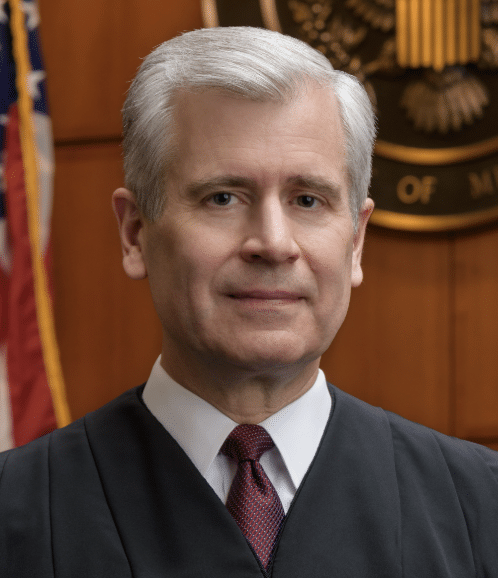
According to a letter from Minnesota Chief Judge Patrick Schiltz to Eighth Circuit Chief Judge Steven Colloton, the U.S. Attorney’s office made an extraordinary move minutes after Micko’s denial, approaching Schiltz directly to request that a district judge override the magistrate’s decision.
“I consulted with other district judges to determine if they had ever heard of the Department of Justice asking a district judge to override a magistrate’s decision in such a manner,” Schiltz wrote in his letter. “None had encountered such a request before.”
Schiltz informed prosecutors he would not issue arrest warrants until after conferring with his colleagues at a bench meeting originally scheduled for Thursday. The meeting was subsequently postponed to January 27 due to security concerns stemming from the presence of Pam Bondi and J.D. Vance at the Federal building.
Faced with this delay, the DOJ filed for an emergency writ of mandamus, claiming immediate action was necessary. Judge Schiltz strongly disputed this characterization in his response.
“The five people whom the government seeks to arrest are accused of entering a church, and the worst behavior alleged about any of them is yelling horrible things at the members of the church. None committed any acts of violence,” Schiltz wrote. “There is absolutely no emergency.”
The judge noted that prosecutors could have sought grand jury indictments on January 20, 21, or 22, but chose not to do so. “The government can still take its case to a grand jury any time it wishes. Instead, the government is insisting that I do something that, as best as I can tell, no district judge in the history of the Eighth Circuit has done,” he added.
In a subsequent communication, Schiltz criticized prosecutors for improperly grouping all protesters together, stating that two of the five individuals were “not protesters at all; instead, they were a journalist and his producer.” The judge emphasized that “there is no evidence that those two engaged in any criminal behavior or conspired to do so.”
Legal observers have identified the journalist as Don Lemon and his producer, though court documents do not explicitly name them.
More troublingly, Schiltz highlighted other pressing matters requiring attention, including “a lockdown at the Minneapolis courthouse because of protest activity, the defiance of several court orders by ICE, and the illegal detention of many detainees by ICE (including, yesterday, a two-year old).”
The Eighth Circuit ultimately denied the government’s request for mandamus relief, though Trump appointee Judge Steven Grasz dissented in part, stating he believed there was probable cause against all five individuals, including the journalist and producer.
What makes this rebuke particularly notable is Judge Schiltz’s background as a two-time clerk for the late Supreme Court Justice Antonin Scalia and an appointee of President George W. Bush. His criticism suggests bipartisan concerns about the government’s approach in this case.
Legal analysts are questioning why prosecutors didn’t simply present their case to a grand jury. Some speculate they may have doubted their ability to secure indictments, while others wonder if local Assistant U.S. Attorneys might have been reluctant to present the case.
This conflict comes amid heightened tensions surrounding immigration enforcement policies and against the backdrop of ongoing investigations into another controversy involving Customs and Border Protection in Minneapolis.
The case highlights growing friction between federal law enforcement and the judiciary over the handling of protest-related prosecutions and immigration enforcement actions in the region.
Fact Checker
Verify the accuracy of this article using The Disinformation Commission analysis and real-time sources.

8 Comments
It’s concerning to hear about the DOJ’s attempts to override the magistrate’s decision. Maintaining the integrity of the judicial process is crucial, especially when dealing with high-profile cases.
I agree. The independence of the courts must be protected, even in the face of pressure from government agencies.
This is an interesting case of the DOJ apparently overstepping its bounds and trying to undermine the authority of the court. I’m curious to learn more about the details and the rationale behind the judge’s decision to deny the arrest warrants.
It’s good to see the judge stand up to the DOJ’s attempts to circumvent the proper legal process. Maintaining the independence of the judiciary is crucial.
This case highlights the importance of checks and balances in the legal system. I’m glad to see the judge standing up to what appears to be an overreach by federal prosecutors.
This is a complex case that touches on some important issues around civil liberties and the role of the justice system. I’ll be following this story closely to see how it develops.
The mining and energy sectors have faced a lot of regulatory scrutiny in recent years. It’s important that the legal system remains fair and impartial when dealing with these industries.
Absolutely. The rule of law must be upheld, regardless of the industry or individuals involved.