


Listen to the article
Bangladesh’s Dangerous Pattern: Blasphemy Allegations Fuel Decade of Violence Against Minorities
A disturbing trend of orchestrated violence targeting Bangladesh’s Hindu communities has emerged over the past decade, with fabricated blasphemy allegations repeatedly used as justification for mob attacks, property destruction, and judicial harassment.
Human rights monitors have documented numerous cases where extremist groups have leveraged unverified claims of religious insult to incite violence against minority communities, often with apparent impunity. According to the Human Rights Congress for Bangladesh Minorities (HRCBM), these incidents follow a predictable pattern—accusation, mob formation, violence, and then inadequate protective response from authorities.
The most recent tragedy unfolded in Mymensingh’s Bhaluka sub-district last December, when Deepu Chandra Das, a garment factory worker, was beaten to death by a mob over alleged blasphemous remarks. After killing Das, attackers tied his body to a tree and set it on fire. Police arrived after the fact, recovering his remains for post-mortem examination, but reported no immediate arrests in the case.
This brutal killing is part of a broader trend affecting Hindus, Bangladesh’s largest religious minority, who comprise about 8 percent of the population. The documented incidents show attacks against people from various walks of life—musicians, teachers, students, and even those merely accused of making social media comments.
Cultural expression has also become dangerous territory. In November 2025, prominent Baul singer Abul Sarkar was arrested after being accused of making derogatory remarks about Islam during a performance. Videos showed mobs later attacking his followers with sticks and bricks, chanting threats to “slaughter the Bauls.” The incident highlighted the vulnerability of Bangladesh’s ancient Baul musical tradition, long celebrated for its spiritual syncretism.
Social media has become a particular flashpoint, with numerous cases stemming from alleged Facebook posts. In August 2025, 25-year-old Bijoy Debnath was beaten by a mob for simply wishing “Happy Birthday” to an atheist blogger living in exile. After the assault, he was handed to police and charged with insulting Islam.
The violence often extends beyond individual targets to entire communities. In Gangachara, Rangpur, the arrest of a teenager on blasphemy allegations triggered mob attacks on at least 14 homes belonging to Hindu families. Though police and army personnel were deployed, they reportedly failed to prevent the initial destruction.
“This recurring pattern of violence creates a climate of fear and insecurity among religious minorities,” said one human rights advocate who requested anonymity for safety concerns. “The systematic exploitation of blasphemy allegations has become a tool for social control and intimidation.”
The legal system has provided little protection. In February 2023, a cyber tribunal sentenced Rakesh Roy, a former Hindu organization leader, to seven years in prison over a Facebook post allegedly insulting Islam. Even more troubling was the 2023 sentencing of a minor, Poritosh Sarkar, to five years’ imprisonment under the Digital Security Act for a social media post. His family and lawyer maintained no evidence linked him to the alleged content.
Teachers appear particularly vulnerable to such allegations. Hriday Chandra Mondal was arrested in April 2022 in Munshiganj after being accused of insulting religious figures during a class. His wife later told reporters the family lived in fear, with their son unable to attend school due to harassment from neighbors.
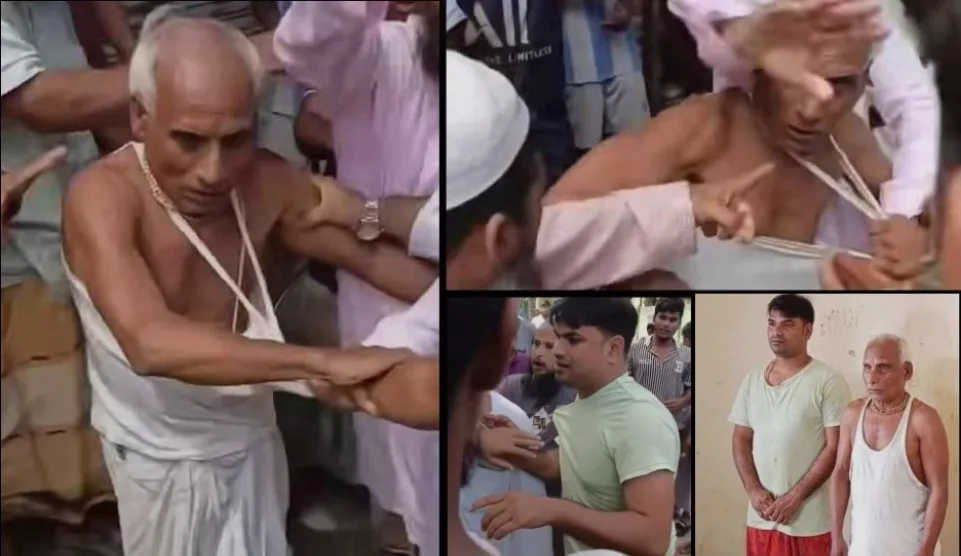
The consequences can be severe even for those who avoid direct violence. In Lalmonirhat, a Hindu father and son were assaulted by a mob in June 2025 over unverified blasphemy claims. Though police intervened, they later detained and arrested the father after complaints from local Islamists.
International human rights organizations have called on Bangladesh’s government to better protect religious minorities and reform laws that facilitate persecution under the guise of protecting religious sentiment. The Digital Security Act, in particular, has been criticized for its vague provisions that enable targeting of individuals on religious grounds.
For Bangladesh’s Hindu community, the cumulative effect of these incidents has been devastating. Many families have reportedly fled their homes temporarily or permanently following attacks, disrupting communities and livelihoods in the process.
As these cases demonstrate, the weaponization of blasphemy allegations continues to threaten the security and rights of religious minorities across Bangladesh, creating cycles of fear that undermine the country’s constitutional commitment to secularism and religious freedom.
Fact Checker
Verify the accuracy of this article using The Disinformation Commission analysis and real-time sources.

8 Comments
This is a troubling pattern of violence and injustice against religious minorities in Bangladesh. Fabricated blasphemy claims should never be used to justify mob attacks and killings. The authorities must do more to protect vulnerable communities and ensure justice is served.
Attacks like this are a horrific violation of human rights. I hope the authorities can investigate this case thoroughly and hold the perpetrators accountable. Minority communities deserve to feel safe and secure in their own country.
Agreed. The government needs to take stronger action to prevent these kinds of incidents and protect religious minorities from mob violence.
This tragic case highlights the urgent need for police and judicial reform in Bangladesh. Mob violence fueled by false accusations of blasphemy cannot be tolerated. The authorities must act swiftly to prevent further attacks and bring the perpetrators to justice.
The scale of the problem, with 24 reported violent incidents, is alarming. Bangladesh must take concrete steps to protect its religious minorities and crack down on extremist groups that abuse blasphemy laws for their own violent agendas.
Agreed. Strengthening minority rights protections and ensuring prompt, impartial investigations of all such incidents should be a top priority for the Bangladeshi government.
It’s deeply disturbing to see how extremist groups are exploiting religious tensions and using unverified claims to incite violence against Hindus and other minorities in Bangladesh. This must stop, and the rule of law needs to be upheld.
This is a disturbing pattern of violence that must be addressed. The Bangladeshi authorities need to do more to safeguard the rights and security of all its citizens, regardless of their religious affiliation. Impunity for such crimes cannot be tolerated.