


Listen to the article
AI-Generated Video Falsely Shows Pro-Russian Protests in Kharkiv
A misleading video circulating on Facebook claims to show residents of the Ukrainian city of Kharkiv protesting with demands to become part of Russia, but an investigation by Agence France-Presse (AFP) has determined the footage was entirely fabricated using artificial intelligence.
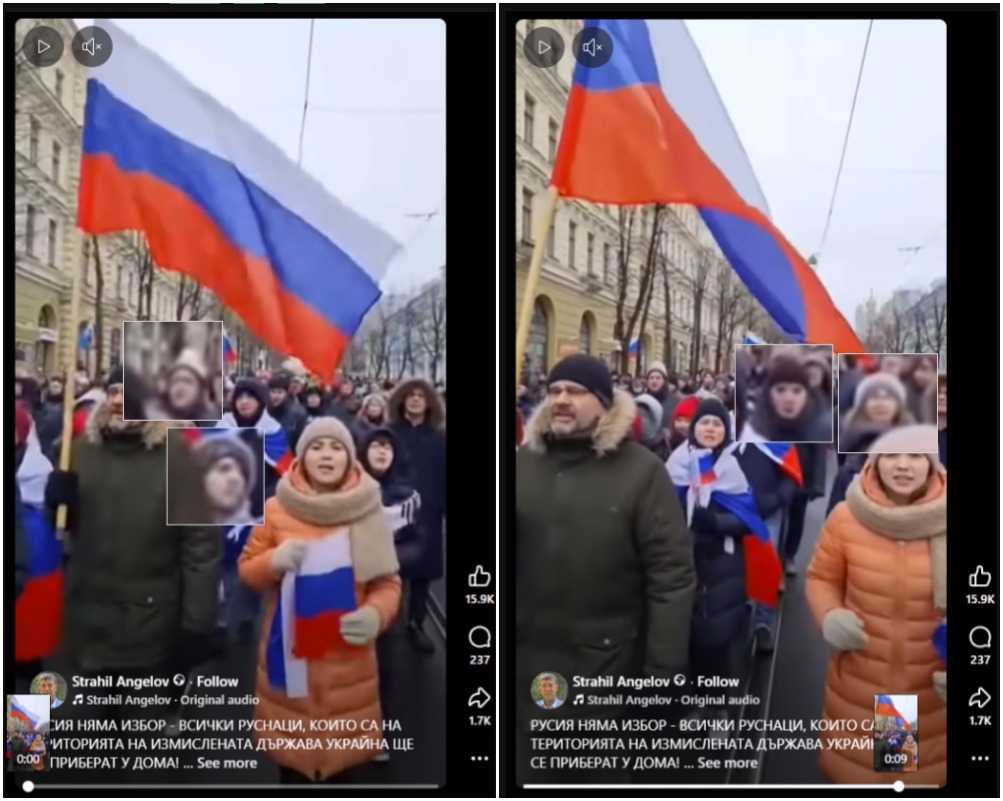
The 10-second video, which has been viewed more than 725,000 times and shared by over 1,900 Facebook users, depicts crowds walking with Russian flags while chanting in Russian: “Russia, we are waiting for you! We hope all this ends soon.” One post explicitly claims “KHARKIV RESIDENTS WANT TO BE PART OF RUSSIA,” while another implies Ukrainian citizens identify as Russians.
AFP’s thorough examination uncovered multiple hallmarks of synthetic content throughout the video, conclusively proving it was AI-generated rather than authentic footage of actual events in Ukraine.
Visual Evidence of AI Manipulation
The investigation identified numerous visual inconsistencies typical of AI-generated content. From the opening frame, the video displays distorted or blurred faces and people with unnatural, zombie-like appearances. Some individuals have missing faces entirely, while others appear unnaturally merged together.
One particularly telling detail involves a Russian flag held by a woman in the foreground. The flag contains an incorrect additional vertical white stripe alongside Russia’s traditional tricolor design. Such flag inconsistencies are common in AI-generated content, where models frequently misrepresent national symbols.
The video also contains physics irregularities. At the beginning, wind appears to blow the woman’s flag to the left while other flags wave in the opposite direction. Later in the clip, her flag changes direction entirely.
Technical Analysis Confirms Synthetic Origin
Multiple specialized detection tools confirmed the synthetic nature of the footage. The AI-generated content detection tool Hive Moderation indicated a 99.9% probability that the video was artificially created. These results were validated by Deepfake-o-meter, an open-source tool developed by the Media Forensics Lab at the University at Buffalo, where five different detection systems indicated over 90% probability of synthetic content.
The audio portion underwent similar scrutiny. The audio analysis tool Hiya indicated a 64% probability that the sound was synthetic, while the Deepfake Total tool developed by the Fraunhofer Institute showed an even higher 98.4% probability of AI-generated audio.
A TikTok post featuring the same video from December 10 carried an AI tag, which the platform uses to indicate content generated using artificial intelligence. The account had previously shared other AI-generated videos supposedly showing pro-Russian demonstrations.
No Evidence of Pro-Russian Demonstrations in Ukraine
AFP found no credible reports of pro-Russian protests taking place in Kharkiv or any other major Ukrainian city in recent weeks. This was confirmed by the agency’s Kyiv bureau, which stated: “The most recent protest-related events took place in July of this year and were related to the independence of anti-corruption agencies.”
These summer protests were sparked by President Volodymyr Zelensky’s attempt to undermine the independence of anti-corruption institutions, which triggered demonstrations and criticism from the European Union, ultimately forcing a policy reversal.
Part of Broader Disinformation Campaign
The fabricated protest video appears to be part of a larger propaganda effort designed to create the impression of strong pro-Russian sentiment within Ukraine. However, polling data contradicts this narrative. According to a recent survey by the Kyiv International Institute of Sociology, 75% of Ukrainians reject peace proposals involving territorial concessions to Russia.
Similar AI-generated videos purporting to show pro-Russian sentiment in Ukraine have proliferated across social media platforms in recent months. Fact-checking organizations, including AFP, have repeatedly debunked such content as part of a growing trend of synthetic media being used to spread misinformation about the Russia-Ukraine conflict.
As peace negotiations continue, experts warn that the increasing sophistication of AI-generated content presents new challenges for identifying authentic information about the situation on the ground in Ukraine.
Fact Checker
Verify the accuracy of this article using The Disinformation Commission analysis and real-time sources.

20 Comments
The discovery of this AI-generated video is a wake-up call for the need to invest in robust fact-checking and media authentication capabilities. Combating the spread of synthetic content is crucial to maintaining an informed citizenry.
I’m glad to see this AI-generated video was quickly debunked. It’s a sobering reminder of the need for robust media literacy and critical thinking when consuming online content, particularly related to geopolitical events.
The creation of this AI-generated video is a concerning development that highlights the need for stronger safeguards and media literacy initiatives to combat the spread of synthetic content and misinformation.
Deeply troubling to see how AI can be exploited to fabricate visual content and spread false narratives. This underscores the critical importance of verifying information from credible sources, especially on complex geopolitical issues.
Absolutely. Maintaining a discerning and skeptical approach is essential to navigating the growing challenge of online misinformation.
This is a troubling example of how AI can be used to create synthetic media that could mislead the public. It’s a stark reminder of the need for robust fact-checking and media literacy efforts to combat the spread of disinformation.
This is a troubling example of how easily manipulated media can be used to sow discord and confusion. We must be extremely cautious about accepting any unverified claims, especially regarding sensitive geopolitical issues.
Absolutely. Fact-checking and relying on reputable sources is crucial to combat the proliferation of disinformation, especially around complex conflicts like the one in Ukraine.
Deeply concerning to see this kind of AI-generated disinformation being spread. It’s critical we remain vigilant and rely on authoritative, verified sources when it comes to the situation in Ukraine.
Agreed. The manipulation of visual content using AI is a growing threat that must be addressed to prevent the spread of false narratives.
The use of AI to create fake videos that could mislead the public is a concerning development. We must be vigilant in verifying the authenticity of media, especially on sensitive topics like the war in Ukraine.
Agreed. Fact-checking and relying on trusted journalistic sources is essential to combat the spread of disinformation in the digital age.
This is a clear example of how AI can be weaponized to spread misinformation. It’s a wake-up call for the need to strengthen media literacy and invest in tools to detect synthetic media.
The creation of this fabricated video using AI is deeply concerning. It underscores the importance of relying on authoritative, verified sources and maintaining a healthy skepticism when consuming information, especially on sensitive topics like the war in Ukraine.
Well said. Fact-checking and critical thinking are essential tools to combat the rising tide of disinformation facilitated by advancements in AI technology.
This is a sobering reminder of the potential for AI to be misused to create false narratives. Maintaining a healthy skepticism and relying on reputable sources is essential to discerning truth from fiction, especially in sensitive geopolitical contexts.
Well said. Diligence and critical thinking are key to navigating the challenges posed by the rise of AI-generated media and misinformation.
Disturbing to see how AI can be used to create fake content that could mislead people. We must remain vigilant and always verify the source and authenticity of information, especially regarding complex geopolitical issues.
Absolutely. Fact-checking and critical thinking are crucial to navigate the growing challenge of disinformation online.
This AI-generated video is a stark reminder of the need for improved media literacy and fact-checking mechanisms to identify and counter the proliferation of synthetic content. Maintaining a vigilant and critical eye is crucial.