


Listen to the article
In the aftermath of the Southport tragedy that claimed three young lives, social media platforms have become a battleground of misinformation, with far-right agitators deliberately stoking tensions and fueling unrest across the United Kingdom.
Security officials and social media researchers have identified a coordinated campaign spreading false claims about the suspect’s identity and background. Though many accounts appear to be operated by real individuals with genuine grievances, experts have uncovered networks of automated “bot” accounts amplifying divisive content and false narratives.
According to a senior security source, these disinformation campaigns utilize sophisticated tactics that exploit existing social tensions. “We’ve seen evidence of organized activity aimed at amplifying certain narratives, particularly those claiming the suspect was an asylum seeker who had recently arrived in the country,” the source explained.
The coordinated nature of these campaigns became apparent as identical messages appeared simultaneously across multiple platforms, often using similar language and sharing the same misleading images. Many of these accounts displayed telltale signs of automation – posting at mechanically regular intervals and engaging primarily with inflammatory content.
Social media companies have struggled to contain the spread of false information. Despite removing thousands of posts, the volume and velocity of new content has overwhelmed moderation systems. By the time posts were removed, many had already been viewed and shared thousands of times, creating what researchers describe as “cascades of misinformation” that proved difficult to counteract.
Marc Owen Jones, an associate professor at Hamad bin Khalifa University who specializes in digital disinformation, noted that the tactics employed in Southport mirror those seen in previous incidents. “We observe the same playbook: seize on a tragedy, push false narratives that align with existing prejudices, and exploit algorithmic weaknesses in social media platforms to gain maximum visibility,” he explained.
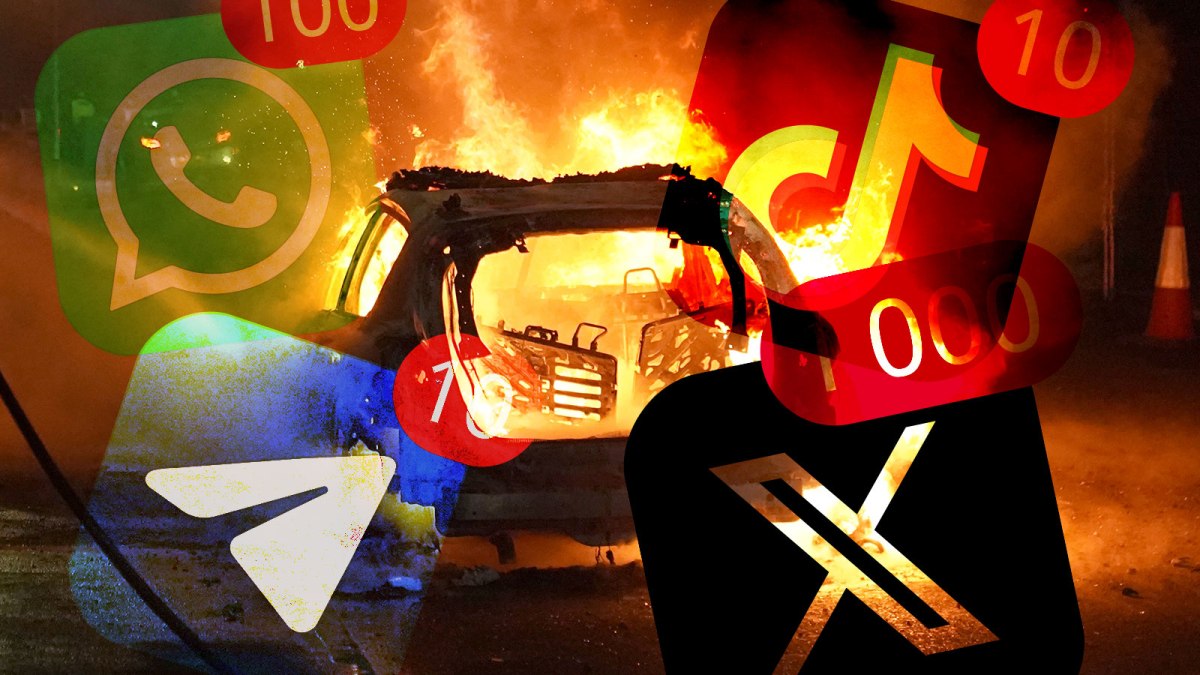
The impact of these disinformation campaigns has extended beyond online spaces, contributing to real-world violence. The riots that followed in Southport and spread to other cities demonstrated how quickly online falsehoods can translate into physical confrontation.
Government officials have criticized social media companies for their response. Home Secretary Yvette Cooper demanded platforms take “much faster action” against content inciting violence, while Prime Minister Keir Starmer has suggested that current regulations may be inadequate to address the scale of the problem.
Under the Online Safety Act, social media companies face significant penalties if they fail to protect users from illegal content, including material that incites violence or hatred. However, enforcement mechanisms remain underdeveloped, and companies continue to rely heavily on automated systems that have proven insufficient during crisis situations.
Technology experts point to fundamental challenges in content moderation at scale. Carl Miller, research director at the Centre for the Analysis of Social Media, noted that “platforms are designed to maximize engagement, and unfortunately, inflammatory content often drives the highest engagement rates.” This creates inherent tensions between business models and public safety considerations.
Law enforcement agencies have announced investigations into the source of the misinformation, with potential criminal charges for those found responsible for inciting violence. The National Crime Agency has established a dedicated team to identify the originators of the most damaging false claims.
Some experts have advocated for a more systemic approach to addressing online misinformation. Professor Helen Margetts of the Oxford Internet Institute suggested that “reactive content moderation will never be sufficient. We need to rethink platform design to reduce the viral spread of harmful content in the first place.”
As communities begin to recover from the violence, questions remain about how to prevent similar situations in the future. Civil society organizations have called for increased media literacy programs and greater transparency from social media companies about how their algorithms amplify certain types of content.
The events in Southport reveal the complex interplay between social media, misinformation, and public unrest in an increasingly polarized society—highlighting the urgent need for more effective responses from technology companies, government regulators, and communities themselves.
Fact Checker
Verify the accuracy of this article using The Disinformation Commission analysis and real-time sources.

11 Comments
The use of bots and automated accounts to amplify divisive rhetoric is a concerning tactic. I hope the authorities are able to identify the orchestrators behind this campaign and take appropriate action to limit the damage. Maintaining trust in information sources will be crucial in the aftermath.
Agreed. Stronger platform policies and user education on spotting inauthentic activity are also important to counter the reach of these disinformation campaigns.
The use of bots and automated accounts to amplify false narratives is concerning. Platforms need to strengthen their efforts to detect and remove this kind of coordinated inauthentic behavior. Rebuilding trust in information sources will be crucial in the aftermath of this tragedy.
It’s distressing to see how quickly misinformation can spread on social media, especially around sensitive events. I hope the authorities are able to swiftly identify the orchestrators behind this campaign and shut down their efforts to sow discord. Fact-checking and media literacy will be key to combating this.
This is a troubling example of how social media can be weaponized to sow discord and division. I hope the security officials are able to effectively disrupt these coordinated disinformation campaigns and that platforms strengthen their efforts to combat the spread of false narratives.
Exploiting social tensions through coordinated disinformation is a dangerous tactic that can incite further unrest. I hope the security officials are able to disrupt these networks and restore accurate information to the public discourse. Misinformation like this only serves to divide communities.
Agreed. Tackling the root causes of social divisions is also important to prevent such manipulation from taking hold in the first place.
This is a concerning case of disinformation and coordinated social media manipulation. It’s crucial that authorities work to identify the bad actors behind these campaigns and put a stop to the spread of false narratives. Transparent and fact-based reporting is key to countering the damage.
The use of bots and automated accounts to amplify divisive narratives is a concerning tactic. I hope the authorities are able to identify the orchestrators behind this campaign and take appropriate action to limit the spread of misinformation. Maintaining public trust in information sources will be crucial.
Absolutely. Platforms should also invest in better detection and removal of coordinated inauthentic behavior to curb the reach of these disinformation campaigns.
This is a stark reminder of the dangers of online disinformation and the need for robust safeguards against coordinated manipulation. I hope the security officials can effectively disrupt these networks and that platforms take strong action to remove inauthentic accounts and content.