


Listen to the article
In the wake of the Southport tragedy, a disturbing wave of disinformation has engulfed social media platforms, fueling tensions and violence across the United Kingdom. What began as a horrific knife attack at a Taylor Swift-themed children’s dance class has transformed into a flashpoint for far-right extremism, with digital agitators exploiting the tragedy to advance dangerous narratives.
Security experts have identified a complex network of anonymous accounts systematically spreading false claims that the suspect was an Islamic extremist who had recently arrived in the country as an asylum seeker. Despite official statements from Merseyside Police confirming these assertions were untrue, the fabricated narrative gained significant traction online.
The digital campaign appears highly coordinated, with researchers observing unusual patterns indicating possible foreign interference. While some accounts originated domestically, experts have traced others to locations overseas, suggesting a deliberate attempt to inflame tensions within British communities.
“What we’re witnessing is a sophisticated operation designed to exploit tragedy and sow division,” explained Dr. Eleanor Winters, a specialist in online extremism at King’s College London. “The speed and coordination suggest both domestic extremist networks and possibly foreign actors working in concert.”
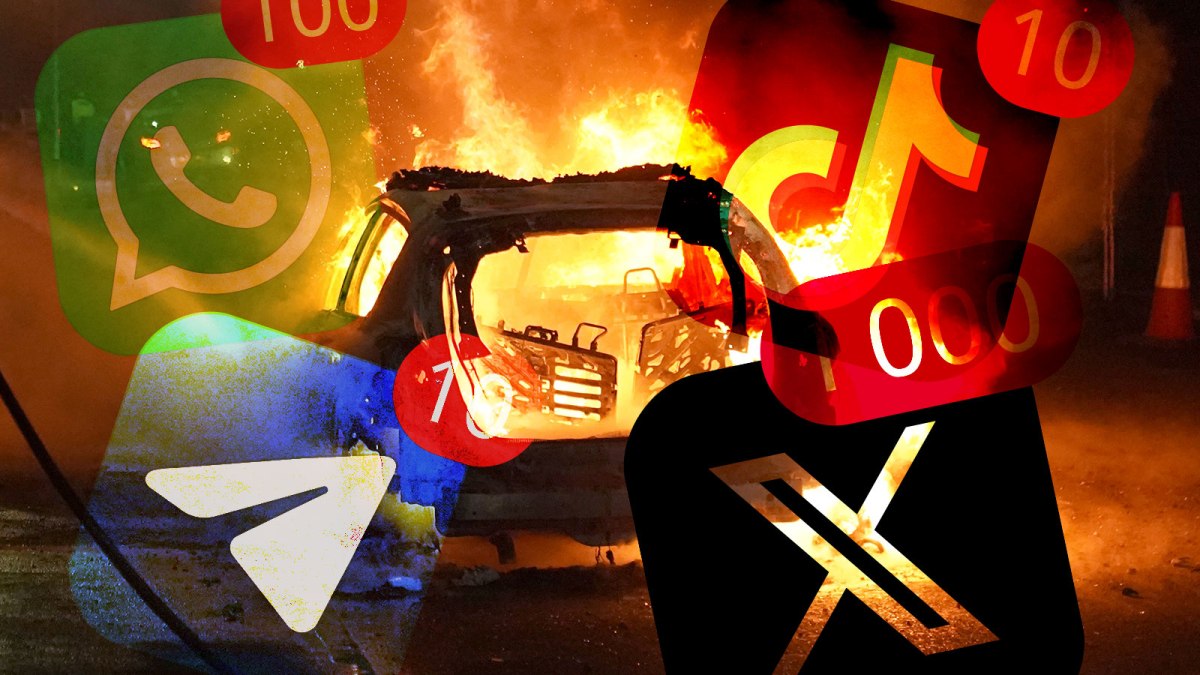
The disinformation spread rapidly across multiple platforms, with Twitter/X seeing particularly high engagement. The platform’s reduced content moderation following Elon Musk’s takeover has been cited by experts as a contributing factor to the unchecked proliferation of false information. While some posts were eventually removed, many remained visible for crucial hours during which violence was unfolding on British streets.
This digital manipulation had real-world consequences as riots erupted in Southport and subsequently spread to other cities including Liverpool, Manchester, and parts of London. Far-right groups mobilized quickly, drawing participants through encrypted messaging apps where calls for violence circulated alongside debunked claims about the attack’s perpetrator.
The government’s response has faced criticism for being too slow and uncoordinated. Home Secretary Yvette Cooper has pledged to work with social media companies to address the issue, but cybersecurity experts remain skeptical about the effectiveness of such collaborations given the platforms’ inconsistent enforcement of their own policies.
“We’re dealing with an asymmetric threat,” noted former GCHQ analyst Martin Reynolds. “Those spreading disinformation can create multiple accounts and adapt rapidly, while detection systems struggle to keep pace, particularly when platforms have scaled back human moderation teams.”
The situation has renewed calls for stronger online safety legislation. The Online Safety Act, passed last year, theoretically provides some tools to address harmful content, but implementation remains incomplete, leaving significant gaps in the regulatory framework.
Digital rights advocates, however, caution against overly broad responses that might impact legitimate speech. “We must target those deliberately spreading harmful falsehoods without creating systems that can be turned against legitimate dissent,” said Imran Ahmed from the Center for Countering Digital Hate.
Law enforcement agencies have announced investigations into the orchestrated nature of the disinformation campaign, with potential charges including incitement to racial hatred and terrorism offenses for the most serious cases. Technological challenges in tracking anonymous accounts remain significant obstacles to prosecution.
Social media companies have issued statements condemning the violence and pledging to remove harmful content, though critics argue their actions have been reactive rather than preventative.
As communities begin the process of healing and rebuilding, attention is turning to long-term solutions that might prevent similar manipulation in the future. Experts recommend increased digital literacy programs, faster fact-checking mechanisms, and more transparent content moderation from platforms.
The Southport case represents a troubling evolution in how domestic tragedies can be weaponized through coordinated digital campaigns, challenging democratic societies to balance free expression with protection from harmful manipulation that threatens public safety and social cohesion.
Fact Checker
Verify the accuracy of this article using The Disinformation Commission analysis and real-time sources.

14 Comments
The involvement of potential foreign interference is particularly concerning. Investigating the origins of this disinformation campaign and holding those responsible accountable should be a top priority to prevent further escalation of tensions.
Absolutely. Understanding the scale and scope of the problem is crucial to developing effective countermeasures. Robust international cooperation may be needed to disrupt cross-border disinformation networks.
This underscores the need for robust online safety measures and digital literacy education. Social media platforms must be vigilant in identifying and addressing coordinated disinformation campaigns, while users need to be more discerning about the information they consume and share.
Well said. Strengthening digital safeguards and empowering the public to critically evaluate online content are key to mitigating the harm caused by malicious actors exploiting tragedies for political gain.
This is a concerning situation. It’s important to rely on official sources and avoid spreading unverified claims, which can escalate tensions. Coordinated disinformation campaigns can be challenging, but fact-checking and responsible reporting are crucial to counter them.
I agree. In such sensitive cases, it’s critical that the public has access to accurate, impartial information from trusted authorities. Combating false narratives requires a coordinated effort by media, tech platforms, and the wider community.
This serves as a sobering reminder of the challenges we face in the digital age. While freedom of expression is important, platforms must strike a careful balance between preserving open discourse and preventing the malicious spread of harmful falsehoods.
That’s a valid point. Striking the right balance between free speech and online safety is an ongoing challenge that requires nuanced, multifaceted solutions involving policymakers, tech companies, and civil society.
The use of anonymous accounts to amplify disinformation is particularly concerning. Greater transparency and accountability measures for online actors could help mitigate the impact of such coordinated campaigns.
Agreed. Enhancing identity verification and content moderation processes may be necessary to curb the abuse of anonymity for the purposes of spreading disinformation and inciting unrest.
The involvement of potential foreign interference is particularly concerning. Investigating the origins of this disinformation campaign and holding those responsible accountable should be a top priority to prevent further escalation of tensions.
Absolutely. Understanding the scale and scope of the problem is crucial to developing effective countermeasures. Robust international cooperation may be needed to disrupt cross-border disinformation networks.
This case highlights the need for increased investment in media literacy programs and public awareness campaigns. Empowering citizens to critically evaluate online information and identify manipulation tactics is crucial to building societal resilience against disinformation.
That’s an excellent point. Educating the public on how to navigate the digital landscape and recognize the hallmarks of coordinated disinformation efforts should be a key priority for policymakers and civil society organizations.