


Listen to the article
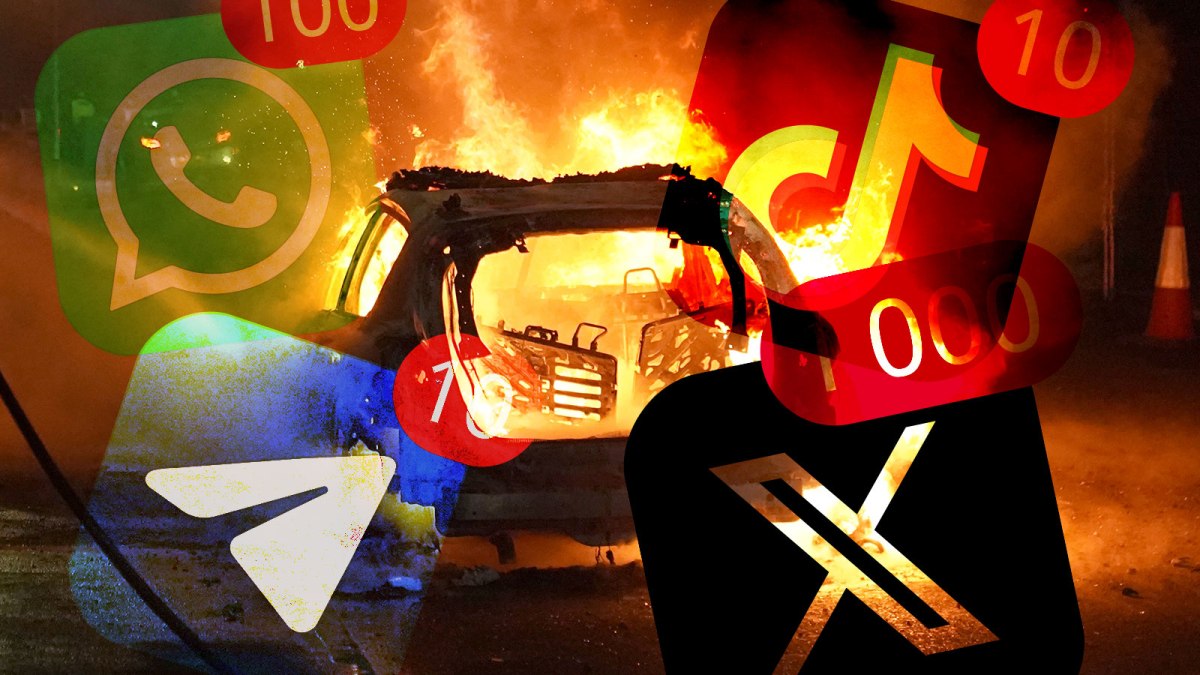
In the aftermath of the Southport tragedy that left three young girls dead and several others injured, a sinister wave of misinformation has flooded social media platforms, creating real-world consequences in communities across Britain.
What began as false claims about the identity of the alleged attacker quickly escalated into a nationwide series of riots and violent protests. The rapid spread of these falsehoods has prompted serious questions about who orchestrates such campaigns and whether they can be effectively countered.
Investigators have identified multiple sources of the misinformation, including far-right extremist networks, foreign influence operations, and opportunistic domestic actors. Security services believe that while the initial spark may have been spontaneous, the subsequent amplification shows hallmarks of coordination.
“We’re seeing a sophisticated interplay between genuine community anger, orchestrated far-right mobilization, and foreign elements seeking to exploit divisions,” said a senior counter-extremism official who requested anonymity due to the sensitive nature of ongoing investigations.
The pattern follows what experts call a “cascade effect” – where an initial false claim is rapidly amplified across platforms through a network of accounts, some automated and others operated by individuals with specific agendas. The Southport case exhibited classic characteristics of this phenomenon, with misleading information spreading faster than fact-checkers could respond.
Foreign interference appears to play a significant role in the current situation. Intelligence agencies have identified clusters of accounts linked to Russia and other state actors that systematically amplified divisive content. These operations typically don’t create the original falsehoods but instead boost existing tensions within communities.
“These are not crude propaganda campaigns,” explained Dr. Emma Richards, a disinformation specialist at King’s College London. “They’re sophisticated operations that understand British society’s fault lines and know exactly which buttons to press to maximize division.”
The domestic far-right has leveraged the situation effectively. Groups that previously operated on the fringes have gained mainstream visibility by positioning themselves as defenders of communities. Their messaging deliberately conflates immigration, Islam, and crime to create a simplified narrative that resonates with genuine public concerns.
Social media platforms have struggled to contain the spread of false information. Despite pledges to act quickly, critics argue their response has been inadequate. Content moderation teams have removed thousands of posts, but the sheer volume and velocity of misinformation outpaces their efforts.
“The platforms’ business models fundamentally incentivize engagement over accuracy,” said Marcus Webb, a former content moderator for a major social media company. “The most inflammatory content spreads fastest, and the algorithms are designed to maximize that spread.”
Legal mechanisms to address the problem remain limited. The UK’s Online Safety Act, which came into force earlier this year, aims to place more responsibility on platforms, but enforcement challenges persist. The line between harmful misinformation and protected free speech often proves difficult to navigate.
Law enforcement agencies have made several arrests related to online incitement, but prosecutions face high evidential bars. Many accounts operate anonymously or from jurisdictions outside UK legal reach, complicating enforcement efforts.
The real-world impact of this digital phenomenon cannot be overstated. Communities with significant Muslim populations have reported heightened fear, with some families avoiding public spaces. Meanwhile, police resources have been stretched responding to disorder in multiple cities simultaneously.
Government officials have called for calm while acknowledging the legitimate grief and outrage over the Southport attack. However, their appeals have struggled to cut through the noise of social media narratives that offer simpler explanations and targets for anger.
Experts warn that the current situation reveals fundamental vulnerabilities in Britain’s information ecosystem. Without coordinated action between government, platforms, and civil society, similar patterns will likely repeat with future triggering events.
“What we’re witnessing isn’t just about one tragedy or one wave of misinformation,” said Dr. Richards. “It’s exposing deeper questions about how our societies handle information in the digital age, and whether our existing institutions can adapt quickly enough to meet the challenge.”
Fact Checker
Verify the accuracy of this article using The Disinformation Commission analysis and real-time sources.

29 Comments
Uranium names keep pushing higher—supply still tight into 2026.
The cost guidance is better than expected. If they deliver, the stock could rerate.
Silver leverage is strong here; beta cuts both ways though.
Good point. Watching costs and grades closely.
Production mix shifting toward Fake Information might help margins if metals stay firm.
Good point. Watching costs and grades closely.
Interesting update on Who is Responsible for Southport Social Media Storm and Can They Be Stopped?. Curious how the grades will trend next quarter.
If AISC keeps dropping, this becomes investable for me.
If AISC keeps dropping, this becomes investable for me.
Good point. Watching costs and grades closely.
Good point. Watching costs and grades closely.
I like the balance sheet here—less leverage than peers.
Good point. Watching costs and grades closely.
Good point. Watching costs and grades closely.
If AISC keeps dropping, this becomes investable for me.
Good point. Watching costs and grades closely.
Good point. Watching costs and grades closely.
The cost guidance is better than expected. If they deliver, the stock could rerate.
Interesting update on Who is Responsible for Southport Social Media Storm and Can They Be Stopped?. Curious how the grades will trend next quarter.
Good point. Watching costs and grades closely.
Good point. Watching costs and grades closely.
Uranium names keep pushing higher—supply still tight into 2026.
Nice to see insider buying—usually a good signal in this space.
Good point. Watching costs and grades closely.
Good point. Watching costs and grades closely.
Silver leverage is strong here; beta cuts both ways though.
Nice to see insider buying—usually a good signal in this space.
Good point. Watching costs and grades closely.
Good point. Watching costs and grades closely.