


Listen to the article
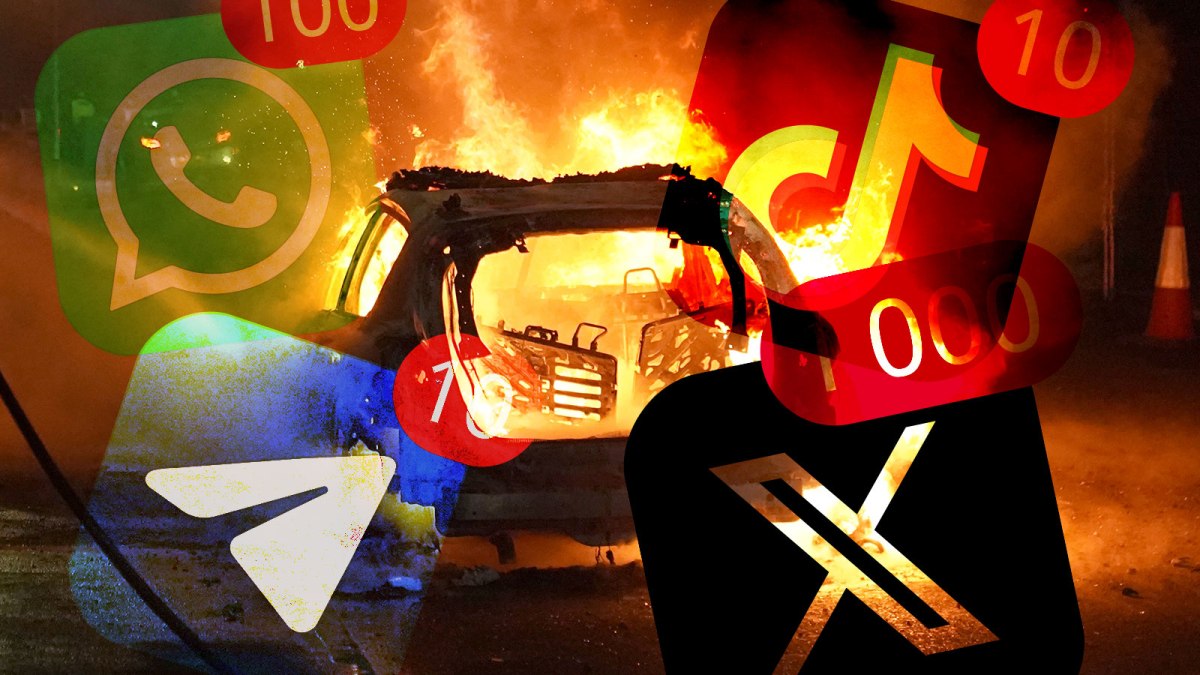
In the aftermath of the tragic Southport stabbings that claimed the lives of three young girls, a troubling wave of disinformation swept across social media platforms, fueling violent riots throughout England. What began as genuine community grief quickly transformed into a breeding ground for conspiracy theories and inflammatory content, raising serious questions about who orchestrates such digital manipulation and what can be done to counter it.
Investigators have identified a network of far-right influencers and anonymous accounts that strategically amplified false claims about the suspect’s identity. These accounts, some with substantial followings, pushed narratives suggesting the perpetrator was an Islamic extremist who had recently arrived in the UK as an asylum seeker – allegations that were categorically false according to police reports.
Security experts point to a calculated pattern in how misinformation spread. “We’re seeing sophisticated coordination,” explains Dr. Emma Wilson, a digital forensics specialist at King’s College London. “These aren’t random posts going viral by chance. There’s evidence of deliberate timing and message amplification by accounts that appear to work in concert.”
The digital trail reveals how certain accounts consistently engage with and boost each other’s content, creating an artificial impression of widespread consensus. This technique, known as “astroturfing,” makes fringe viewpoints appear more mainstream than they actually are.
Several of the most influential accounts pushing false narratives about Southport have been traced to individuals with connections to known far-right organizations. One account with over 100,000 followers was operated by a figure previously involved with nationalist groups that had been monitored by UK security services.
The social media platforms themselves have faced heavy criticism for their delayed response. Meta, which owns Facebook and Instagram, removed hundreds of posts containing false information about the Southport attack, but only after the content had already reached millions of users and riots had begun in several cities.
“The damage was done in those critical first 24 hours,” notes former counter-terrorism official Richard Walton. “Social media companies have the technology to identify coordinated inauthentic behavior much faster than they currently deploy it.”
The economic impact of the resulting unrest has been substantial. The Association of British Insurers estimates damages from the riots could exceed £50 million, with dozens of small businesses suffering extensive destruction. In Liverpool alone, over 30 shops reported significant damage.
Legal experts highlight the challenges in prosecuting those who spread disinformation. “Current UK legislation wasn’t designed for the social media age,” explains media law solicitor James Hartley. “While incitement to violence is clearly illegal, proving that posting false information constitutes incitement presents significant evidential hurdles.”
The government has pledged to address these issues in the upcoming Online Safety Bill, which aims to place greater responsibility on tech companies to moderate harmful content. However, critics argue that the proposals don’t go far enough in addressing coordinated disinformation campaigns.
International perspectives offer potential solutions. Germany’s Network Enforcement Act imposes substantial fines on platforms that fail to remove illegal content quickly, while Finland has pioneered digital literacy education in schools to help citizens better identify false information.
Community leaders in Southport have launched grassroots initiatives to counter the division created by the disinformation campaign. Local interfaith groups have organized vigils that explicitly reject the narratives promoted online, while youth organizations have developed rapid-response teams to share accurate information during crises.
As investigations continue into both the original attack and the subsequent unrest, security analysts warn that the Southport case represents a dangerous new template for how disinformation can rapidly transform tragedy into civil disorder.
“What we witnessed wasn’t just a spontaneous reaction to a terrible crime,” concludes Dr. Wilson. “It was a masterclass in how digital manipulation can exploit genuine grief to advance extremist agendas. Unless we develop more effective countermeasures, this pattern will likely repeat with increasing frequency and impact.”
Fact Checker
Verify the accuracy of this article using The Disinformation Commission analysis and real-time sources.

12 Comments
Social media amplification of harmful conspiracy theories is a growing problem. It’s crucial that platforms and authorities work together to quickly identify and shut down coordinated disinformation efforts.
Absolutely. The ability of bad actors to leverage social media to sow chaos and division is extremely worrying. Safeguarding public discourse should be a top priority.
This is a textbook example of how malicious actors can weaponize social media to spread disinformation and incite unrest. The authorities need to move swiftly to identify and stop these networks.
Absolutely. The ease with which false narratives can spread and escalate is deeply concerning. Robust fact-checking and accountability measures are critical to counter these threats.
Orchestrating disinformation campaigns to incite violence and division is a serious crime. The authorities need to crack down hard on these bad actors and their networks to prevent further harm.
Absolutely. The damage caused by the rapid spread of false narratives can be profound. Stronger oversight and enforcement against coordinated manipulation is critical.
Tragic incidents like this bring out the worst in some people. Using social media to spread lies and fan the flames of hatred is despicable. I hope the perpetrators are held accountable.
Agreed, this kind of malicious behavior exploiting tragedy for political ends is reprehensible. Restoring public trust in the aftermath will be an immense challenge.
It’s deeply disturbing to see how quickly false narratives can take hold and escalate through social media. Robust fact-checking and content moderation need to be a top priority.
Agreed. The ability of bad actors to leverage social media to sow chaos and division is extremely worrying. Safeguarding public discourse should be a key focus for platforms and authorities.
This is really concerning. Misinformation campaigns like this can have devastating effects on communities. I hope the authorities are able to quickly identify the bad actors behind this and put a stop to their activities.
Agreed, the speed and scale at which false narratives can spread online is truly alarming. Robust fact-checking and content moderation will be crucial to counter this.