


Listen to the article
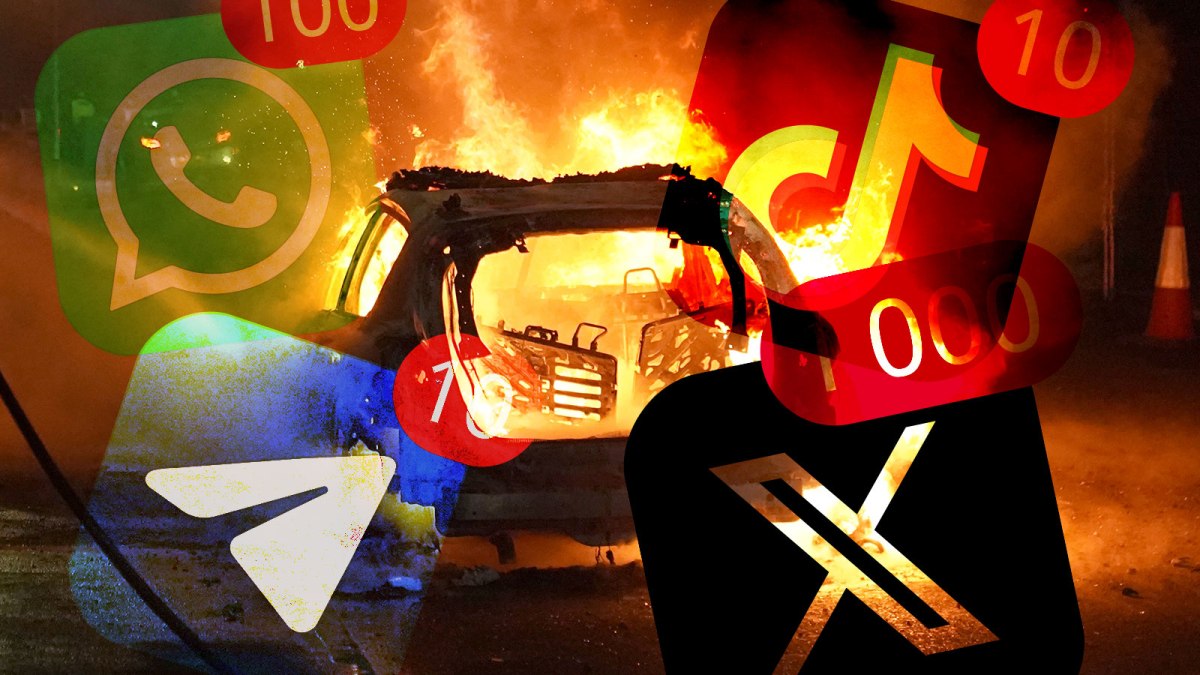
In the aftermath of the Southport knife attack that claimed the lives of three young girls, a troubling wave of disinformation has flooded social media platforms, igniting violent protests across Britain. What began as a tragedy has transformed into a complex web of false narratives, orchestrated by a network of anonymous accounts with apparent connections to Russia.
The violent unrest, which has swept through cities including Southport, Rotherham, and Belfast, stems largely from fabricated claims that the suspect, 17-year-old Axel Rudakubana, was an Islamic extremist who had recently arrived in the UK by boat. Court records have since confirmed Rudakubana was born in Cardiff to Rwandan parents and had no connection to radical Islam.
Intelligence officials and disinformation experts have identified a coordinated campaign of falsehoods designed to inflame tensions. Analysis reveals that within hours of the attack, Russian-linked accounts began amplifying false information about the suspect’s identity and background.
“We’re witnessing a sophisticated operation that exploits a horrific tragedy to sow division,” said Dr. Elena Morton, who specializes in digital disinformation at King’s College London. “The speed and coordination suggest this isn’t spontaneous but rather a calculated effort to destabilize British society.”
The campaign utilized a familiar playbook of disinformation tactics. Initial false claims were seeded by accounts with minimal followers, then amplified by larger accounts with Russian connections. The content was subsequently picked up by far-right influencers and mainstream users, creating the illusion of organic spread.
Home Secretary Yvette Cooper has warned about the “industrial-scale” disinformation, noting that foreign actors are exploiting the situation to instigate violence. The government has established a rapid response unit to counter false narratives, but the task remains daunting as misinformation continues to circulate widely.
Social media companies face mounting criticism for their handling of the crisis. Despite pledges to combat harmful content, platforms including X (formerly Twitter), Facebook, and TikTok have struggled to contain the spread of disinformation. A recent analysis found that posts containing debunked claims about the Southport attack received over 25 million views before moderation actions were taken.
“Tech companies have the tools to identify and limit this content, but their response has been woefully inadequate,” said Marcus Williams of the Center for Digital Resilience. “When profit models prioritize engagement over truth, disinformation thrives.”
The impact extends beyond social media. The violence has caused millions of pounds in property damage, injured dozens of police officers, and further traumatized communities already grieving from the initial attack.
The Southport case highlights the evolving nature of information warfare. Russia has a documented history of employing disinformation to exacerbate social tensions abroad, particularly around immigration and race relations. Security experts suggest these operations serve to undermine Western democracies while distracting from Russia’s actions in Ukraine and elsewhere.
“This represents a new phase in asymmetric conflict,” explained former intelligence officer Catherine Benson. “For a minimal investment, hostile actors can trigger significant real-world disruptions that strain resources and erode public trust.”
Countering such campaigns presents unique challenges. Traditional media literacy efforts move too slowly to combat rapidly spreading falsehoods. Meanwhile, government interventions risk appearing as censorship, potentially reinforcing conspiracy narratives.
Community leaders in affected areas are attempting to restore calm through dialogue and public appeals for unity. In Southport, local residents organized a peace vigil attended by thousands, demonstrating solidarity across religious and ethnic lines.
As investigations continue, security officials warn that the Southport disinformation campaign likely serves as a template for future operations. The incident underscores the urgent need for more robust defenses against information manipulation, particularly during moments of national trauma.
“What we’re witnessing isn’t just about one tragedy,” concluded Dr. Morton. “It’s about how vulnerable our information ecosystem remains to exploitation, and the real human cost when disinformation translates into violence on our streets.”
Fact Checker
Verify the accuracy of this article using The Disinformation Commission analysis and real-time sources.

9 Comments
This is a sobering reminder of the power of social media to amplify falsehoods and inflame tensions. I’m curious to learn more about the specific tactics being used in this disinformation campaign, and what can be done to disrupt these coordinated efforts to exploit tragedies for political gain.
Agreed. Disinformation thrives in the absence of facts. Robust fact-checking and transparent reporting will be essential to countering this narrative hijacking and restoring public trust.
The orchestration of false narratives around this tragedy is truly appalling. Exploiting people’s pain and fear for political gain is despicable. I hope the authorities can identify and halt the individuals and networks behind this coordinated disinformation campaign.
Agreed. Spreading disinformation during a time of grief and mourning is a new low. Fact-based reporting and open dialogue are needed to calm tensions, not fanning the flames of hatred and division.
This is a troubling situation. It’s concerning to see how quickly misinformation can spread and be used to inflame tensions, especially around sensitive topics like this attack. Proper fact-checking and responsible reporting will be crucial to countering the disinformation campaign.
The deliberate spread of false narratives around this tragedy is deeply troubling. I hope the authorities can quickly identify and halt the individuals and networks orchestrating this coordinated disinformation campaign. Responsible, fact-based reporting will be crucial to restoring public understanding.
This is a concerning example of how social media can be weaponized to sow discord, even in the wake of a terrible event. I’m curious to learn more about the tactics and motivations behind this coordinated disinformation campaign. Unraveling these networks is crucial to preventing such abuses in the future.
This is a chilling example of how social media can be weaponized to sow discord and division, even in the wake of a horrific event. I’m curious to learn more about the specific tactics and motivations behind this coordinated disinformation campaign. Unraveling these networks and exposing their methods will be key to preventing such abuses in the future.
It’s heartbreaking to see how this tragic incident has been hijacked and twisted for political ends. I hope the authorities can move swiftly to identify the perpetrators and put a stop to their malicious activities. Accurate information and responsible reporting will be key to countering the damage.