


Listen to the article
The swirl of misinformation following the tragic Southport knife attack has exposed deep rifts in British society, highlighting how rapidly false claims can spread during moments of national trauma.
In the hours after three children were killed in a horrifying incident at a Taylor Swift-themed dance class, a fog of unverified information began circulating online. Despite police quickly clarifying that the attack was not terror-related, social media platforms became flooded with baseless rumors about the suspect’s identity, religion, and immigration status.
These fabrications gained significant traction, with some falsely claiming the attacker was an asylum seeker who had recently arrived on a small boat. Others erroneously stated he was a Muslim terrorist. None of these allegations proved true, but the damage was already done.
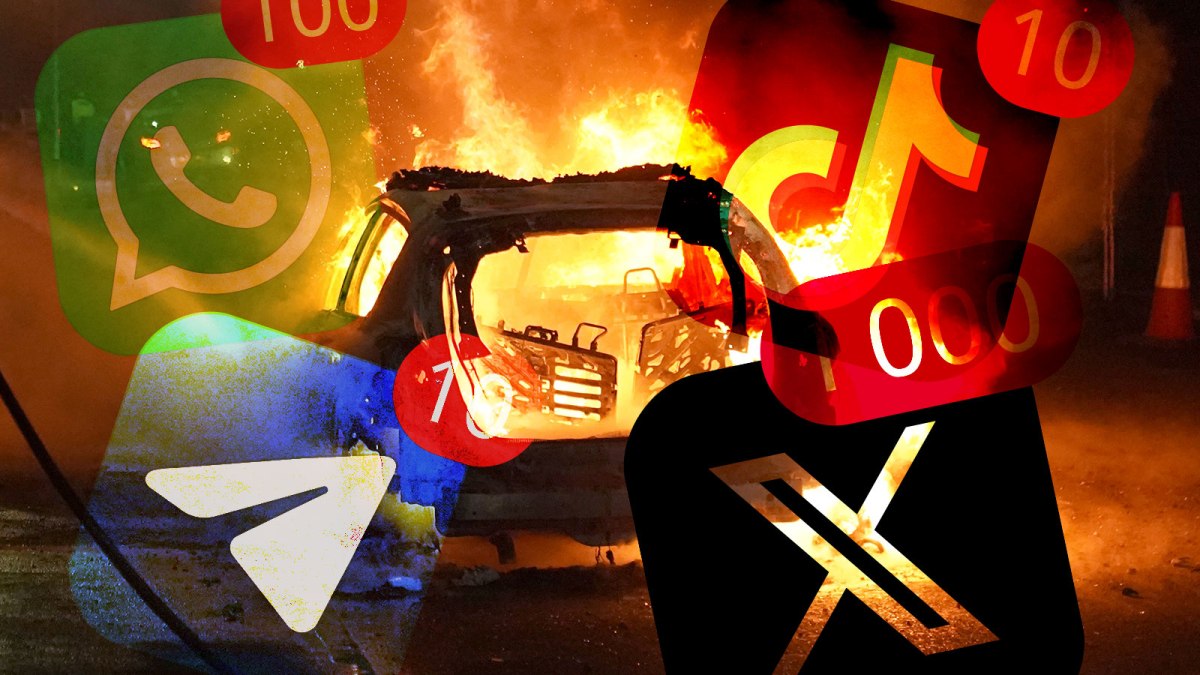
The rapid spread of these falsehoods highlights a troubling pattern that has become increasingly common during crisis events. Social media algorithms tend to amplify emotionally charged content, allowing misinformation to reach millions before facts can be established. Many platforms have struggled to implement effective moderation policies that can respond quickly enough during fast-moving events.
“What we’re seeing is a perfect storm of algorithmic amplification, emotional reaction, and political opportunism,” said Dr. Emma Wilson, a digital misinformation researcher at King’s College London. “Once these narratives take hold, they’re extraordinarily difficult to counteract.”
The consequences of this misinformation cascade were severe and immediate. Far-right groups mobilized in Southport and later in other cities across the UK, including Liverpool, Manchester, and Hartlepool. What began as supposedly peaceful protests quickly descended into violent riots, with police officers injured and businesses vandalized.
Home Secretary Yvette Cooper condemned the violence, describing it as “far-right thuggery” rather than legitimate protest. Prime Minister Keir Starmer echoed these sentiments, promising swift justice for those involved in the disturbances.
The role of social media platforms has come under intense scrutiny. While companies like X (formerly Twitter) and Facebook have policies against misinformation, enforcement remains inconsistent. The UK’s Online Safety Act, which came into force this year, requires platforms to protect users from harmful content, but critics argue implementation has been slow.
“These platforms have had years to develop effective crisis protocols,” said Julian Barnes, director of the Center for Digital Democracy. “The fact that we’re still seeing this level of misinformation spread during tragic events suggests their systems remain woefully inadequate.”
Experts point to several factors that have exacerbated the situation. Political polarization has created an environment where misinformation often aligns with pre-existing beliefs. Additionally, declining trust in traditional news sources has left many turning to unverified social media accounts for information.
The Southport incident also revealed how international networks of influencers and political figures can amplify misinformation. Several prominent American and European far-right commentators shared the false claims to millions of followers, giving local rumors a global audience.
Law enforcement officials have begun making arrests related to the online spread of misinformation. Merseyside Police announced they are investigating numerous social media posts for potential incitement to violence or racial hatred, offenses that can carry significant penalties under UK law.
For communities affected by both the tragedy and subsequent unrest, the road to healing will be long. Local leaders in Southport have called for unity and calm, organizing interfaith gatherings and community dialogues to counter division.
As investigations continue into both the original attack and the resulting violence, questions remain about how society can better prepare for and respond to such information crises in the future. Experts suggest that media literacy education, faster fact-checking systems, and more accountable platform policies will all be necessary components of any solution.
What the Southport tragedy has made painfully clear is that in an age of instantaneous communication, the battle against misinformation is not merely academic—it has real-world consequences that can compound tragedy with chaos.
Fact Checker
Verify the accuracy of this article using The Disinformation Commission analysis and real-time sources.

9 Comments
This is a disturbing pattern that seems to play out all too often. Platforms need to be more proactive in identifying and limiting the spread of misinformation, especially around sensitive events. But the root causes run deeper – we need to address the societal factors that make people vulnerable to these false narratives.
I’m curious to know more about the specific tactics and motivations behind this social media storm. Were there coordinated efforts to spread these false claims, or was it more organic amplification through algorithms and user behavior? Understanding the mechanics is key to developing effective countermeasures.
Tragic events often bring out the worst in people. Spreading misinformation and false narratives during a crisis is abhorrent and can have real, harmful consequences. We need to find ways to promote truth and civility, even in the face of trauma.
Tragic events like this bring out the worst in some people. Spreading harmful falsehoods for political gain or personal gratification is unacceptable. We need a multi-stakeholder approach to combat this, involving platforms, lawmakers, civil society, and the public.
This is a concerning situation. Spreading misinformation during a tragedy can cause real harm and undermine public trust. Social media platforms need to improve their ability to quickly identify and limit the spread of false claims, before they take on a life of their own.
Responsible journalism and effective platform moderation are essential, but won’t solve the problem alone. We also need to invest in media literacy programs that empower people to critically evaluate online content and resist the pull of emotionally charged misinformation.
Disinformation campaigns that exploit tragedy are a growing threat. We need a multipronged approach – stronger platform policies, better media literacy, and a societal commitment to truth-telling, even when it’s uncomfortable. This is a complex challenge, but one we must address.
Anonymity and rapid sharing on social media make it easy for bad actors to manipulate information for their own agenda. Responsible journalism and fact-checking are crucial to counter this, but platforms also need better safeguards to prevent the amplification of unverified claims.
I agree. Social media algorithms that prioritize engagement over accuracy are a major part of the problem. Platforms need to rethink their incentive structures to reward truthful, constructive content instead.