


Listen to the article
Social Media Becomes Battleground for Fake News as Russia-Ukraine War Unfolds
The Russia-Ukraine conflict has sparked a flurry of misinformation across social media platforms, with Turkish social networks becoming particularly fertile ground for manipulated content that distorts the reality of the war, according to a recent analysis of fake posts.
Researchers examining the spread of falsified war-related content identified five main themes: war reporting, ideological misrepresentation, humor, hate speech, and conspiracy theories. Each category employs distinctive tactics designed to mislead and influence social media users.
The War Through a Distorted Lens
Fake posts about the war consistently transform social media into spaces where users generate news-like content without actual journalistic credentials or standards. These accounts employ clickbait tactics and manipulated images to rapidly spread misinformation through likes and shares.
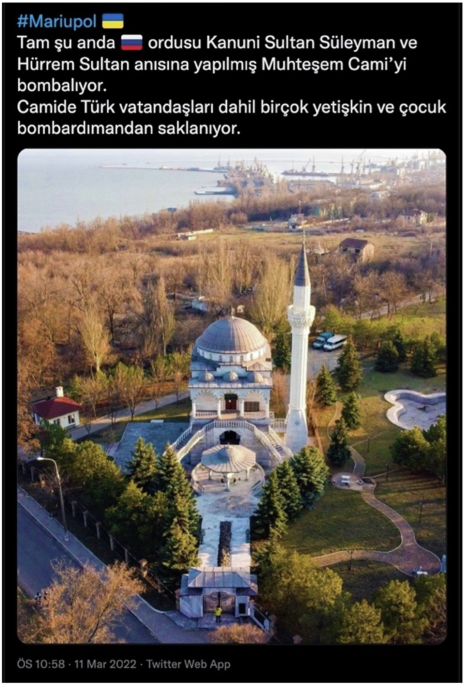
One striking example featured a high-angle image of a mosque with the hashtag #Mariupol and a Ukrainian flag emoji. The accompanying text claimed: “Right now, the Russian army is bombing the ‘Magnificent Mosque’ built in memory of Sultan Suleiman the Magnificent and Hürrem Sultan. Many adults and children, including Turkish citizens, are taking refuge in the mosque from the bombardment.”
This post exemplifies a common tactic: combining historical narratives with current events to create emotionally resonant but fabricated stories. By invoking Turkish historical figures, the post attempts to draw Turkey into the conflict emotionally.
“Ukraine Is Alone” Narrative Takes Hold
A prevalent sub-theme in war reporting presents Ukraine as abandoned by world powers. These posts, while masquerading as breaking news about frontline developments, frequently mix personal opinions and ideological perspectives with purported facts.
One widely shared post proclaimed: “WAR HAS BEGUN. Violent explosions are happening in Kharkiv, Kiev, and many other cities. Europe and the US have abandoned Ukraine. Russia and Putin are doing whatever they want. NATO is urgently intervening.”
The post included a night photograph showing beams of light, falsely presented as explosions in Ukrainian cities. This combination of alarming text with decontextualized imagery creates a powerful but misleading impression of events.
Ideological Battle: “Nazi Ukrainians” vs. “Nazi Russians”
Particularly troubling is the way both pro-Ukrainian and pro-Russian fake content incorporates Nazi imagery and historical references to vilify the opposing side. This creates a stark ideological polarization in how the conflict is presented.
In one example, President Zelensky’s Ukrainian Armed Forces logo on a sweatshirt was falsely associated with Nazi symbolism during a speech. The post misleadingly asked: “What message can Ukraine’s President convey with a Nazi symbol?”
Meanwhile, pro-Ukrainian fake content took a similar approach by portraying Putin on a fabricated Time magazine cover, digitally manipulating his image alongside Hitler. The cover headline read: “The Return of History, How Putin Shattered Europe’s Dreams,” with text suggesting Putin was following “Hitler’s historical footsteps.”
Humor Blurs War’s Reality
The analysis also identified how humor is weaponized to spread misinformation. By incorporating comedic elements, these posts make it more difficult for users to recognize falsehoods.
One post from a Turkish humor magazine combined the text “Bayraktar, SIHA TB2 mistreated Russian convoy” with an unverified video showing an exploding tank. The humorous framing transformed serious war events into entertainment, further blurring the line between fact and fiction.
Character Assassination Through Hate Speech
Hate speech-infused fake content targeted political leaders, particularly Ukrainian President Zelensky. Pro-Russian posts attacked his pre-political career and leadership capabilities, often incorporating xenophobia and anti-LGBT rhetoric.
One manipulated image portrayed Zelensky with text stating: “Zelensky is a puppet of the imperialists! Zelensky is a supporter of LGBT! Zelensky is leading Ukraine and its people into the abyss!” This narrative frames Zelensky as a “Western pawn” while simultaneously stigmatizing LGBT communities.
Conversely, pro-Ukrainian fake content portrayed Zelensky as a heroic soldier fighting alongside his troops. One widely circulated image showed him in military gear, falsely claiming he was personally fighting on the front lines.
Conspiracy Theories Flourish
Perhaps most concerning is the proliferation of conspiracy theories. Two primary narratives emerged: that the war was orchestrated by “external and secret forces” commonly referred to as “foreign powers,” or that the conflict isn’t real at all but rather a digitally staged event to establish a “new world order.”
One post claimed: “DEEP STATE IN PANIC: Rothschild warns… Nathaniel Rothschild warned the British government that if Putin wins in Ukraine, the ‘New World Order’ will end.” Another alleged the war footage was staged, comparing it to “similar movies shot for Syria” and claiming previous conflicts were “orchestrated by foreign powers.”
Social media experts warn that these hybrid conspiracy theories are particularly dangerous, as they combine personal opinions with unfounded narratives in easily shareable formats that can proliferate rapidly regardless of context.
As the war continues, the analysis highlights the urgent need for greater media literacy and more robust fact-checking mechanisms to combat the spread of manipulated content that threatens to distort public understanding of this significant geopolitical conflict.
Fact Checker
Verify the accuracy of this article using The Disinformation Commission analysis and real-time sources.

13 Comments
As an investor in the mining and energy sectors, I’m concerned about the potential impact of this kind of widespread misinformation on market sentiment and decision-making. Reliable information is crucial for making informed investment choices.
It’s disheartening to see social media become a battleground for propaganda and false narratives. Combating the spread of misinformation requires a multi-pronged approach involving platform policies, media literacy education, and individual vigilance.
This is a sobering reminder of the challenges we face in the digital age when it comes to discerning truth from fiction. As an observer of the mining and commodities space, I hope to see continued efforts to combat the spread of misinformation and maintain the integrity of information.
This is a timely reminder of the importance of critical thinking and fact-checking when consuming information, especially on social media. The proliferation of misinformation during conflicts can have real-world consequences.
The flood of false information during the Russia-Ukraine war underscores the urgent need for improved media literacy and fact-checking efforts, especially on social media platforms. This is an issue that affects us all, regardless of our specific industry interests.
The tactics used to spread misinformation, like clickbait headlines and manipulated images, are concerning. As an investor in mining and energy companies, I hope social media platforms can take stronger action to limit the reach of this kind of content.
Yes, the distortion of facts and warping of the narrative through social media is very worrying. Maintaining an accurate understanding of the situation is crucial, especially for those of us with investments in the relevant sectors.
The report highlights the sophisticated tactics used to spread disinformation on Turkish social media during the Russia-Ukraine war. As an industry observer, I’m curious to see what measures social media platforms and governments will take to address this challenge.
The tactics used to spread misinformation, such as manipulated images and clickbait headlines, are particularly concerning. As an investor, I’m curious to see how this issue will be addressed by social media platforms, fact-checkers, and the broader industry.
It’s troubling to see how social media is being weaponized to spread propaganda and conspiracy theories around the war. Fact-checking and media literacy efforts are crucial to counter the tide of false and misleading information.
Absolutely. Discerning truth from fiction on social media has become increasingly challenging during this conflict. Reliable journalism and authoritative sources are more important than ever.
The spread of misinformation and fake news during the Russia-Ukraine war is very concerning. Social media platforms need to do more to combat the flood of manipulated content and disinformation that can mislead people and distort the reality of the conflict.
The report’s findings emphasize the need for greater transparency and accountability from social media companies when it comes to moderating content and limiting the reach of disinformation. This is an issue that affects us all, regardless of our industry focus.