


Listen to the article
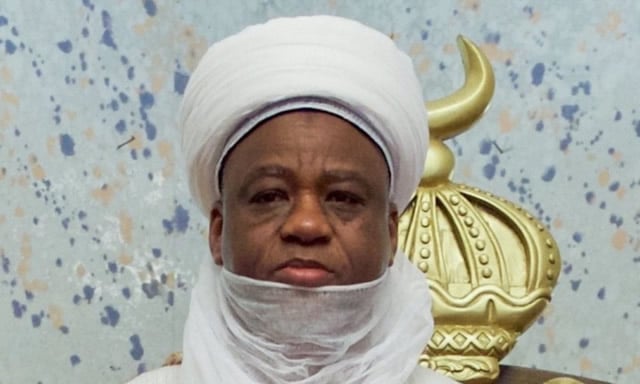
Nigerian monarch Sultan Muhammad Sa’ad Abubakar has urged the Federal Government to implement regulations governing social media usage, warning that the unchecked spread of misinformation threatens national stability and peace.
During the General Assembly of the Northern Traditional Rulers Council held Tuesday in Birnin Kebbi, the Sultan of Sokoto expressed alarm over how rapidly false information spreads online, noting that many Nigerians tend to accept and react to unverified content without scrutiny.
“It is now time for the government to regulate social media in the country. The spread of fake news is dangerous and must be addressed,” the Sultan told the assembly of northern traditional leaders.
This marks the second time in recent weeks that the influential monarch has raised concerns about social media’s impact on Nigerian society. Just last week, he described social media as “a tool of division and hatred” while calling for greater Muslim unity across the country.
The Sultan’s appeal comes amid growing concerns about social media’s role in amplifying religious and ethnic tensions in Nigeria, where misinformation has been linked to incidents of violence and community conflict. Security experts have previously noted how viral false information has contributed to flare-ups between farming and herding communities in parts of the country.
During the assembly, the Sultan also praised the Nigerian Armed Forces for their dedication to restoring peace across regions affected by banditry and insecurity. He specifically acknowledged military efforts that made it possible for the council to safely convene in Kebbi State, an area previously affected by security challenges.
“I strongly condemn some of the harsh words directed at our military because of certain setbacks. They are doing their best to restore security in many parts of the country,” he stated. “Such criticism does not help. Instead, it discourages those who are putting their lives on the line for our safety.”
The Northern Traditional Rulers Council meeting centered on the theme “Strengthening Community Collaboration for Lasting Peace and Security in Northern Nigeria,” highlighting the crucial role traditional institutions play in security frameworks.
Vice Chairman of the Council and Emir of Borno, Abubakar Elkanemi, emphasized the importance of dialogue and cooperation in addressing Nigeria’s complex security challenges. He described traditional rulers as vital intermediaries between government authorities and local communities, noting their effectiveness in non-kinetic approaches to conflict resolution.
“Traditional institutions remain the closest authority to our people and serve as the bridge between communities and government structures,” Elkanemi said. “Our historical role in promoting harmony cannot be overlooked in modern security strategies.”
The assembly drew high-profile attendance, including Kebbi State Governor Nasir Idris, the Minister of Budget and Economic Planning, the Etsu Nupe, and numerous prominent traditional rulers from across northern Nigeria.
Nigeria has witnessed growing calls for social media regulation in recent years, though critics worry such measures could be used to stifle legitimate free speech and political opposition. The country temporarily banned Twitter in 2021 following a dispute with the platform, though the restriction was later lifted after negotiations.
The Sultan’s appeal for regulation reflects broader concerns among traditional and religious leaders about social media’s impact on community cohesion. He specifically highlighted how provocative religious content online has exacerbated divisions and eroded trust between different faith communities in Nigeria’s diverse religious landscape.
Security analysts note that any regulatory framework would need to balance legitimate concerns about harmful content with constitutional protections for freedom of expression, presenting a significant challenge for policymakers considering the Sultan’s recommendation.
Fact Checker
Verify the accuracy of this article using The Disinformation Commission analysis and real-time sources.

11 Comments
The rise of misinformation and its potential to sow division is worrying. The Sultan’s appeal for the Nigerian government to regulate social media warrants careful attention, though any policies would need to be designed thoughtfully to avoid unintended consequences.
Regulating social media to curb the spread of fake news is a complex and delicate issue. While the Sultan raises valid concerns, finding the right approach requires balancing the need for truth and public safety with the principles of free expression. It’s a challenge with no easy answers.
The rapid spread of misinformation online is a global problem that warrants serious attention. The Sultan’s call for the Nigerian government to regulate social media usage is a reasonable proposal, though the specifics would need to be carefully considered to uphold free speech while mitigating harm.
The Sultan’s concerns about the dangers of unchecked misinformation on social media are understandable. Addressing this issue through regulation could help, but would require a nuanced approach to avoid infringing on legitimate discourse. It’s a difficult balance to strike.
The Sultan’s appeal for social media regulation to combat fake news speaks to a growing global issue. While misinformation online can be damaging, crafting effective policies to address it is no easy task. Any approach would need to be carefully considered to avoid overreach or unintended consequences.
The Sultan raises an important point about the dangers of unchecked misinformation online. Social media’s amplification of false narratives is a global concern. Balanced regulation that respects free expression while curbing malicious actors could help, but it requires nuance to get right.
Agreed, any regulations would need to be carefully crafted to avoid overreach or censorship. Finding the right approach is crucial to address the real harms of misinformation while preserving the benefits of open online discourse.
Social media’s role in amplifying false narratives and sowing division is a valid concern raised by the Sultan. Regulating this space is a complex challenge that requires balancing public safety with the principles of free expression. It’s an issue that many countries are grappling with.
Combating the spread of fake news is a growing challenge for many countries. The Sultan’s call for social media regulation to address this issue is understandable, though the specifics would require thoughtful consideration to balance free speech and public safety concerns.
Regulating social media is a complex issue with valid concerns on both sides. While misinformation can be harmful, striking the right balance between free speech and responsible moderation is crucial. Thoughtful policies that prioritize truth and civil discourse could help, but it’s a delicate challenge.
The spread of misinformation on social media is a serious problem that warrants attention. The Sultan’s call for the Nigerian government to implement regulations is understandable, though the specifics would require nuanced policymaking to balance free speech and public safety concerns.