


Listen to the article
Social Media: The Invisible Force Shaping How We Think and Perceive
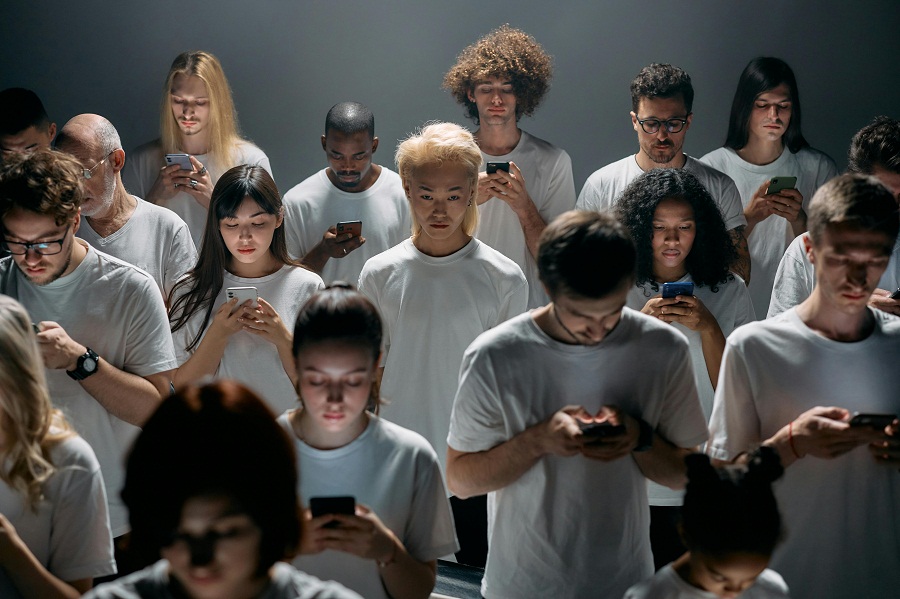
Social media has become an inescapable influence on human cognition and perception, functioning as a powerful environmental stimulus that can both inspire and mislead, according to medical and cognitive experts.
Human beings naturally absorb information from their surroundings—including people, institutions, culture, technology, and religious values. The practices, habits, and norms we develop are directly influenced by these environmental factors, with information sources now predominantly including platforms like Facebook, Instagram, YouTube, and TikTok.
These platforms don’t merely deliver content; they actively shape cognitive styles and worldviews, often without users being conscious of this invisible influence.
“Social media functions as a continuous environmental stimulus that modulates attention, memory encoding, emotional salience, and belief formation,” explains Dr. Mohammad Najim Uddin, Senior Consultant of Neuromedicine at Apollo Imperial Hospitals Chattogram. He notes that platform algorithms “selectively amplify emotionally charged, novel, or controversial content,” reinforcing cognitive biases such as confirmation bias.
The impact can be both constructive and detrimental. On the positive side, educational content like entrepreneurship podcasts hosted on Facebook and YouTube provide strategies for starting and growing businesses, motivating young talents to pursue their entrepreneurial aspirations.
However, exposure to negative content—including misinformation, disinformation, hate speech, and coordinated propaganda—can significantly drain emotional resources and distort perception. A prominent example is what psychologists call the “mean world syndrome,” where constant exposure to crime reporting leads individuals to perceive the world as fundamentally dangerous, regardless of actual crime statistics.
This cognitive distortion extends to health information as well. “Patients increasingly seek advice from public forums where non-qualified individuals prescribe medications, recommend supplements for memory enhancement, obesity, sexual health, dermatologic issues, or musculoskeletal pain, often without a scientific basis,” Dr. Najim observes.
The repetition of dubious claims increases their perceived validity through what psychologists term the “illusory truth effect”—a phenomenon where familiarity breeds belief, regardless of factual accuracy. “Essentially, repetition creates the illusion of reality,” Dr. Najim explains.
The neurological underpinnings of social media addiction further complicate matters. “Dopaminergic reward circuits are activated by likes, shares, and novelty, reinforcing engagement rather than accuracy,” says Dr. Najim. This neurochemical reward system explains why users continue scrolling despite diminishing returns in terms of quality information.
Media patterns also shift dramatically around major public events. “Following popular films or social trends, I observe spikes in related advertisements, memory boosters, performance enhancers, and nationalist narratives linked to sports,” Dr. Najim notes. “These narratives often frame competition as war or an identity struggle, thereby exaggerating emotional polarisation.”
The neurological impact extends beyond momentary perception. “In neurological terms, repeated emotional priming strengthens associative networks and may alter risk perception and judgment. Thus, social media does not merely transmit information; it actively shapes cognitive framing, risk assessment, and behavioral intentions,” explains Dr. Najim.
Despite these concerns, social media maintains significant positive potential. When properly curated, these platforms can become “professional amplifiers rather than distractors,” connecting users to global colleagues engaged in research, advocacy, and innovation, thereby encouraging self-improvement and intellectual growth.
Dr. Najim recommends practicing “cognitive hygiene” by limiting exposure to emotionally manipulative content, recognizing algorithmic reinforcement loops, and avoiding compulsive scrolling. He advocates prioritizing activities that support long-term wellbeing—meaningful work, structured learning, community service, and reflection—while building emotional resilience rather than amplifying outrage.
“Social media is neurocognitively powerful,” Dr. Najim concludes. “It can compromise perception or elevate global collaboration depending on how it is used. The determinant variable is not the platform itself, but the user’s critical framework and behavioral discipline.”
Fact Checker
Verify the accuracy of this article using The Disinformation Commission analysis and real-time sources.

13 Comments
This is a thought-provoking analysis of how social media platforms can shape our worldviews and cognitive styles. The findings about the selective amplification of certain content are particularly concerning. We must be mindful consumers of online information and push for greater platform transparency.
This is a thought-provoking analysis of how social media platforms can subtly shape our worldviews and cognitive styles. The selective amplification of certain content is particularly concerning, as it can reinforce biases and contribute to the spread of misinformation. Maintaining a skeptical mindset and pushing for greater platform transparency are important steps forward.
Fascinating insights into the invisible power of social media to shape our thoughts and beliefs. The selective amplification of certain content is particularly worrying, as it can reinforce cognitive biases and contribute to the spread of misinformation. This calls for urgent action to address these issues.
This is a sobering look at the subtle yet powerful ways social media can influence our thoughts and perceptions. The finding that platforms ‘selectively amplify’ certain content is particularly concerning. We must be vigilant consumers of online information.
An eye-opening analysis of social media’s role in ‘modulating’ our attention, memory, emotions, and beliefs. The implications for the spread of misinformation and the polarization of views are deeply troubling. This calls for urgent action to address these issues.
The article raises valid concerns about social media’s ability to unconsciously influence our cognition and perception. The finding that platforms selectively amplify emotionally-charged content is quite troubling, as it can exacerbate polarization and the spread of misinformation. Developing a more critical understanding of these dynamics is crucial.
The article highlights an important but often overlooked aspect of social media’s impact. As information-processing beings, we are highly susceptible to the environmental cues and incentives embedded in these platforms. Developing a more critical understanding of this dynamic is crucial.
I agree. Social media’s shaping of our cognition and worldviews deserves much deeper scrutiny. The need for greater transparency and accountability around platform algorithms is becoming increasingly clear.
The article highlights an important yet underappreciated aspect of social media’s impact – its ability to unconsciously influence our cognition and perception. The selective amplification of emotionally-charged content is a serious concern that deserves greater attention and solutions.
The article highlights an important but often overlooked aspect of social media’s impact – its ability to unconsciously influence our cognition and perception. The finding that platforms selectively amplify emotionally-charged content is deeply troubling, as it can exacerbate polarization and the spread of misinformation. This calls for urgent action to address these issues and empower users to be more critical consumers of online information.
Fascinating insights on how social media platforms shape our cognition and worldviews. The selective amplification of emotionally-charged content is certainly concerning. I wonder what implications this has for the spread of misinformation and the formation of polarized views.
You raise an excellent point. The ability of social media algorithms to reinforce cognitive biases is quite worrying from a societal standpoint. Responsible platform design and user awareness will be critical to mitigate these effects.
The article raises valid concerns about social media’s invisible influence on human cognition and perception. Selective amplification of emotionally-charged content is a serious problem that warrants further research and solutions. Maintaining a critical, skeptical mindset when consuming online information is crucial.