


Listen to the article
Greeks Increasingly Turn to Social Media for News, Eurobarometer Survey Reveals
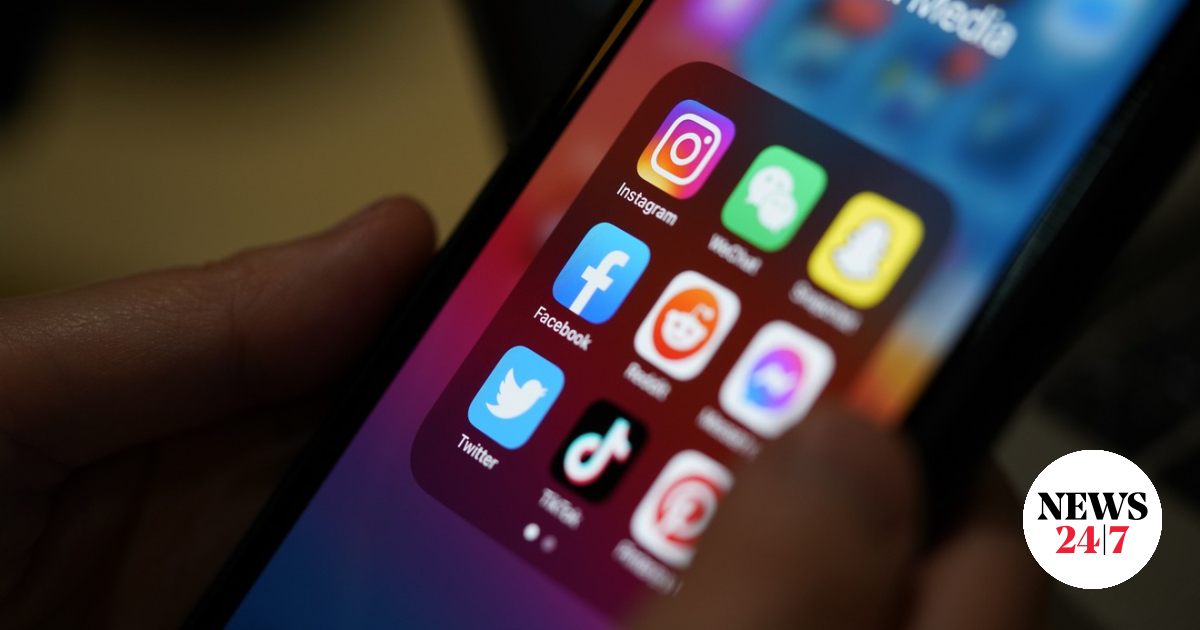
Television’s long-held dominance as the primary news source in Greece is facing a significant challenge, with social media platforms now emerging as the preferred information channel for many Greeks, according to the latest Eurobarometer Social Media Survey 2025.
The survey reveals a stark contrast between Greek news consumption habits and broader European trends. In Greece, 56% of respondents cite social media platforms as their main information source on social and political issues—substantially higher than the EU average of 40%. Television follows closely at 54%, notably below the EU average of 71%.
Search engines (49%), video platforms (41%), friends and family (39%), and traditional print or online media (34%) round out the primary information sources for Greek citizens.
This shift is particularly pronounced among younger demographics. Social networks serve as the dominant news source for 65% of Greeks aged 15-24 and 57% of those aged 25-39. While television remains strong among middle-aged Greeks (62% in the 40-54 age group), social media has made significant inroads even among those over 55, with 62% in this demographic regularly using these platforms for news.
Among social media platforms, Facebook maintains its leading position in Greece with 68% usage, followed by YouTube (56%), Instagram (46%), TikTok (35%), and X (formerly Twitter) at 27%. The age divide is evident here too—Instagram leads among 15-24 year-olds at 66%, while Facebook dominates among older Greeks, reaching 76% among those over 55.
The survey also highlights concerning trends regarding misinformation exposure in Greece. A significant 16% of respondents report encountering fake news “very often,” 26% “often,” and 32% “sometimes.” Only 4% of Greeks claim not to have seen false news in the week prior to the survey—lower than the EU average of 7%. This suggests Greeks are either more aware of misinformation or more exposed to it than their European counterparts.
Influencer culture has taken hold in Greece at rates comparable to the broader EU. Approximately 37% of Greek social media users follow influencers or content creators, with much higher rates among younger users—64% of those aged 15-24 and 59% of those aged 25-39 follow such accounts.
Across the EU, the media landscape reflects a hybrid consumption pattern, with 66% of citizens using traditional media daily while 59% obtain information from digital sources. Television remains the predominant news source throughout Europe at 71%, with 42% of respondents indicating it has become more important to them over the past year.
When it comes to trust, the survey reveals that EU citizens place most confidence in friends and family (45%) and scientists (45%). Teachers (17%), journalists (13%), public institutions (13%), NGOs (11%), and media outlets (10%) follow with considerably lower trust ratings. Politicians and social media influencers rank at the bottom, trusted by only 5% and 4% of respondents, respectively.
The content preferences of Europeans center on public health and healthcare systems (61%), with issues related to democracy, migration, and climate change also generating significant interest.
This dramatic shift in news consumption habits presents both opportunities and challenges for information dissemination in Greece. As social media platforms continue to gain prominence as news sources, particularly among younger generations, traditional media outlets may need to adapt their strategies to remain relevant in an increasingly digital information ecosystem.
Meanwhile, the high exposure to misinformation reported by Greeks underscores the importance of media literacy initiatives and responsible content curation across all platforms as citizens navigate an increasingly complex media landscape.
Fact Checker
Verify the accuracy of this article using The Disinformation Commission analysis and real-time sources.

10 Comments
It’s fascinating to see the contrast between Greece’s news landscape and broader European trends. I’m curious to learn more about the specific factors that have led to social media overtaking television as the dominant news source in the country.
Yes, understanding the local dynamics in Greece would provide helpful context for interpreting this shift in news consumption patterns.
This shift in news consumption habits in Greece is quite significant. I’m curious to see how it impacts political discourse and civic engagement over time. Will social media lead to more fragmentation or greater transparency?
That’s a great question. The impact on political discourse is an important issue to watch closely as social media becomes more dominant.
The high adoption of social media as a primary news source in Greece, especially among younger demographics, is a notable trend. I wonder how this compares to other European countries and what factors might be driving this change.
Interesting to see how social media is disrupting traditional media in Greece. I wonder what this means for the quality and diversity of news coverage. Will social platforms help amplify more voices or create echo chambers?
Good point. Social media can be a double-edged sword – it provides new avenues for news, but also risks spreading misinformation if not used responsibly.
The rise of social media as a primary news source, particularly among younger Greeks, is an interesting development. I wonder how this might impact the diversity of news coverage and perspectives available to the public.
This data on news consumption habits in Greece raises some important questions about the role of social media in shaping public discourse. I’ll be curious to see how this evolves and what the broader implications might be.
Agreed, it’s a complex issue that merits close observation and analysis to understand the broader societal impacts.