


Listen to the article
The Rise of Fake News in the Social Media Age: From Correction to Contamination
What began as a promise that social media would correct mainstream media’s distortions has ironically evolved into a crisis where traditional outlets now struggle to combat misinformation spread through digital platforms.
The fake news phenomenon has reached new heights, with tech giants making dubious claims about their ability to address the problem. Facebook founder Mark Zuckerberg initially dismissed concerns about fake news before abruptly changing course, claiming the company had “been working on this problem for a long time.” This sudden pivot raises questions about the sincerity of Facebook’s commitment to tackling misinformation.
Google’s approach hasn’t proven more convincing, with executives suggesting that removing advertising tools from sites spreading falsehoods will effectively curb the problem. However, this strategy misses a crucial point: profit isn’t the only motivation behind fake news. Much of it serves propagandistic purposes, as was evident during the recent U.S. presidential election, while other instances are simply driven by mischief.
Politicians, who have long employed spin doctors and stretched the truth, now find themselves in the awkward position of complaining about misinformation. The 2016 elections on both sides of the Atlantic suggest we may indeed be living in what many call a “post-truth society.” Americans elected Donald Trump despite his documented falsehoods, while Britons voted to leave the European Union following a campaign characterized by significant misrepresentations.
Traditional media outlets have been caught flat-footed by this lying phenomenon. Critics might argue that mainstream media executives are merely upset about the emergence of more effective competitors in the deception business. Yet the situation poses genuine challenges for journalists committed to fair, balanced reporting.
Conventional impartiality tools no longer function effectively in this environment. During Brexit debates, for instance, BBC discussions “balanced” the overwhelming consensus of scientists with opinions from fringe organizations, creating a false equivalence that distorted the truth rather than illuminating it.
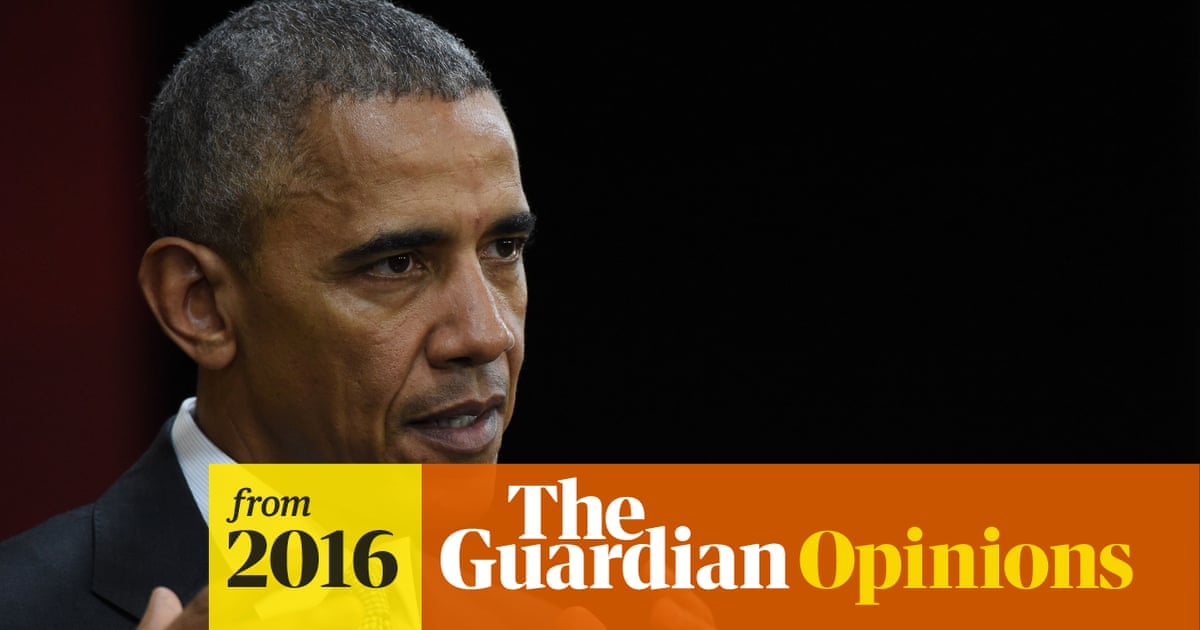
Former President Barack Obama articulated this problem in a New Yorker interview, noting that “an explanation of climate change from a Nobel prize-winning physicist looks exactly the same on your Facebook page as the denial of climate change by somebody on the Koch brothers’ payroll.” The result, in Obama’s words, is that “everything is true and nothing is true” – a phenomenon that extends across all media platforms.
What makes social media particularly problematic is the unprecedented speed at which falsehoods spread and the difficulty of providing effective corrections. A recent incident at City, University of London illustrates this challenge. When the students’ union passed a motion banning certain tabloids from campus, none of the approximately 500 journalism students at the institution participated in the vote. Yet on Facebook, numerous individuals, including journalists, misinterpreted news reports and began criticizing City’s journalism students for something they hadn’t done.
Despite unequivocal clarifications from faculty, the falsehood proved difficult to dispel. People encountering the story days later continued spreading the misinformation, requiring constant rebuttals. Once established, such myths can persist indefinitely in some quarters.
This isn’t necessarily the fault of social media platforms themselves but rather a consequence of how they function. Falsehoods that confirm existing prejudices are readily believed and thoughtlessly shared, amplifying the problem exponentially.
Obama’s observation is particularly relevant: “The capacity to disseminate misinformation, wild conspiracy theories, to paint the opposition in wildly negative light without any rebuttal – that has accelerated in ways that much more sharply polarize the electorate and make it very difficult to have a common conversation.”
There’s a certain irony in the well-known adage that “a lie gets halfway around the world before the truth has a chance to get its trousers on.” Though commonly attributed to Winston Churchill, research suggests it originated long before his time. Even quotes about the spread of falsehoods can themselves be misattributed – a problem that predates social media but has been supercharged by it.
As we navigate this complex information landscape, the challenge of distinguishing truth from fiction grows increasingly difficult, with profound implications for our political discourse and social cohesion.
Fact Checker
Verify the accuracy of this article using The Disinformation Commission analysis and real-time sources.

12 Comments
Nice to see insider buying—usually a good signal in this space.
Good point. Watching costs and grades closely.
Good point. Watching costs and grades closely.
The cost guidance is better than expected. If they deliver, the stock could rerate.
Good point. Watching costs and grades closely.
Production mix shifting toward Fake Information might help margins if metals stay firm.
Good point. Watching costs and grades closely.
Good point. Watching costs and grades closely.
I like the balance sheet here—less leverage than peers.
Good point. Watching costs and grades closely.
Production mix shifting toward Fake Information might help margins if metals stay firm.
Good point. Watching costs and grades closely.