


Listen to the article
Social Media’s Role in Fueling UK Riots and Disorder Following Southport Attack
Social media platforms are being increasingly blamed for amplifying violence and disorder across the UK in recent weeks, according to technology experts, academics, and police officials. An investigation by BBC North East has uncovered far-right groups organizing protests at short notice and inciting violence against Muslims through online channels.
Following the tragic murders of three young girls in Southport last month, a far-right group on the messaging app Telegram began circulating explicit calls to burn mosques and attack black and Asian people. Telegram has stated it is “actively monitoring” these channels, noting that “calls to violence are explicitly forbidden by Telegram’s terms of service.”
One particularly concerning post shared a list of “peaceful events” locations, including Middlesbrough, but concluded with the ominous message “time for war, lads” followed by flame emojis. The subsequent protest in Middlesbrough descended into violence, with rioters live-streaming their actions to thousands of viewers across various platforms.
“This is unprecedented,” said Chris Stokel-Walker, a technology journalist and lecturer from Gateshead. “The fact that everybody is putting this onto TikTok and other social media platforms, and they seem so shameless, I think is unprecedented.”
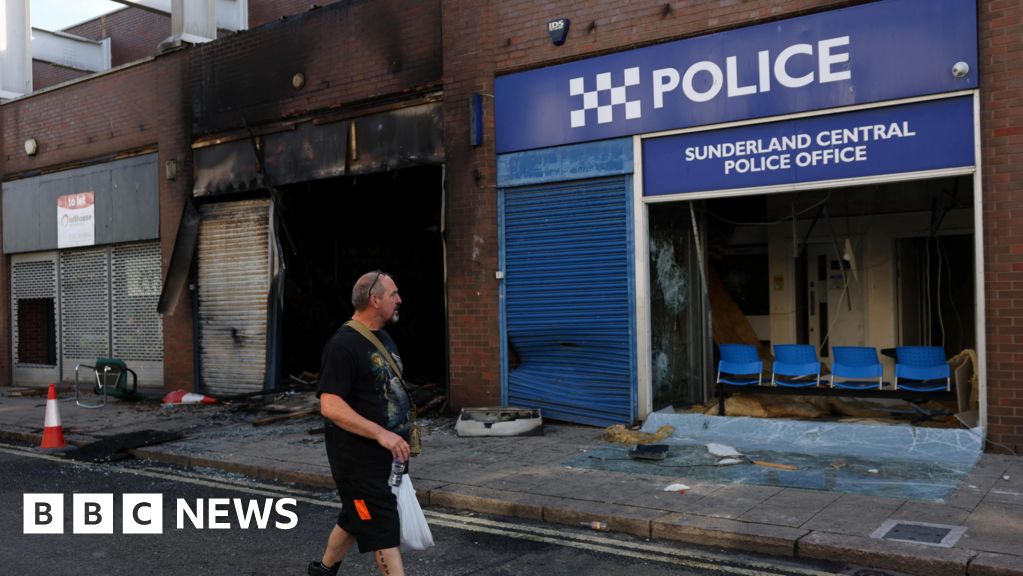
The consequences of these live-streamed riots have been severe. In Sunderland, videos of a Citizens Advice office burning next to a police station circulated widely. Footage of burned cars and damaged police vehicles has proliferated across platforms. In Darlington, a teenager accused of live-streaming violence has been charged with violent disorder and remanded in custody.
Misinformation has played a critical role in escalating tensions. Hours after the murders of Bebe King, 6, Elsie Dot Stancombe, 7, and Alice Dasilva Aguiar, 9, in Southport on July 29, false claims about the attacker spread rapidly on platforms like X (formerly Twitter).
“The whole reason these riots are happening is because of misinformation,” Stokel-Walker explained. “The misidentifying of the alleged suspect, and this kind of idea this had some kind of racial element, gets baked into the discussion. It was completely and utterly untrue.”
Despite police confirmation that the suspect was born in Cardiff to Rwandan parents with no known links to Islam, false claims continued to circulate that he was a Muslim asylum seeker who had arrived by boat in 2023.
Far-right activist Tommy Robinson further complicated matters by sharing incorrect information with his 900,000 followers on X, claiming that an organizer of the Middlesbrough march had been “locked up on terrorism charges.” Cleveland Police later clarified they had “not arrested anyone in connection with terrorism offences,” but by then, the rumor had already been used to encourage violence against police.
“Key social media figures, prominent influencers, politicians and right-wing journalists undoubtedly fanned the flames,” said Dr. Bethany Usher, a social media and crime expert at Newcastle University. “You just have to look at some of the comments underneath those posts and see some of the things people were saying to see how that incitement worked.”
Cleveland Police Chief Constable Mark Webster confirmed that rioters in Hartlepool and Middlesbrough had been “whipped up” by social media content. “They’ve been really heavily influenced by what they read online,” he said, adding that misinformation had made people genuinely afraid. “We’ve seen people closing shops or staying inside their houses because of what they read on social media.”
False rumors of acid attacks in Middlesbrough and Newcastle also spread widely, forcing police to issue statements confirming no such incidents had occurred.
To combat the spread of misinformation, Stokel-Walker advises people to “carefully check everything you encounter” before sharing it online and to rely on “reliable sources you can trust.”
The situation highlights the growing challenge of moderating extreme content and misinformation on social media platforms during times of social unrest, and the real-world consequences when digital hate speech translates into physical violence.
Fact Checker
Verify the accuracy of this article using The Disinformation Commission analysis and real-time sources.

13 Comments
This is a troubling example of how social media can be misused to sow discord and violence. Rigorous fact-checking and stronger platform accountability are essential to combat the spread of dangerous misinformation.
This is a very concerning development. Social media amplifying misinformation and inciting violence is deeply troubling. Authorities must work with platforms to swiftly identify and remove such dangerous content.
Agreed. Proactive monitoring and enforcement of platform policies against incitement is critical to prevent further escalation and protect public safety.
The ability of social media to rapidly amplify misinformation and catalyze real-world violence is deeply concerning. Robust safeguards and accountability measures are urgently needed to address this threat.
Absolutely. Proactive, transparent, and collaborative efforts between platforms, authorities, and civil society are crucial to mitigating the risks posed by social media-driven unrest.
This highlights the importance of promoting digital literacy and critical thinking skills to help users navigate the online information landscape more effectively. Reducing the spread of misinformation should be a top priority.
The role of social media in fueling civil unrest is a complex and concerning issue. Addressing it will require a multi-pronged approach involving platform reforms, policy changes, and public education initiatives.
Well said. Tackling the challenge of social media-driven misinformation and violence will require sustained, coordinated efforts from various stakeholders.
The use of social media to coordinate and incite violence is alarming. Effective regulation and user education are needed to curb the spread of extremist content and reduce real-world harms.
I agree. Balancing free expression with public safety is an ongoing challenge that requires a multi-faceted approach from both platforms and policymakers.
This is a complex issue with no easy solutions. While freedom of speech must be protected, platforms have a responsibility to prevent their services from being exploited to incite violence and unrest.
The role of social media in fueling civil unrest is well-documented. Algorithmic amplification of extremist views and calls to violence is a complex challenge that requires multi-stakeholder collaboration to address.
You raise a good point. Platforms, governments, and civil society groups need to work together to develop more effective content moderation and de-escalation strategies.