


Listen to the article
The spread of disinformation online during the Democratic Republic of Congo’s Ebola outbreak has emerged as a significant challenge to public health efforts, according to health officials and communication experts.
As the DRC continues to battle one of the deadliest Ebola outbreaks in recent history, false information circulating on social media platforms has undermined trust in healthcare workers and complicated efforts to contain the virus.
“What we’re seeing in the Congo mirrors similar challenges we’ve faced in other health emergencies,” said Dr. Michel Yao, who has worked with the World Health Organization’s emergency response team. “When misinformation spreads faster than accurate public health guidance, lives are directly put at risk.”
The current Ebola outbreak in the DRC’s eastern provinces, which began in 2018, has been particularly challenging to address due to a perfect storm of security concerns, community mistrust, and the rapid spread of conspiracy theories through WhatsApp, Facebook, and local radio channels.
Common myths circulating online include claims that Ebola is a hoax created by government officials to attract foreign aid, that the virus is spread by healthcare workers themselves, or that traditional remedies offer protection against infection. These narratives have led some communities to resist vaccination campaigns and refuse treatment.
The problem extends beyond the DRC, as similar patterns of health misinformation have emerged globally. During the COVID-19 pandemic, false information about vaccines and treatments spread across borders within hours, creating what the WHO termed an “infodemic” running parallel to the disease outbreak.
Social media companies have attempted to implement measures to combat health misinformation, including partnering with fact-checking organizations, limiting the reach of debunked claims, and promoting content from authoritative health sources. However, these efforts have shown limited effectiveness in stemming the tide of false information.
“The challenge with health misinformation is that it often plays on existing fears and mistrust,” explained Dr. Sylvie Briand, Director of Epidemic and Pandemic Preparedness and Prevention at WHO. “In regions where trust in government or outside institutions is already low, disinformation finds fertile ground.”
Public health experts have increasingly recognized that addressing misinformation requires more than simply providing correct information. It necessitates understanding the underlying concerns of affected communities and engaging local leaders who maintain community trust.
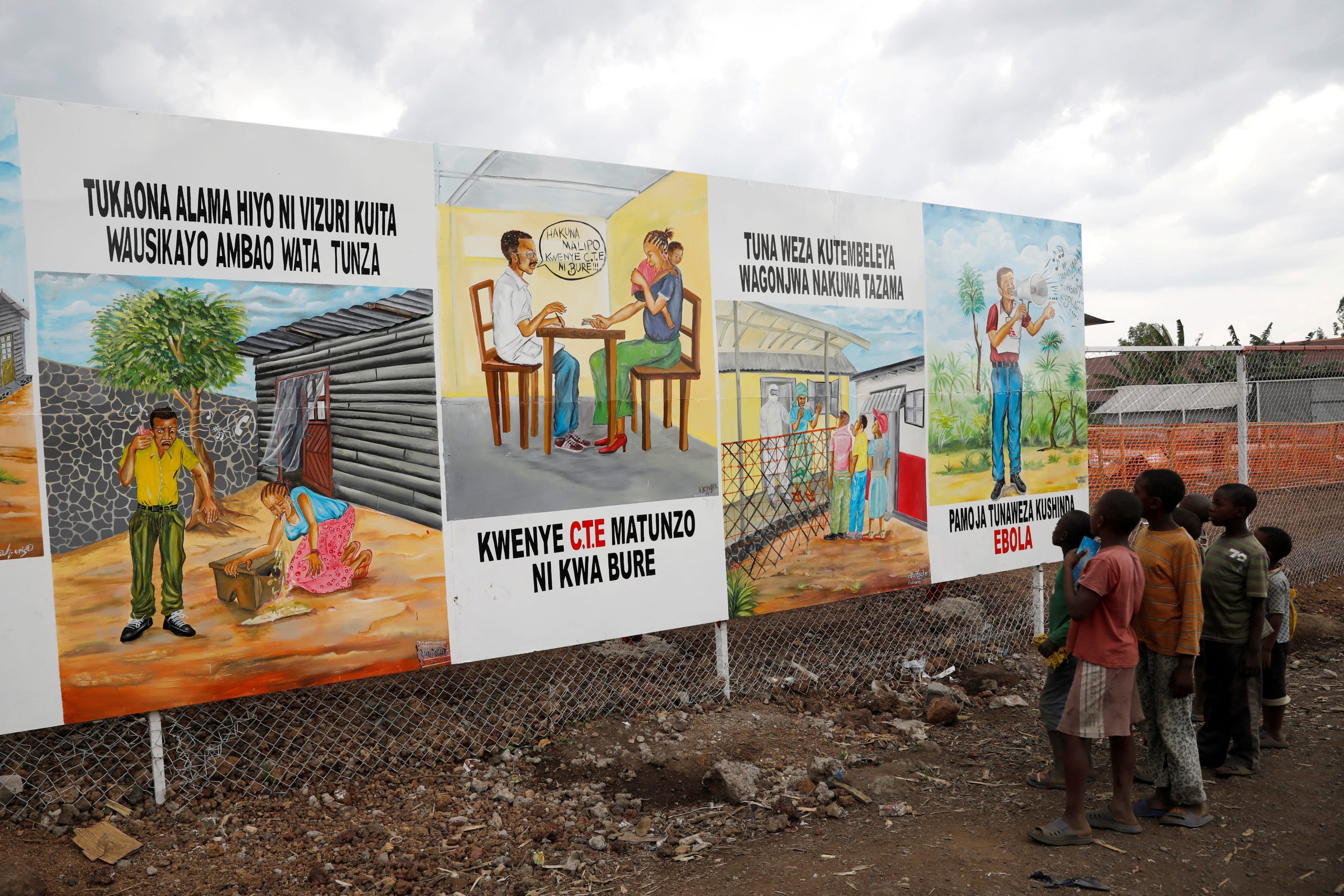
In North Kivu and Ituri provinces, where the Ebola outbreak has been centered, community engagement teams have begun working with religious leaders, traditional healers, and local influencers to counter harmful narratives and promote prevention measures.
“What we’ve learned is that effective communication during health emergencies can’t be one-way,” said Claude Muhindo, a community engagement specialist working in Beni. “We need to listen to community concerns and address them directly, while involving trusted local voices in sharing accurate information.”
The struggle against health misinformation in the DRC represents a broader global challenge that spans beyond public health. Similar patterns of disinformation campaigns have disrupted political processes, exacerbated social conflicts, and undermined scientific consensus on issues from climate change to vaccine safety.
Digital literacy programs and community-based monitoring systems are among the strategies being developed to build resilience against misinformation. However, experts caution that there are no simple solutions to this complex problem.
As the international community continues to support the DRC’s efforts to end the Ebola outbreak, addressing the parallel epidemic of misinformation remains a critical component of the response. The lessons learned from combating health disinformation in the Congo may prove valuable for future outbreaks, as digital connectivity continues to increase across Africa and globally.
The battle against Ebola in the DRC thus illustrates a sobering reality of modern public health emergencies: in an interconnected world, controlling the spread of a virus requires not only medical interventions but also effective strategies to contain the viral spread of harmful misinformation.
Fact Checker
Verify the accuracy of this article using The Disinformation Commission analysis and real-time sources.

30 Comments
Nice to see insider buying—usually a good signal in this space.
Good point. Watching costs and grades closely.
Good point. Watching costs and grades closely.
Silver leverage is strong here; beta cuts both ways though.
Good point. Watching costs and grades closely.
Good point. Watching costs and grades closely.
Uranium names keep pushing higher—supply still tight into 2026.
Interesting update on Social Media Fuels Disinformation During DRC Ebola Crisis. Curious how the grades will trend next quarter.
Good point. Watching costs and grades closely.
Silver leverage is strong here; beta cuts both ways though.
Good point. Watching costs and grades closely.
The cost guidance is better than expected. If they deliver, the stock could rerate.
Silver leverage is strong here; beta cuts both ways though.
Exploration results look promising, but permitting will be the key risk.
Good point. Watching costs and grades closely.
Good point. Watching costs and grades closely.
Nice to see insider buying—usually a good signal in this space.
Nice to see insider buying—usually a good signal in this space.
Good point. Watching costs and grades closely.
Good point. Watching costs and grades closely.
Uranium names keep pushing higher—supply still tight into 2026.
Good point. Watching costs and grades closely.
Good point. Watching costs and grades closely.
Nice to see insider buying—usually a good signal in this space.
Good point. Watching costs and grades closely.
Uranium names keep pushing higher—supply still tight into 2026.
Good point. Watching costs and grades closely.
I like the balance sheet here—less leverage than peers.
Good point. Watching costs and grades closely.
Good point. Watching costs and grades closely.