


Listen to the article
Senate Committee Advances Bills to Combat False Information and Regulate Social Media
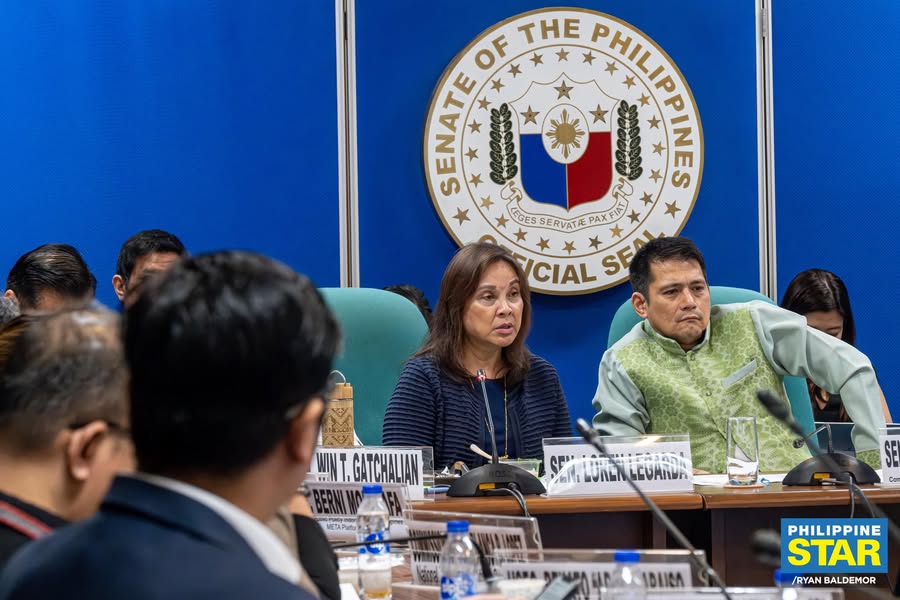
The Senate Committee on Public Information and Mass Media held a significant session Wednesday, advancing several key pieces of legislation aimed at curbing misinformation and enhancing transparency in the Philippine digital landscape.
Under the leadership of Chairman Senator Robin Padilla, the committee discussed a package of measures including the Anti-False Content and Fake News Act, Social Media Transparency Act, and related legislation addressing the proliferation of misleading information across digital platforms.
The Anti-False Content and Fake News Act represents one of the most ambitious attempts to date by Philippine lawmakers to address the growing concern of deliberate misinformation campaigns. The proposed legislation would create legal frameworks to hold accountable those who knowingly create and distribute false information that could harm public interest or national security.
“The spread of false information has become one of the most pressing issues of our time,” a committee spokesperson noted during the proceedings. “This legislation aims to protect Filipinos from manipulation while preserving legitimate freedom of expression.”
The Social Media Transparency Act, meanwhile, focuses on requiring greater accountability from tech platforms operating in the Philippines. If passed, the act would mandate that social media companies disclose their content moderation policies, algorithmic practices, and data collection methods to both users and government regulators.
Industry experts present at the hearing highlighted the challenges of balancing free speech protections with the need to combat harmful content. Representatives from major tech companies operating in the Philippines expressed concerns about implementation difficulties but acknowledged the need for reasonable regulation.
Media freedom advocates cautioned that any legislation must be carefully crafted to prevent potential abuse that could stifle legitimate criticism or dissent. Civil liberties organizations stressed that enforcement mechanisms must include sufficient safeguards against politically motivated censorship.
The legislative push comes amid growing global concern about the role of social media platforms in amplifying misinformation. The Philippines, with over 89 million active social media users representing roughly 81% of the population, has been particularly vulnerable to online manipulation campaigns. During recent election cycles, coordinated disinformation efforts have significantly influenced public discourse.
Senator Padilla emphasized the urgency of these measures, noting that the Philippines faces unique challenges as one of the world’s most active social media markets. “Our democracy depends on citizens having access to accurate information,” Padilla stated. “These bills aim to create a more transparent digital environment while respecting constitutional freedoms.”
The committee hearing also included testimony from academic researchers who presented evidence of how false information spreads through Philippine social networks, often through coordinated inauthentic behavior from both domestic and foreign sources.
Economists at the session outlined the potential business impact of stricter regulations, suggesting that while compliance costs would increase for tech companies, the legislation could ultimately benefit the digital marketplace by increasing user trust.
The bills now move to the technical working group stage, where lawmakers will refine the language and address concerns raised during the hearing. Several senators indicated they would propose amendments to strengthen privacy protections and clarify enforcement mechanisms.
If approved by the committee, the legislation would then advance to the Senate floor for broader debate, potentially setting up the Philippines as a regional leader in social media regulation.
The Department of Information and Communications Technology has signaled support for the measures, indicating potential backing from the executive branch should the legislation reach the President’s desk.
Fact Checker
Verify the accuracy of this article using The Disinformation Commission analysis and real-time sources.

9 Comments
While I understand the motivations behind these bills, I have some concerns about potential overreach and unintended consequences. Careful consideration of free speech and privacy rights will be crucial.
The challenges around misinformation are complex, but this legislative package looks like a thoughtful attempt to address them. I’m curious to see how the details get worked out and implemented.
Absolutely. The devil will be in the details, but it’s a step in the right direction to combat the spread of false and harmful content online.
Combating misinformation is a noble aim, but the implementation details will be critical. I’m curious to see how the lawmakers plan to define and enforce the parameters of ‘false content’.
Tackling misinformation and upholding transparency are critical issues in the digital age. These proposed bills seem like a reasonable approach to address the growing challenges posed by false content and opaque social media practices.
Enhancing transparency and accountability for social media platforms is a worthy goal. However, I hope the legislation can strike the right balance and avoid creating unnecessary burdens.
These bills seem like a reasonable attempt to address a complex issue. I’ll be interested to follow the ongoing debates and discussions around their potential impacts and effectiveness.
It’s encouraging to see lawmakers taking proactive steps to combat the proliferation of deliberate misinformation. Accountability and transparency measures are much needed in this space.
I agree. Misinformation can have serious consequences, so it’s important to find the right balance between freedom of expression and protecting the public interest.