


Listen to the article
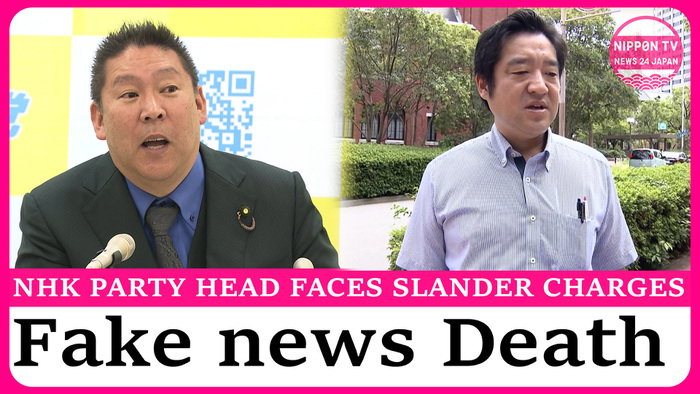
Japanese authorities have arrested Tachibana Takashi, leader of the NHK Party, on suspicion of defamation following months of investigation into false claims he made about a deceased former local politician.
The 58-year-old political figure was taken into custody in an Osaka Prefecture parking lot early on November 9. The arrest stems from a series of allegedly defamatory statements Tachibana made about Takeuchi Hideaki, a former member of the Hyogo prefectural assembly who died in January 2025.
Takeuchi had previously served on a special committee investigating Hyogo Governor Saito Motohiko over harassment allegations. During this period, Takeuchi became a target of online slander, resigned from his position in November 2024, and was found unresponsive at home two months later in what appears to have been a suicide.
Police allege that Tachibana made false statements about Takeuchi both before and after his death. In December 2024, Tachibana claimed in a public speech that Takeuchi was “super dangerous” and “most probably being investigated by police.” After Takeuchi’s death, Tachibana posted on social media claiming the former assemblyman “was being voluntarily questioned by Hyogo prefectural police continuously from about September last year” and “was scheduled to be arrested.”
These claims were categorically denied by Hyogo’s police chief, Murai Toshiyuki, who stated in January: “We have never conducted any voluntary questioning of former assembly member Takeuchi as a suspect. Moreover, there has never been any talk of arresting him. These claims are completely baseless.”
When questioned about his statements prior to his arrest, Tachibana acknowledged their inaccuracy. “As the Hyogo prefectural police chief completely denied at the prefectural assembly that there had been any arrest, any plan to arrest, or any voluntary questioning, I would like to apologize for having posted information on the internet that was contrary to the facts,” he said.
Tachibana claimed he had received the information from individuals “well-informed about current events” and felt “fairly confident” about its accuracy at the time.
The widow of Takeuchi filed criminal complaints on six counts against Tachibana in June 2025. At a press conference following the arrest, she expressed relief: “After news of the arrest came out, I reported it at my husband’s altar. Since filing the criminal complaints, I had worries and anxieties about what might happen, but now I feel relieved.”
She revealed that she had been “crushed by the shock of my husband’s death and fearful of baseless slander” but found the strength to take action after encouragement from a university senior.
This isn’t Tachibana’s first brush with legal trouble. In 2023, he was convicted for crimes including forcible obstruction of Japanese public broadcaster NHK’s operations and is currently serving a suspended sentence.
Legal expert Kamei Masaki, a lawyer and former prosecutor, noted the unusual nature of the arrest: “Defamation cases are generally handled without taking the suspect into custody. I think the fact that he was detained reflects the seriousness and maliciousness of the case, including factors involving the impact of social media and societal influence.”
The fact that Tachibana was arrested during his suspended sentence period could significantly impact the outcome of this case. “It’s not very common to have two suspended sentences. There is a high possibility of a prison sentence,” Kamei explained, suggesting the penalty could range from “a little over a year or up to two years.”
Police are continuing to build cases against Tachibana on all six counts filed by Takeuchi’s widow.
Fact Checker
Verify the accuracy of this article using The Disinformation Commission analysis and real-time sources.

10 Comments
Spreading false information about a deceased public official is unethical and potentially illegal. However, the arrest on defamation charges raises concerns about government overreach and suppression of dissent. There needs to be a fair and impartial investigation.
While false and damaging claims against a public official are unacceptable, the use of defamation charges raises concerns about government overreach. Hopefully the investigation and legal proceedings will be conducted impartially and with due process.
Defamation laws are complex, and this case seems to involve a lot of political tensions. I’m curious to learn more about the specific evidence and legal arguments on both sides before drawing any conclusions. Maintaining a balance between protecting reputations and upholding free speech is important.
This is a serious abuse of power and an attack on free speech. Defamation charges should only be used in extreme cases, not to silence political opponents. The public deserves transparency and open discourse, not government crackdowns.
This case highlights the fine line between legitimate political speech and unlawful defamation. It will be important to closely examine the evidence and ensure the legal process is fair and unbiased, without compromising essential democratic freedoms.
Agreed, the nuances here are critical. We need to uphold the rule of law while also protecting the vital role of free expression in a healthy democracy.
This seems like a complex case with a lot of political tensions involved. I’m curious to learn more about the specific evidence and legal arguments on both sides. Defamation laws can be a tricky balance between protecting reputations and upholding free expression.
Agreed, the details will be crucial here. It’s important to ensure a fair and transparent process, regardless of the political affiliations involved.
While the alleged false claims against the late politician are concerning, the use of defamation charges to arrest a political opponent raises significant civil liberties issues. The investigation and legal process must be conducted with the utmost transparency and fairness.
It’s concerning to see a politician facing such severe legal consequences for their speech, even if the claims were proven false. We should be cautious about setting a precedent that could chill legitimate political debate and criticism. More details are needed to evaluate this case properly.