


Listen to the article
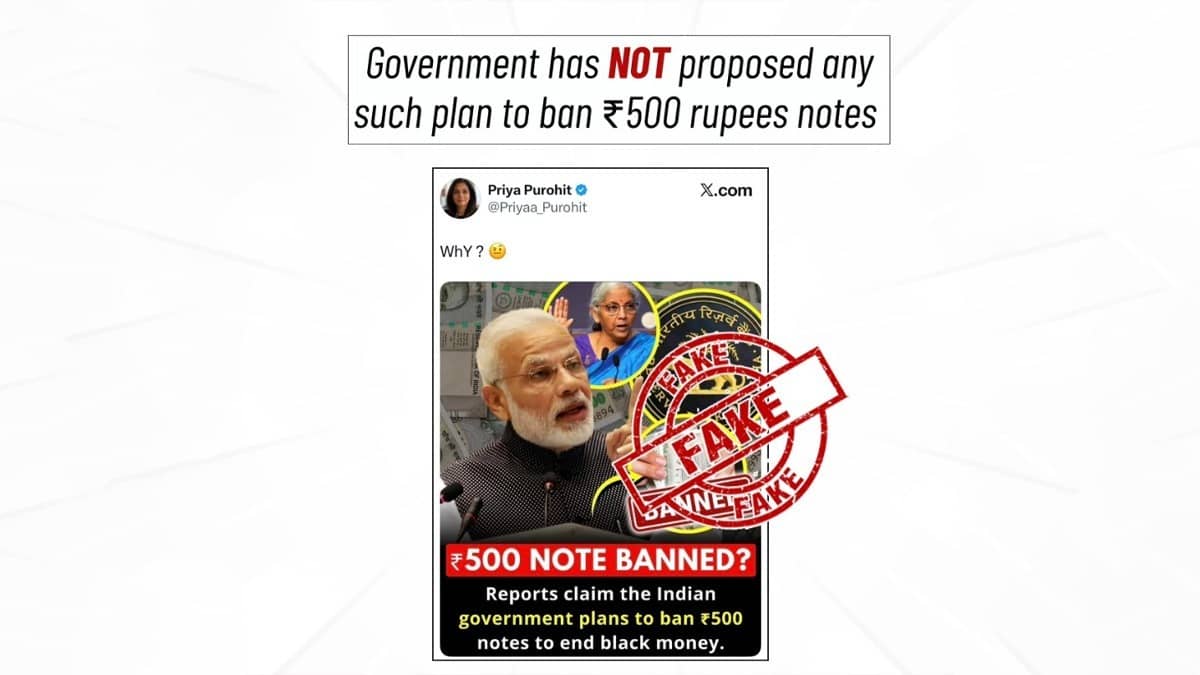
Several social media platforms were flooded with alarming claims this week that the Indian government intends to demonetize ₹500 currency notes, prompting the Press Information Bureau (PIB) to issue an immediate clarification on Wednesday.
The PIB’s Fact Check unit categorically dismissed these viral posts as misinformation and warned citizens against believing unverified claims about currency demonetization.
“Claims circulating on social media stating that the Government of India plans to ban ₹500 notes are completely false,” the PIB Fact Check unit stated in its official communication. “Citizens are strongly advised to verify information regarding government policies through authorized channels only.”
This isn’t the first time rumors about currency demonetization have created panic among the public. India still remembers the economic and social impact of the 2016 demonetization when ₹500 and ₹1,000 notes were suddenly withdrawn from circulation. That decision, announced by Prime Minister Narendra Modi on November 8, 2016, invalidated nearly 86 percent of the country’s currency overnight.
Financial experts suggest these recurring rumors reflect lingering anxiety about potential currency interventions. Dr. Raghuram Singh, economist at the Delhi School of Economics, told our correspondent: “The 2016 demonetization left a deep psychological impact on Indians. Even unfounded rumors can trigger panic buying, hoarding, or hasty financial decisions.”
The Reserve Bank of India (RBI) has maintained silence on these specific rumors but has previously emphasized its commitment to ensuring adequate currency supply. The central bank regularly monitors currency circulation patterns and makes adjustments as necessary to maintain economic stability.
According to the RBI’s latest data, ₹500 notes constitute approximately 31% of the total currency notes in circulation by volume, but represent nearly 76% by value, making them critical to daily economic transactions across the country.
Market analysts point out that any actual decision to demonetize ₹500 notes would have significant economic ramifications, particularly for India’s substantial cash-dependent informal sector, which employs over 90% of the country’s workforce.
“The informal economy and small businesses rely heavily on cash transactions,” explained Priya Mehta, Chief Economist at Axis Securities. “Even unfounded rumors can temporarily disrupt local markets and consumer behavior.”
The spreading of such financial misinformation has become increasingly common on platforms like WhatsApp, Facebook, and Twitter, where posts can rapidly reach millions without verification. Digital rights activists have pointed to this incident as another example of how financial misinformation can potentially destabilize markets and create unnecessary public anxiety.
The Ministry of Electronics and Information Technology has been working with social media platforms to develop more robust systems for flagging potential financial misinformation, though these efforts remain challenging due to the volume and velocity of content shared daily.
PIB’s Fact Check unit, established in 2019, has become increasingly active in combating misinformation related to government policies. The unit regularly monitors social media platforms and responds to queries from citizens seeking verification of government-related information.
The government has encouraged citizens to forward suspicious claims about government policies to the PIB Fact Check portal or its social media handles for verification before sharing them further.
“In today’s digital age, verifying information before sharing is a civic responsibility,” said a senior official from the Ministry of Information and Broadcasting who requested anonymity. “The government has established multiple channels through which citizens can access authentic information about policies and programs.”
Citizens seeking accurate information about government policies are advised to consult only official websites such as india.gov.in, the PIB website, or verified social media accounts of government ministries and departments.
Fact Checker
Verify the accuracy of this article using The Disinformation Commission analysis and real-time sources.

10 Comments
Vigilance against misinformation is critical, particularly around topics with major economic implications. Kudos to the PIB for their prompt action to quash these unfounded demonetization rumors.
While the 2016 demonetization left a lasting impact, these unverified social media claims are unhelpful and irresponsible. The public should heed the PIB’s guidance to rely on authoritative sources for accurate information.
It’s concerning to see these types of misinformation campaigns gain traction, even years after the 2016 demonetization. The public should heed the PIB’s advice and verify claims through official government channels.
The 2016 demonetization caused significant economic upheaval – I can understand why these rumors would be unsettling for many. Verifying information through official channels is crucial to avoid further undue distress.
Well said. Spreading unconfirmed claims, even inadvertently, can sow confusion and fear. The government is right to forcefully rebut these false reports and urge the public to rely on authoritative sources.
The 2016 demonetization experience understandably left many Indians wary of potential currency changes. But spreading unsubstantiated rumors only breeds more uncertainty. The PIB is right to call for reliance on authoritative sources.
Absolutely. Maintaining public trust in government and financial institutions is crucial, especially on sensitive economic issues. Verified information from official channels should be the priority.
Recurring demonetization rumors highlight the need for strong public communication and trust in institutions, especially on sensitive economic matters. Kudos to the PIB for their swift and clear response.
Glad to see the PIB quickly dispelling these unfounded demonetization rumors. It’s important the public relies on official government sources, not unverified social media posts, when it comes to major economic policies.
Absolutely, misinformation can cause unnecessary panic and disruption. The public deserves accurate, transparent information from trusted authorities on any potential currency changes.