


Listen to the article
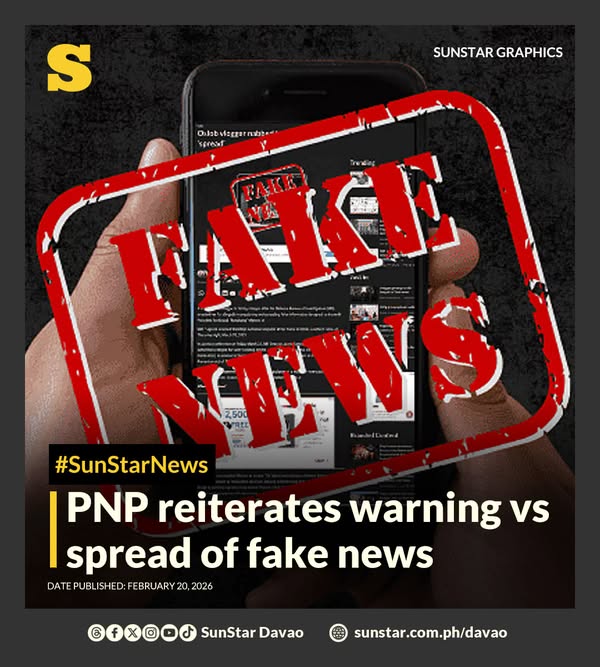
Philippine authorities have issued a stern warning to content creators and social media users about the potential consequences of sharing unverified information online, amid growing concerns about the spread of misinformation in the digital space.
The Philippine National Police (PNP) urged netizens to exercise greater caution when posting and sharing content across social media platforms, emphasizing the critical importance of fact-checking before publishing. The reminder comes at a time when the Philippines continues to grapple with a surge in online misinformation that has sometimes led to real-world consequences.
“Verification is not optional in today’s digital landscape—it’s a responsibility,” said a PNP spokesperson during a recent press briefing in Manila. “We are seeing an alarming trend of unverified information going viral before the facts can catch up.”
The Philippines has one of the highest social media usage rates globally, with citizens spending an average of four hours daily on various platforms, according to recent data from social media management firm Hootsuite. This high engagement rate has created fertile ground for both legitimate content creators and those spreading questionable information.
Digital rights advocates have cautiously welcomed the police reminder while expressing concern about potential overreach. “While we support efforts to promote responsible online behavior, any measures must not infringe on protected speech,” noted Maria Santos of the Digital Rights Coalition Philippines.
The PNP clarified that their advisory is primarily educational rather than punitive, though they reminded the public that existing laws such as the Cybercrime Prevention Act could apply in cases where harmful misinformation is deliberately spread.
Content creators, who form a significant economic sector in the Philippines with an estimated 100,000 professional influencers nationwide, have had mixed reactions to the police statement.
“Most professional creators already follow strict verification protocols,” explained Paolo Hernandez, head of the Philippine Content Creators Association. “The challenge is often with casual users who may not understand the impact of sharing unverified information.”
The issue has taken on additional significance as the Philippines approaches another election cycle, with authorities concerned about the potential for politically motivated misinformation campaigns. During the 2022 presidential election, fact-checking organizations documented thousands of instances of election-related false claims circulating on social media platforms.
Tech companies operating in the Philippines have also responded to the growing concern. Meta, the parent company of Facebook—which remains the dominant social platform in the country with over 80 million Filipino users—recently announced expanded fact-checking partnerships with local media organizations.
“The responsibility for accurate information is shared between platforms, creators, and users,” said telecommunications analyst Ramon Buenaventura. “What we’re seeing is an acknowledgment that the ecosystem needs more guardrails.”
Digital literacy experts suggest that beyond warnings, longer-term solutions must include enhanced education. The Department of Education has been gradually incorporating media literacy into the national curriculum, though implementation remains uneven across the country’s diverse educational landscape.
For ordinary Filipinos navigating the complex information environment, the police reminder serves as yet another signal of the changing digital landscape where sharing content carries increasing responsibility.
“The days of casually forwarding messages or posting content without verification are behind us,” concluded the PNP spokesperson. “In our interconnected world, each of us becomes a gatekeeper of information, and that role comes with obligations to society.”
Fact Checker
Verify the accuracy of this article using The Disinformation Commission analysis and real-time sources.

8 Comments
This is a complex issue with no easy solutions. While I applaud the PNP’s actions, I’m curious to know more about their specific investigative and enforcement strategies. Transparency will be important.
Curbing the spread of misinformation is a global challenge, not just a local one. I hope the PNP’s efforts set a positive example that can be replicated in other countries facing similar problems.
This is a timely and important issue. I hope the PNP’s investigation leads to meaningful changes in how online content is created and shared in the Philippines. Educating the public should be a key priority.
As someone who follows mining and commodities news, I’m interested to see how this situation evolves. Misinformation in this sector could have real-world economic implications that need to be addressed.
Absolutely. Fact-based reporting is crucial for investors and industry stakeholders to make informed decisions. I hope the PNP’s efforts help restore trust in online content.
This is an important issue that deserves attention. Fact-checking is crucial in the digital age when misinformation can spread rapidly. I hope the PNP’s investigation leads to better education and accountability around online content.
As a Filipino citizen, I’m glad to see the authorities taking this issue seriously. The high social media usage in our country makes us vulnerable to the spread of false information. Strengthening digital literacy is key.
I agree. We all have a responsibility to verify information before sharing it online. This will help build a more informed and responsible digital community.