


Listen to the article
Pakistan’s Senate Passes Controversial Bill Criminalizing Online Misinformation
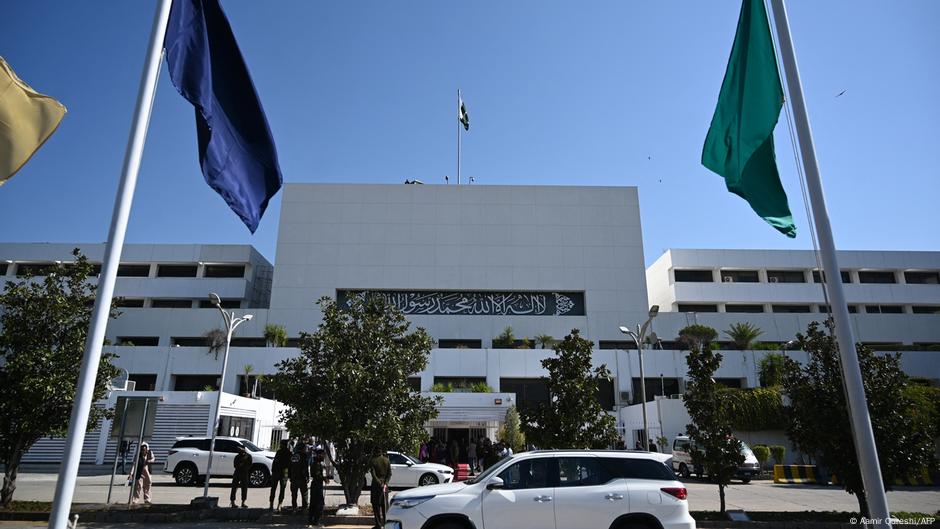
Pakistan’s upper house of parliament passed a contentious bill on Tuesday that criminalizes the spread of online misinformation, drawing immediate backlash from journalists and opposition figures who fear it could severely restrict free speech in the country. The legislation had already cleared the National Assembly last week and now awaits final approval.
Under the new law, anyone who “intentionally disseminates” information they have “reason to believe to be false or fake and likely to cause or create a sense of fear, panic or disorder or unrest” could face up to three years imprisonment and fines of up to 2 million rupees (approximately $7,121 or €6,822).
The legislation also establishes a new regulatory agency with broad powers to immediately block content deemed “unlawful and offensive” from social media platforms without judicial oversight, raising concerns about potential censorship.
Journalists covering the Senate proceedings staged a walkout from the press gallery in protest as the bill passed. Asif Bashir Chaudhry, representing the Pakistan Federal Union of Journalists, told AFP that media professionals felt betrayed by the government’s approach.
“We genuinely wanted a law against misinformation, but if it’s not being done through open discussion but rather through fear and coercion, we will challenge it on every available platform,” Chaudhry said, highlighting the lack of stakeholder consultation in the drafting process.
The protest wasn’t limited to journalists. Members of the center-left Pashtun nationalist Awami National Party (ANP), which is part of the Senate’s ruling coalition, also walked out during the vote, according to Pakistani media reports, suggesting fractures within the government alliance over the controversial measure.
Opposition figures have condemned the legislation as a thinly veiled attempt to silence critics. Shibli Faraz, Senate opposition leader and member of jailed former Prime Minister Imran Khan’s Pakistan Tehreek-e-Insaf (PTI) party, criticized the rushed nature of the bill’s passage and described it as “highly undemocratic.” He expressed concern that the law would disproportionately target PTI activists who have been vocal on social media.
The legislation comes amid heightened political tensions in Pakistan, where authorities have imposed multiple internet shutdowns during protests by PTI supporters demanding the release of Imran Khan. The former prime minister’s supporters maintain that his graft conviction is politically motivated and designed to keep him out of power.
This isn’t Pakistan’s first attempt at controlling online content. In 2023, the country’s media regulator temporarily blocked Wikipedia over “blasphemous material,” though the ban was lifted days later at Prime Minister Shahbaz Sharif’s request.
Media freedom advocates fear this new legislation represents a significant escalation in the government’s efforts to control online discourse. The broad language of the bill could potentially be interpreted to criminalize legitimate criticism, satire, or reporting that authorities find uncomfortable.
The legislation comes at a time when digital rights are increasingly under pressure in South Asia. Several neighboring countries have implemented similar laws in recent years, citing concerns about misinformation and national security, while critics argue they primarily serve to shield governments from accountability.
As the bill moves toward implementation, civil society groups are expected to challenge its constitutionality in court, setting the stage for a prolonged legal battle over freedom of expression in Pakistan’s digital spaces.
Fact Checker
Verify the accuracy of this article using The Disinformation Commission analysis and real-time sources.

7 Comments
Hmm, this new law seems ripe for abuse and potential overreach. Criminalizing the spread of information deemed ‘fake’ without clear judicial oversight is a worrying development for democracy. I’ll be following this issue closely to see how it unfolds.
While the intent to curb the spread of harmful misinformation online is understandable, the lack of judicial oversight raises red flags. I worry this could lead to censorship of legitimate news and commentary, even in niche sectors like mining and commodities.
As a professional in the mining and metals industry, I’m closely watching how this law could impact the flow of information and analysis that we rely on. Responsible reporting and discussion of market trends and developments should be protected, not stifled.
As a mining and commodities enthusiast, I hope this law doesn’t inadvertently restrict the spread of important industry news and analysis, even if it’s sometimes speculative. Responsible reporting should be protected, not censored under the guise of fighting misinformation.
This seems like a concerning move by Pakistan’s government, potentially limiting free speech and press freedom. While misinformation is a serious issue, overly broad censorship laws can be abused. I hope they find a balanced approach that protects citizens without stifling legitimate discourse.
This is a concerning development for anyone interested in the mining, energy, and commodities sectors. We need robust, transparent public discourse on these critical industries, not heavy-handed government censorship under the guise of fighting misinformation.
As someone who follows the mining and metals space closely, I’m worried this new law could inadvertently restrict legitimate industry news and commentary. Responsible reporting shouldn’t be lumped in with malicious misinformation, even if the line isn’t always clear.