


Listen to the article
Experts Challenge Recent Downplaying of Misinformation’s Societal Impact
A growing body of research indicates that misinformation has measurable effects on society, despite recent claims attempting to minimize its impact, according to leading researchers in the field. Sander van der Linden, Ullrich Ecker, and Stephan Lewandowsky argue that dismissing the problem of misinformation threatens fact-based public dialogue at a critical time.
Several recent opinion pieces have attempted to downplay misinformation’s role in fueling violence, dismissed threats from digital technologies in spreading false information, or claimed that disinformation is merely a distraction from underlying issues. These arguments often mischaracterize the prevalence, impact, and nature of misinformation in today’s media landscape.
The researchers highlight that misinformation operates through both direct and indirect pathways. The 2024 UK riots offer a clear example, having been triggered by a false story spread on social media. While those who participated likely already held anti-immigration and anti-Muslim views, these beliefs themselves were likely shaped by earlier exposure to misleading information.
“The reasons why people hold these views are complex, but it is difficult to ignore that these too are most likely shaped by misinformation,” the researchers note, pointing to phenomena like the recent false claim that Haitians were eating pets in Ohio as examples of how misinformation shapes public opinion.
Evidence from historical events like the Rwanda genocide demonstrates how propaganda directly contributed to approximately 10% of violence against Tutsis in areas that received propaganda radio broadcasts compared to those that didn’t. Moreover, the indirect effects through word-of-mouth and social interactions amplified this impact significantly.
The researchers describe misinformation as a “meta-risk” that impacts perceptions of other risks, such as climate change, which then affects how these challenges are managed. It also exacerbates societal problems by lowering institutional trust and increasing polarization – creating a feedback loop where misinformation lowers trust, and lower trust makes people more susceptible to misinformation.
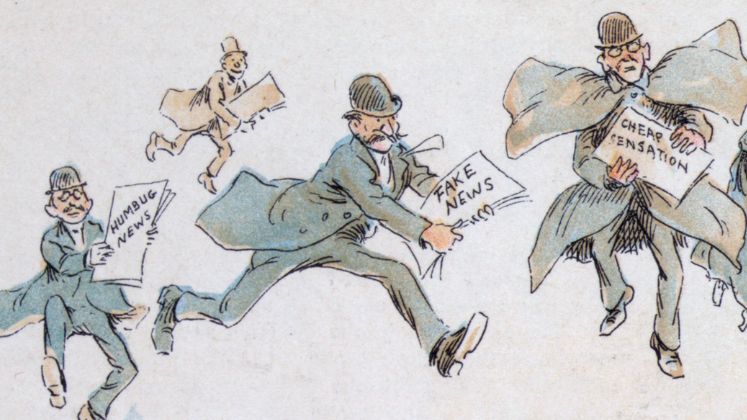
Critics often attempt to minimize the prevalence of misinformation by defining it narrowly as “fake news,” which represents only a small portion of misleading content. However, expert consensus defines misinformation more broadly to include both false and misleading information, including propaganda and manipulative content containing half-truths.
While some studies estimate that misinformation comprises between 0.2% and 28.8% of social media posts, these figures can be misleading. A recent study showed that misleading information about COVID-19 vaccines that wasn’t flagged by fact-checkers reached over 20% of Facebook’s US users and was viewed six times more often than all fact-checked fake news combined. It was also 50 times more impactful in driving vaccine hesitancy.
The researchers cite numerous examples of misinformation’s real-world impact, from mob lynchings in India to people ingesting toxic chemicals during the COVID-19 pandemic. While randomized control trials using misinformation would be unethical, laboratory studies and natural field experiments provide strong evidence of its harmful effects.
For instance, regions with higher susceptibility to misinformation show lower vaccine uptake, and areas with greater exposure to TV shows featuring COVID-19 misinformation experienced more deaths. Similar research shows causal links between misinformation exposure and voting for populist parties.
Contrary to claims that misinformation has no identifiable markers, research shows it frequently uses common manipulation techniques and logical fallacies. Machine learning models analyzing news headlines rated as false by multiple independent sources can achieve over 80% classification accuracy using known psychological markers.
“Meta-analyses of interventions that teach people about misinformation techniques show that knowing about such tactics helps people accurately discern between misinformation and credible information,” the researchers emphasize.
As debates about misinformation continue, the researchers argue that both science and jurisprudence have developed evidence-based approaches to differentiate truth from falsehood, even under uncertain conditions. Dismissing these capabilities, they suggest, is tantamount to claiming that neither science nor justice can be achieved.
Fact Checker
Verify the accuracy of this article using The Disinformation Commission analysis and real-time sources.

10 Comments
It’s concerning to see attempts to downplay the threat of misinformation. The researchers make a strong case that we shouldn’t dismiss this problem, as it has very real consequences. We need to take it seriously and find effective ways to address it.
This is a complex issue, but I think the experts are right to highlight the measurable societal impacts of misinformation. We can’t afford to be complacent, even if the effects are not always direct and immediate. Maintaining trust in facts and institutions is crucial.
This is a timely and important discussion. While the underlying issues may be complex, we can’t ignore the role that misinformation plays in shaping perceptions and fueling harmful narratives. We need to find ways to combat the spread of false information.
I agree, the impact of misinformation should not be underestimated. Even if the initial beliefs were already present, the spread of false information on social media can amplify and reinforce those views in harmful ways. Tackling this challenge requires a multifaceted approach.
Exactly, we need to be vigilant about the way misinformation can shape public discourse and perceptions, even indirectly. Fact-based dialogue is essential for a healthy society.
I appreciate the researchers’ efforts to challenge the recent attempts to downplay the threat of misinformation. Their arguments highlight the need for a nuanced, evidence-based understanding of this issue and its societal implications. It’s a complex problem, but one we can’t afford to ignore.
Misinformation is a genuine threat that deserves our full attention. The researchers make a compelling case that we shouldn’t dismiss or downplay its impacts, no matter how the issue is framed. Addressing this challenge is vital for the health of our society.
I’m glad to see this issue being discussed and challenged. Misinformation can have far-reaching and insidious effects, even if the initial false claims seem relatively minor. We need a robust, evidence-based approach to tackle this growing problem.
This is a crucial issue that deserves serious attention. Misinformation can have real and dangerous consequences, as we’ve seen with events like the 2024 UK riots. We need to address this problem head-on through education, fact-checking, and curbing the spread of false narratives.
The researchers raise valid concerns about the prevalence and impact of misinformation. Even if the initial beliefs existed, the way false narratives spread and reinforce those views is deeply problematic. We need to take this threat seriously and develop effective solutions.