


Listen to the article
Fact-Checking in Crisis: The Battle for Truth in a Post-Truth Era
Fact checking has been described as cleaning up a sewage spill with a teaspoon. Now, as social media giants retreat from their verification efforts, that teaspoon is being taken away entirely.
When Donald Trump claimed during his September 2023 presidential debate with Kamala Harris that Haitian immigrants in Springfield, Ohio, were “eating the dogs” and “eating the cats” of local residents, the assertion was quickly debunked by multiple news organizations. PolitiFact ultimately awarded Trump’s statement its “Lie of the Year” distinction for 2024.
This incident exemplifies the growing challenge fact-checkers face in an increasingly polarized information landscape. From Time magazine’s pioneering research department in the 1920s to the New Yorker’s rigorous fact-checking operation, verification has always been fundamental to quality journalism. But the 24-hour news cycle and proliferation of social media have dramatically increased both the volume of misinformation and the demand for rapid verification.
In response, specialized fact-checking organizations have emerged worldwide. AAP FactCheck in Australia and AFP Fact Check, with 150 journalists across 26 languages, now routinely investigate claims ranging from Russia’s Ukraine invasion to COVID-19 misinformation. Their work has exposed manipulated footage in the Israel-Gaza conflict, debunked political misrepresentations in Australia, and countered false claims about American politicians and aviation safety.
The political rise of Donald Trump ushered in what many considered a golden age for fact-checking. In 2016, Meta launched a program paying independent fact-checkers to flag misinformation on its platforms. During Trump’s first term, The Washington Post documented 30,573 false or misleading claims made by the president. By 2017, “fake news” had become Collins Dictionary’s word of the year.
Between 2014 and 2021, the global number of third-party fact-checkers grew tenfold. However, after eight years of consistent growth, research from Duke University’s Reporters’ Lab found the number of active fact-checking projects worldwide declined for the first time in 2023, with a further drop in 2024.
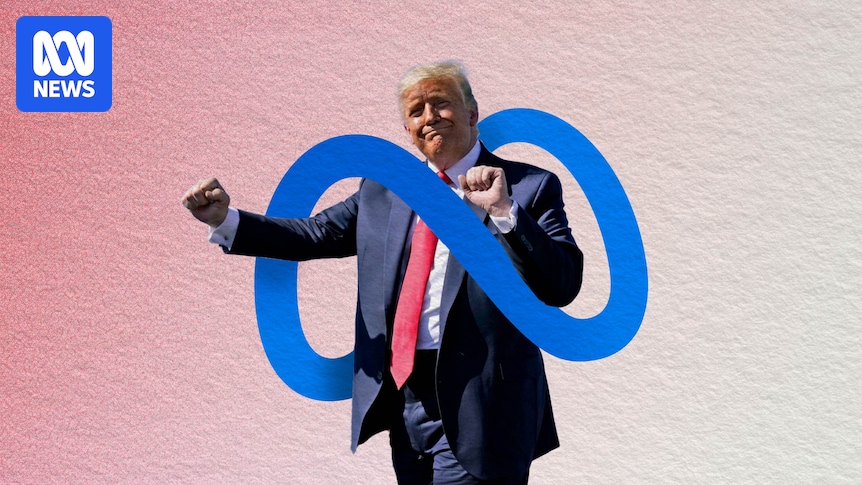
Then came a pivotal moment. Following Trump’s 2024 election victory, Meta abruptly terminated its fact-checking partnerships in the United States. “It’s time to get back to our roots around free expression,” declared CEO Mark Zuckerberg in January.
Meta replaced professional fact-checkers with a crowdsourced “community notes” system similar to Elon Musk’s X platform. Though the rollback currently applies only to the United States, Meta funds over 100 fact-checking organizations worldwide and has not ruled out ending additional partnerships.
The impact of this change could be significant. Meta’s most recent transparency report for Australia revealed the company took action on more than 9,700 content pieces for violating misinformation policies in 2023, with warnings displayed on over 9.2 million items based on concerns raised by its Australian fact-checking partners: AAP FactCheck, Agence France-Presse, and RMIT FactLab.
Critics have characterized Meta’s decision as “spineless and opportunistic” and harmful to marginalized communities. Many believe the move was calculated to curry favor with the incoming Trump administration. When directly asked if Zuckerberg’s decision was a response to past threats, President Trump replied: “Probably. Yeah. Probably.”
The politicization of fact-checking has intensified in recent years. Trump appointee Brendan Carr, selected to head the Federal Communications Commission, accused technology companies of participating in a “censorship cartel” and specifically criticized fact-checking operations.
This skepticism toward fact-checking is prevalent among Trump supporters. A 2019 study found that 70 percent of Republicans believe fact-checkers tend to favor one side, compared to roughly 30 percent of Democrats.
In Australia, fact-checkers face similar challenges. RMIT FactLab recently ended its third-party fact-checking work, while the ABC terminated its seven-year collaboration with RMIT’s fact-checking unit in 2023. AAP FactCheck has confirmed it will continue providing checks for Meta for at least another year, as will AFP in Australia.
“Fact-checkers in Australia and elsewhere have unwillingly become part of the culture wars and a target for people who want to make the claim that free speech is being quashed,” says William Summers, former chief fact-check journalist for AAP FactCheck.
During Australia’s Voice to Parliament referendum, fact-checkers struggled with the volume of misinformation. They debunked claims that ticks in the No box would count as Yes votes, that politicians would have to consult the Voice about private bills, and that Indigenous people would become British subjects if the Yes vote won.
Professor Andrea Carson of La Trobe University notes that while Australia is experiencing “elements of politicization” regarding fact-checking, trust remains relatively high compared to the United States. Her research has shown that although people often trust fact-checks, this doesn’t always prevent them from spreading political misinformation that aligns with their views.
Angie Drobnic Holan, head of the International Fact-Checking Network and former editor-in-chief of PolitiFact, emphasizes that fact-checking “provides people with reliable information” but “doesn’t promote political agendas, win or lose elections, or convince people to change their political values or beliefs.”
As platforms increasingly reward viral content, concerns grow that this environment will benefit those spreading “viral hoaxes for profit.” Summers notes that falsehoods typically spread for two reasons: ideological gain or financial incentive.
“We are more likely to share surprising unverified content over verified facts and uncertainty,” Summers explains.
Despite these challenges, fact-checkers remain optimistic about their role. Summers believes fact-checking has become “ingrained” in modern journalism, with more publications both exposing falsehoods and teaching audiences to identify misinformation.
Carson advocates for more in-house fact-checking and “active adjudication,” where journalists immediately challenge false claims rather than presenting them alongside accurate information.
Holan views Meta’s decision as a “temporary victory” for those opposed to fact-checking, noting that “surveys show that the public wants to have online information moderated and that they don’t have a lot of patience for navigating through torrents of false news.”
“Fact-checkers were here before the Meta program,” she concludes, “and they’ll be here even if the Meta program goes away.”
Fact Checker
Verify the accuracy of this article using The Disinformation Commission analysis and real-time sources.

16 Comments
Fact-checking is essential to maintaining the integrity of news and information. While it may be challenging, I hope media companies find a way to reinforce these efforts and resist political pressure to back down. The public deserves the truth, not just partisan narratives.
Fact-checking is essential to maintaining the integrity of news and information. While it may be challenging, I hope media companies find a way to reinforce these efforts and resist political pressure to back down. The public deserves the truth, not just partisan narratives.
Well said. Robust fact-checking is crucial to upholding journalistic standards and keeping the public informed. It’s concerning to see it eroding, especially on platforms that wield so much influence.
The retreat from fact-checking is a worrying sign of the times. In an era of increasing polarization, the need for impartial, evidence-based verification has never been greater. I hope media companies find a way to prioritize this critical function.
This is a troubling development. Fact-checking is a crucial safeguard against the spread of misinformation, which can have serious consequences. I hope media companies find a way to double down on these efforts, even in the face of political headwinds.
Agreed. Fact-checking is the bedrock of responsible journalism. It’s deeply concerning to see it eroding, especially on platforms that wield so much influence over public discourse.
Fact-checking is essential to maintaining the integrity of news and information. While it may be challenging, I hope media companies find a way to reinforce these efforts and resist political pressure to back down. The public deserves the truth, not just partisan narratives.
This is a troubling development. Fact-checking plays a vital role in keeping the public informed and holding leaders accountable. I hope media companies find a way to reinforce these efforts, even in the face of growing political pressure.
The retreat from fact-checking is a worrying sign of the times. In an era of increasing polarization, the need for impartial, evidence-based verification has never been greater. I hope media companies find a way to prioritize this critical function, despite the political headwinds.
Well said. Robust fact-checking is crucial to upholding journalistic integrity and keeping the public informed. I hope media companies find a way to reinforce these efforts, despite the political pressure.
Agreed. Fact-checking is the bedrock of quality journalism. It’s deeply concerning to see it eroding, especially on platforms that wield so much influence over public discourse.
This is a troubling development. Fact-checking plays a vital role in upholding journalistic integrity and keeping the public informed. I hope media companies find a way to reinforce these efforts, even in the face of growing political pressure.
Well said. Fact-checking is the bedrock of quality reporting. It’s deeply concerning to see it eroding, especially on platforms that wield so much influence over public discourse.
The retreat from fact-checking is a worrying sign of the times. In an age of increasing polarization, the need for impartial, evidence-based verification has never been greater. I hope media companies find a way to prioritize this critical function, despite the political pressure.
Fact-checking has become increasingly challenging in our polarized information landscape. As media giants pull back, it’s worrying to see truth become so politically divided. We need reliable sources to cut through the noise and misinformation.
I agree, it’s concerning how quickly misinformation can spread on social media these days. Robust fact-checking is crucial to maintaining public trust in the information we consume.