


Listen to the article
Malaysian authorities have uncovered a series of sophisticated social media scams impersonating the country’s monarch, highlighting growing concerns about AI-generated deepfakes targeting high-profile figures.
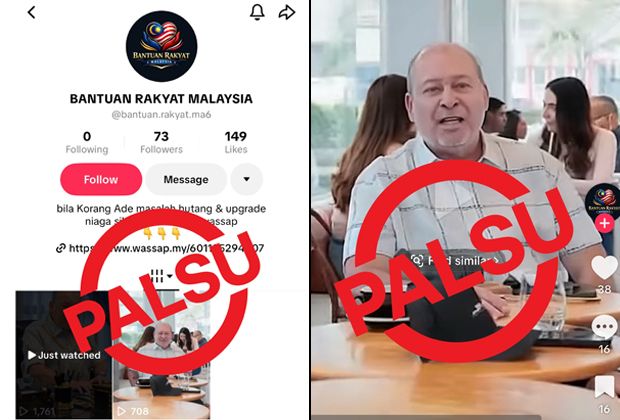
The Johor Royal Press Office (RPO) recently identified multiple fraudulent TikTok accounts using artificial intelligence technology to mimic the voice of His Majesty Sultan Ibrahim, King of Malaysia. These deceptive videos feature a voice closely resembling the King’s, reportedly promoting fake financial assistance programs supposedly offered to the public during Ramadan.
“The public is advised to remain vigilant and not be easily influenced by these fake accounts, which are often used by scammers for fraudulent purposes on social media platforms,” the RPO warned in an official statement released on the Sultan’s Facebook page on Wednesday.
The statement emphasized that impersonation and identity misuse constitute criminal offenses under Malaysian law, signaling potential legal consequences for the perpetrators.
Investigations revealed at least two videos uploaded through the account @bantuan.rakyat.ma6, which combined images of Sultan Ibrahim with AI-generated voice content designed to deceive viewers. The account name itself—which translates roughly to “people’s assistance”—appears calculated to lend credibility to the financial scam by suggesting an official government aid program.
This incident reflects a troubling global trend of increasingly sophisticated digital deception. As AI voice cloning technology becomes more accessible and convincing, public figures and government officials worldwide have become prime targets for impersonation in financial scams, misinformation campaigns, and political manipulation.
Malaysia, with its constitutional monarchy system and high social media penetration rate, presents an attractive target for such schemes. The Sultan of Johor, who was installed as Malaysia’s 17th King in January 2024 under the country’s rotating monarchy system, carries significant influence and respect among Malaysians, making his likeness valuable for scammers seeking to exploit public trust.
Cybersecurity experts note that these AI-generated scams represent a significant evolution from traditional phishing attempts. The convincing nature of modern voice cloning technology means even vigilant citizens might be deceived when confronted with what appears to be an authentic message from a trusted authority figure.
“What makes these AI scams particularly dangerous is their ability to bypass many people’s natural skepticism,” explains Dr. Amirah Hassan, a digital security researcher at Universiti Teknologi Malaysia. “When you hear a voice that sounds exactly like someone you recognize and respect, your guard naturally lowers.”
The timing of these scams during the approach to Ramadan appears deliberate, as the holy month is traditionally associated with increased charitable giving in Malaysia’s predominantly Muslim society. Scammers often exploit religious occasions when people are more inclined to participate in financial aid programs.
The Malaysian Communications and Multimedia Commission (MCMC) has previously warned about the rise in AI-generated scams on social media platforms. The commission encourages users to verify information through official channels and report suspicious content immediately.
TikTok, the platform hosting the fraudulent content, has faced increasing pressure globally to improve its response to AI-generated deepfakes and misinformation. While the company has policies against impersonation and misleading content, the rapid proliferation of such materials continues to challenge content moderation systems.
For Malaysians, officials recommend following only verified social media accounts with blue checkmarks and checking the Royal Palace’s official channels for any legitimate announcements regarding public initiatives or financial assistance programs.
The case underscores the urgent need for both technological solutions and public education to combat the growing sophistication of AI-enabled fraud in an increasingly digital society.
Fact Checker
Verify the accuracy of this article using The Disinformation Commission analysis and real-time sources.

12 Comments
This is a sobering example of how AI-generated deepfakes can be weaponized to defraud and mislead the public. I commend the Malaysian authorities for their swift response and hope other nations follow suit.
Deepfake technology is a double-edged sword. While it has creative potential, bad actors are clearly misusing it for nefarious purposes. Robust regulations and public awareness campaigns are crucial to address this challenge.
Well said. Policymakers must stay ahead of the curve and develop effective safeguards, while also promoting ethical AI development and use.
Deepfake scams are a serious threat, especially when abusing the voice/image of a head of state. I hope this incident spurs more international cooperation to combat this emerging form of cybercrime.
This case highlights the urgent need to address the proliferation of AI-generated disinformation. Stronger digital literacy education could help the public spot these deceptive tactics.
Deepfakes targeting political and public figures are a growing threat globally. Robust regulation and enforcement will be crucial to deter such abuse of advanced technologies.
Absolutely. Governments and tech platforms must work together to develop effective policies and tools to detect and remove these manipulated audio/video impersonations.
This is concerning. Deepfake technology has serious implications for disinformation and fraud. I hope Malaysian authorities can identify and prosecute those responsible to discourage such criminal activity.
It’s disheartening to see scammers exploiting AI to target public figures and defraud vulnerable citizens. Kudos to the Malaysian authorities for taking swift action on this issue.
Impersonating the King of Malaysia for financial fraud is unacceptable. I’m glad the authorities are cracking down on these illegal activities and warning the public. We need zero tolerance for such blatant deception.
Impersonating a head of state is a serious offense. I’m glad the Johor Royal Press Office is taking action to warn the public and signal legal consequences. Vigilance is key to combating these AI-powered scams.
Agreed. The public needs to be very cautious about suspicious social media accounts and dubious financial offers, especially if they appear to be from official sources.