


Listen to the article
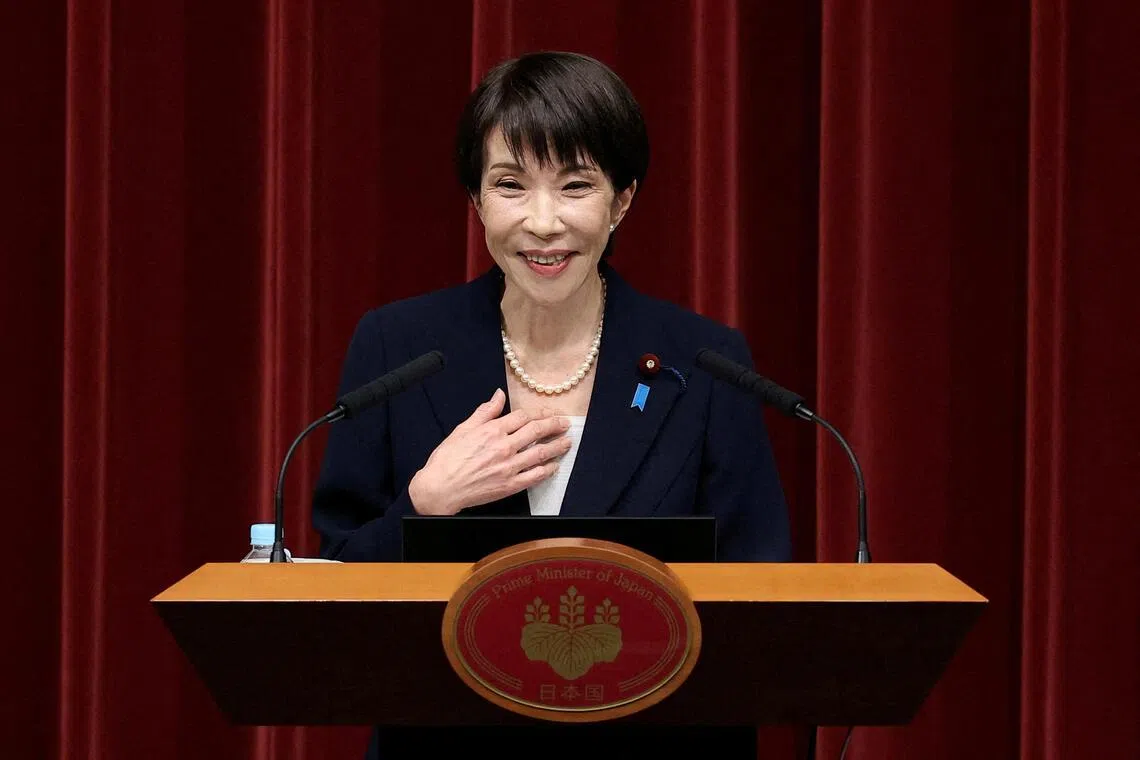
Taiwan FactCheck Center has exposed a wave of false claims circulating on Taiwanese social media regarding Japanese Prime Minister Sanae Takaichi’s family history, according to a recent investigation by the non-profit organization.
The investigation revealed that 21 social media accounts, including 13 believed to be of Chinese origin, have been spreading disinformation that falsely identifies Takaichi’s grandfather as an Imperial Japanese Army officer who participated in Japan’s invasion of China during World War II.
These misleading posts included fabricated details claiming her grandfather held the rank of major in the former Japanese military. Many posts shared an inflammatory photograph showing a man wielding a sword forcing a Chinese person to kneel, implying a direct familial connection to wartime atrocities.
Prime Minister Takaichi’s office has categorically denied these claims in a statement to Kyodo News, stating, “He had a different name and he was not a Japanese soldier.” The Taiwan FactCheck Center confirmed that the name attributed to Takaichi’s grandfather in these posts is incorrect, and the widely shared photograph was taken from a publication with no connection to the prime minister’s family.
The timing of this disinformation campaign appears strategically coordinated. The Taiwan FactCheck Center traced the first appearance of these false claims to a Baidu bulletin board, a popular Chinese platform, in early October 2025. However, the posts gained significant traction following Takaichi’s parliamentary remarks in early November 2025, when she stated that a Chinese attack on Taiwan could constitute a “survival-threatening situation” for Japan.
During those parliamentary discussions, Takaichi suggested such an attack might warrant action by Japan’s Self-Defense Forces in support of the United States, signaling Japan’s growing concern about regional security in the Taiwan Strait. The escalation of false posts after these comments suggests a potential effort to undermine her credibility and inflame historical tensions.
This incident highlights the increasingly sophisticated nature of cross-border disinformation campaigns in East Asia, where historical grievances from World War II continue to influence contemporary diplomatic relations. Japan’s colonial rule over Taiwan from 1895 to 1945 and its wartime actions in China remain sensitive topics that can easily be exploited to sow division.
Security experts note that such disinformation tactics have become more common in the region, particularly surrounding discussions of Taiwan’s security status. The targeted nature of these posts, appearing in Taiwanese social media spaces but accessible to Japanese users, demonstrates the borderless nature of digital influence operations.
The Taiwan FactCheck Center has issued a public warning urging people to exercise caution when consuming social media content about political figures. The organization emphasized that users are deliberately abusing social media platforms to spread false information with the apparent goal of influencing Taiwanese public opinion on Japan and its policies toward Taiwan.
As tensions in the Taiwan Strait region continue to evolve, fact-checking organizations anticipate an increase in similar disinformation campaigns targeting political figures who express support for Taiwan’s security. The incident underscores the critical importance of media literacy and fact-checking in an era where digital platforms can rapidly amplify false narratives across national boundaries.
Japanese and Taiwanese officials have not commented on whether they are coordinating efforts to counter such disinformation, though both nations have previously acknowledged the challenges posed by foreign influence operations in their respective information ecosystems.
Fact Checker
Verify the accuracy of this article using The Disinformation Commission analysis and real-time sources.

11 Comments
It’s troubling to see how social media can be weaponized to spread disinformation for political purposes. The false claims about the Japanese PM’s grandfather seem to be part of a larger coordinated effort to discredit her. Fact-checkers play a vital role in combating this kind of manipulation.
The disinformation campaign targeting the Japanese PM’s family history is deeply troubling. Spreading false narratives and doctored photos is a malicious attempt to rewrite history and damage reputations. I commend the fact-checkers for exposing these lies and setting the record straight.
Absolutely. Fact-based reporting and rigorous verification are crucial to counter the proliferation of misinformation, especially around sensitive political and historical issues. We need to be vigilant in identifying and calling out these kinds of coordinated disinformation efforts.
This is a timely reminder of the importance of verifying information, especially when it comes to political figures and their family histories. I’m glad the Taiwan FactCheck Center was able to debunk these false claims. It’s crucial that we rely on credible, fact-based sources to get the full picture.
This incident highlights the urgent need for improved media literacy and fact-checking capabilities, both at the individual and institutional levels. We must be vigilant in verifying information, especially when it comes to sensitive political and historical narratives. The Taiwan FactCheck Center’s efforts are commendable and serve as a model for combating the spread of online misinformation.
The alleged connection between the Japanese PM’s grandfather and wartime atrocities appears to be completely fabricated. It’s disappointing to see disinformation campaigns trying to smear political leaders with unsubstantiated claims. Fact-checking is crucial to combat the spread of this kind of misleading content.
Absolutely, we need more rigorous fact-checking to counter the proliferation of fake news and propaganda, especially around sensitive political and historical issues. Spreading misinformation can have serious consequences.
This seems like a classic case of social media misinformation targeting a political figure. It’s concerning to see false claims and doctored photos being spread so widely, especially when they involve sensitive historical events. I hope the Taiwan FactCheck Center’s investigation helps set the record straight.
This is a prime example of how social media can be exploited to spread false and inflammatory narratives. I’m glad the Taiwan FactCheck Center was able to debunk these claims and clarify the facts around the Japanese PM’s family history. It’s important we remain critical consumers of online content and rely on credible sources.
This is a concerning example of how social media can be used to sow discord and undermine trust in political leaders. I’m glad the Taiwan FactCheck Center investigated these claims and found them to be false. Maintaining transparency and accuracy in public discourse is essential for a healthy democracy.
The wave of false claims about the Japanese PM’s grandfather is a concerning example of the potential for social media to be used as a tool for political manipulation. I commend the Taiwan FactCheck Center for their investigative work in exposing these lies and setting the record straight. Fact-checking is essential to maintain the integrity of public discourse.