


Listen to the article
Pakistan’s Interior Minister Announces Crackdown on Fake News
Interior Minister Mohsin Naqvi announced Monday that Pakistan will launch a major initiative against fake news, with the Information Ministry and National Cyber Crime Investigation Agency (NCCIA) taking coordinated action to combat misinformation online.
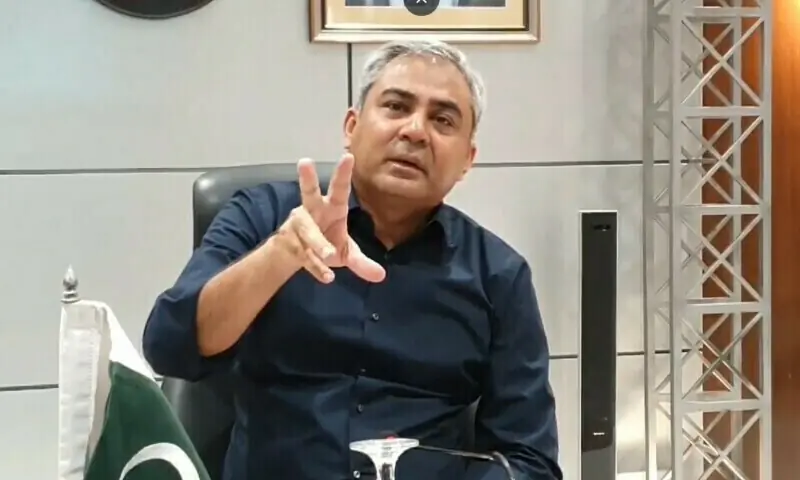
Speaking at a press conference in Lahore, Naqvi claimed that “90 percent of news on social media is fake” in recent weeks. While affirming his belief in freedom of expression and the right to criticize, he drew a clear distinction between legitimate journalism and unsubstantiated claims circulating online.
“If you have evidence, you can report any story. But it cannot be allowed that you say whatever you want on social media, make any allegation against anyone, declare any living person dead and declare a dead person alive,” Naqvi stated firmly.
The minister emphasized that traditional media outlets have established accountability structures, where complaints about false reporting can be addressed through the Pakistan Electronic Media Regulatory Authority or editorial management. In contrast, social media allows anyone to post unverified information without consequences.
“We will not allow you to spread fake news across the country and create panic in the garb of journalism,” Naqvi warned, adding that the government considers journalists to be those who work within established media systems with editorial oversight.
When asked if a new regulatory body would be established to implement this initiative, Naqvi indicated one was already in development. He stressed that the government’s actions would target those spreading misinformation rather than legitimate journalists.
The announcement comes amid growing concerns about digital disinformation in Pakistan, where social media platforms have become increasingly influential in shaping public opinion. Media freedom advocates have previously expressed concern that anti-fake news measures could potentially be used to suppress legitimate criticism.
In the same press conference, Naqvi addressed several other pressing national security matters. He highlighted difficulties in returning Afghan refugees from Khyber Pakhtunkhwa (KP) province, alleging that local authorities were “protecting” Afghan migrants despite federal directives to close refugee camps.
The minister linked Afghan nationals to recent terrorist attacks, including one on Federal Constabulary headquarters. He announced that police station house officers would now be tasked with identifying “illegal Afghans” in their jurisdictions to facilitate their return to Afghanistan.
“My message to illegal Afghans is to leave yourself respectfully. Because if you get caught now, we will not just send you back,” Naqvi warned, without elaborating further. He added that Afghans who return after being deported would face arrest.
Naqvi criticized the KP provincial government, saying, “Our message to the KP government is also that it is important at this time to prioritize your country over politics.” He indicated that the federal government was considering multiple options, including potential legal action, to address what he characterized as provincial non-cooperation on security matters.
“When it comes to national security, it cannot happen that a province makes its own policy. We will not allow this,” he stated.
The minister also addressed concerns about travelers being denied boarding on international flights, claiming only 50-70 people daily were being prevented from traveling. Naqvi blamed a “agent mafia” for exaggerating the issue on social media and defended the practice as necessary to improve Pakistan’s passport ranking internationally.
When questioned about delays in issuing the notification for the Chief of Defence Forces appointment, Naqvi dismissed the speculation, explaining that establishing a new institution following constitutional amendments requires time. “They want things to happen at the press of a button, but things don’t work that way,” he said.
The minister’s announcements reflect the government’s increasing focus on controlling information flows in digital spaces while addressing complex security challenges related to migration, terrorism, and institutional reforms.
Fact Checker
Verify the accuracy of this article using The Disinformation Commission analysis and real-time sources.

8 Comments
Interesting to see Pakistan taking action against the spread of misinformation online. Social media has enabled the rapid dissemination of unverified claims, which can be damaging. However, care must be taken to preserve legitimate criticism and journalism.
Agreed. Responsible oversight is important, but authorities must be cautious not to overstep and inadvertently restrict valid reporting and commentary.
Cracking down on fake news is a complex challenge, but necessary to maintain trust in news and information. Pakistan’s initiative to hold social media accountable is an interesting approach, though balancing free speech and accuracy will be delicate.
Monitoring and addressing fake news is crucial, but the methods used are critical. Pakistan’s plan to involve the NCCIA and PEMRA is an interesting approach, though the details will be important to ensure it’s applied fairly and effectively.
Absolutely. The government will need to be transparent about the process and ensure it doesn’t inadvertently stifle legitimate journalism and criticism.
Tackling the rise of misinformation online is an important but complex challenge. Pakistan’s initiative to involve regulatory bodies is a notable approach, though the specifics will be crucial in upholding press freedoms while curbing false claims.
Fake news is a global challenge, and I’m curious to see how Pakistan’s crackdown unfolds. Curbing misinformation is crucial, but the approach must balance that need with upholding free expression. It’s a delicate balance.
Interesting to see Pakistan taking a comprehensive approach to addressing fake news, involving both the Information Ministry and cybercrime agency. Maintaining the balance between free speech and accuracy will be key as this initiative unfolds.