


Listen to the article
Misinformation Floods Social Media as India-Pakistan Tensions Escalate
A deluge of false information is spreading rapidly across social media platforms as tensions between nuclear-armed neighbors India and Pakistan reach alarming levels, complicating public understanding of the actual military situation unfolding in South Asia.
Since India’s missile strikes on Pakistan on May 7, fact-checkers, government agencies, and digital forensics experts have been working continuously to combat the spread of misleading content. The information landscape has become cluttered with mislabeled videos, recycled images, and fabricated public advisories, leaving millions of anxious observers struggling to separate fact from fiction.
One of the most widely circulated pieces of misinformation was a video allegedly showing Indian missiles striking targets in Bahawalpur, Pakistan. Multiple Indian news channels broadcast the footage, but fact-checking organization Alt News revealed the clip actually depicted an Israeli airstrike on Gaza from October 2023. A reverse image search traced the video to a Sputnik Armenia report, and BBC Verify confirmed it had no connection to the current South Asian conflict.
“This is a clear-cut case of recycled footage misrepresented as breaking news,” stated Alt News, which has debunked dozens of similar false claims over the past few days.
The misinformation crisis extends beyond just that incident. As claims of Indian drone attacks on Pakistan emerged Thursday, fact-checkers quickly identified an old video from Texas fires being circulated as new footage. Other false claims have utilized AI-generated imagery or visuals from conflicts in Gaza and Ukraine, while some purported strike footage was taken from YouTube simulations.
Both countries have contributed to the confusion through unverified claims and counterclaims as they attempt to shape the narrative in their favor. False stories from Pakistan have included alleged airstrikes on the Srinagar airbase and claims of destroying an Indian army brigade headquarters.
India’s Press Information Bureau debunked these claims, noting that the supposed Srinagar attack video actually showed sectarian clashes in Pakistan’s Khyber Pakhtunkhwa province from early 2024. Reporters and local residents confirmed no evidence of an attack at the airbase in Kashmir.
“There has been a marked spike in misinformation since 3am on May 7,” a Press Information Bureau official told Hindustan Times. “We are working 24/7 to counter each falsehood.”
Another 37-second clip showing smoke, fire, and gunfire was widely shared as footage of Pakistan’s retaliation against Indian strikes. Claims ranged from downed Indian jets to a destroyed brigade headquarters. However, Alt News confirmed the video predated the current conflict and had been circulating online since at least April 27.
Gaming footage has also been weaponized in the information war. A widely shared clip allegedly showing Pakistani jets striking Indian territory was revealed to be footage from the video game “Battlefield 3.” Other posts repurposed images from unrelated Indian air force crashes in 2021 and 2024, while footage from the 2020 Beirut port explosion was misrepresented as evidence of Pakistani retaliation.
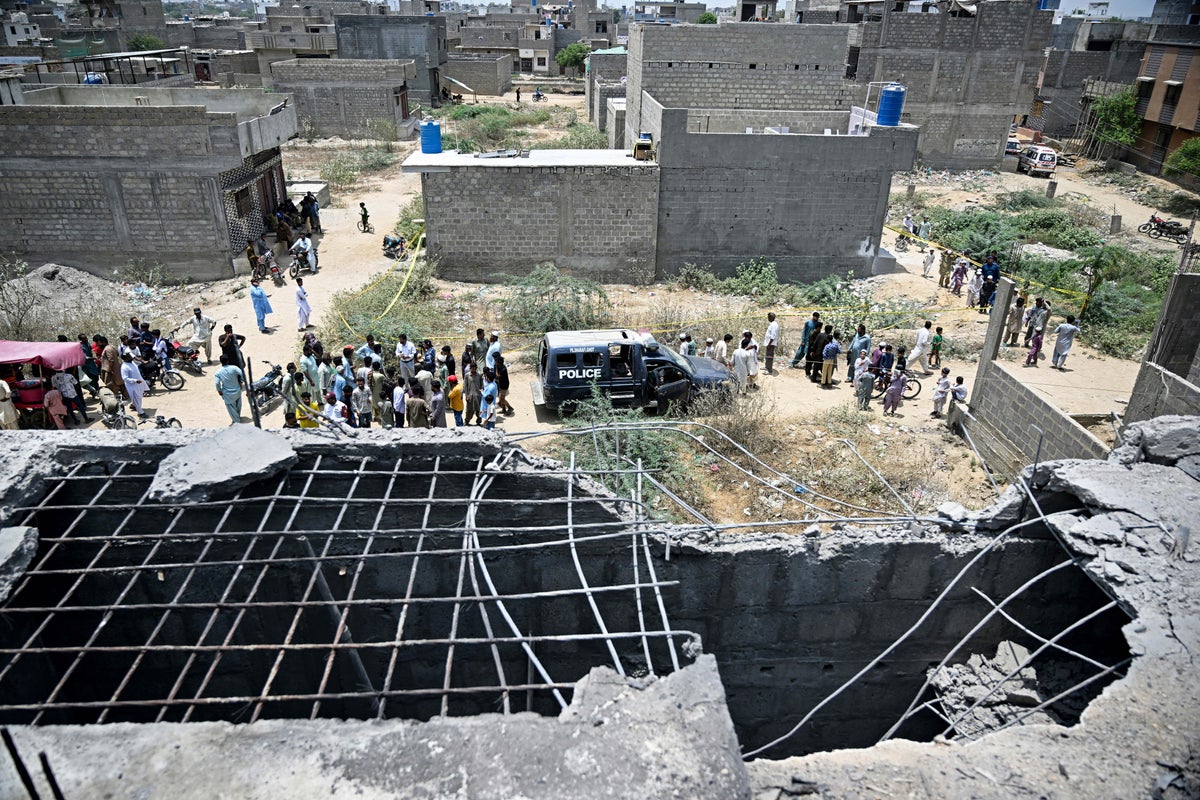
Confusion persists regarding claims about downed Indian jets, including a French-made Rafale. While India denies losing any aircraft, The Independent has captured video showing debris at the scene of an apparent crash. French intelligence told CNN it verified that at least one Rafale was lost based on ground visuals. Meanwhile, Pakistan maintains it successfully downed as many as five Indian jets.
On Thursday, Pakistan’s military claimed to have intercepted 25 Indian drones targeting major urban centers, including Lahore and Karachi. Indian officials did not directly address this claim but stated that air defense systems in Pakistan had been targeted.
Adding to public concern, the Indian government flagged a fake advisory circulating online that mimicked civil defense protocols and urged citizens to stock up on food and medicines. The Press Information Bureau labeled it “FAKE” and warned against “Pakistan-linked accounts” attempting to “flood the information space with falsehoods so quickly and overwhelmingly that it becomes difficult to separate fact from fiction.”
As of Thursday, the bureau’s fact-check unit had issued at least 21 public clarifications. Experts warn that in this highly polarized environment, recycled content and AI-generated fakes have become central to information warfare.
“Algorithmic engagement rewards dramatic content over accurate content,” Bellingcat founder Eliot Higgins told BBC Verify. “Old footage from unrelated wars is often used to provoke emotional reactions.”
Fact Checker
Verify the accuracy of this article using The Disinformation Commission analysis and real-time sources.
