


Listen to the article
Court Questions Definition of “Fake News” in Pakistan’s Amended Cybercrime Law
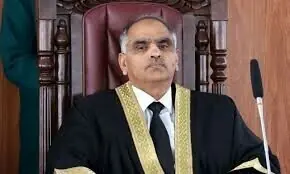
Justice Raja Inaam Ameen Minhas of the Islamabad High Court (IHC) raised critical questions on Monday about how authorities would determine what constitutes “fake news” under Pakistan’s amended Prevention of Electronic Crimes Act (PECA).
During a hearing of petitions filed by prominent journalists and media organizations challenging the controversial amendments, Justice Minhas probed the mechanism for identifying false information. “Who will decide whether the information is fake or false?” the judge asked. “Explain how fake news will be determined. How will proceedings regarding fake news begin?”
The petitions, filed by senior journalist Hamid Mir, the Pakistan Federal Union of Journalists (PFUJ), the Islamabad High Court Journalists Association (IHCJA) and others, argue that the amendments severely restrict freedom of expression and concentrate excessive powers in the hands of the executive branch.
Counsel for the petitioners emphasized that the amended law transfers powers traditionally held by the judiciary to executive authorities. They argued that determinations regarding false information should be made by an independent judicial tribunal established in consultation with Pakistan’s Chief Justice, rather than by government officials who may have political motivations.
The petitioner’s counsel pointed to a particularly troubling aspect of the new legislation: the expanded complaint mechanism. Under the amendments, not only can aggrieved parties file complaints, but third parties can also initiate proceedings against alleged purveyors of “fake news.”
“This provision opens the door for proxies to file complaints, which will inevitably lead to misuse of the law,” the counsel argued. They further noted that context is crucial when evaluating potentially false information, as not every incorrect statement constitutes harmful disinformation. “Fake information can also be the result of an error that does not cause harm to anyone,” the counsel stated.
Asif Bashir Chaudhry, President of the Rawalpindi-Islamabad Union of Journalists (RIUJ), informed the court that the PFUJ had initially approached the court regarding PECA in February 2023, but the case had remained pending without any stay order. He claimed that during this period, more than two dozen journalists had received life imprisonment sentences under the law.
Chaudhry cited one particularly concerning case in which a journalist was prosecuted after reporting on the use of substandard materials in road construction—a report later validated when the road required early demolition.
Justice Minhas acknowledged the significance of the issue but noted the constraints of judicial intervention in parliamentary legislation. “This is legislation. It cannot be suspended through an interim order,” the judge remarked, indicating the court would make its determination after hearing detailed arguments from all parties. The hearing was subsequently adjourned until March 6.
PECA, first introduced in 2016, has faced persistent criticism from press freedom and human rights organizations, who have labeled it a “black law” designed primarily to suppress dissent. The recent amendments, passed in 2023, introduced even harsher penalties for content deemed “fake news,” expanded government oversight of digital platforms, and established new regulatory bodies to monitor social media.
Amnesty International warned when the amendments were proposed that they could “further tighten the government’s grip over Pakistan’s heavily controlled digital landscape.” Similarly, the Human Rights Commission of Pakistan (HRCP) expressed concerns that the changes “would curb fundamental rights.”
The law has drawn increasing scrutiny from lawmakers as well. In August 2023, the Senate Standing Committee on Information and Broadcasting voiced concern over the growing number of cases registered against journalists under PECA and called for urgent action to address the media community’s concerns regarding arbitrary arrests and FIRs.
As the case proceeds, it represents a crucial test of press freedom and digital rights in Pakistan, where journalists have faced intensifying pressure and legal challenges in recent years.
Fact Checker
Verify the accuracy of this article using The Disinformation Commission analysis and real-time sources.

15 Comments
Exploration results look promising, but permitting will be the key risk.
Good point. Watching costs and grades closely.
Good point. Watching costs and grades closely.
The cost guidance is better than expected. If they deliver, the stock could rerate.
Good point. Watching costs and grades closely.
Good point. Watching costs and grades closely.
If AISC keeps dropping, this becomes investable for me.
Good point. Watching costs and grades closely.
Good point. Watching costs and grades closely.
Uranium names keep pushing higher—supply still tight into 2026.
Good point. Watching costs and grades closely.
The cost guidance is better than expected. If they deliver, the stock could rerate.
The cost guidance is better than expected. If they deliver, the stock could rerate.
Good point. Watching costs and grades closely.
Good point. Watching costs and grades closely.